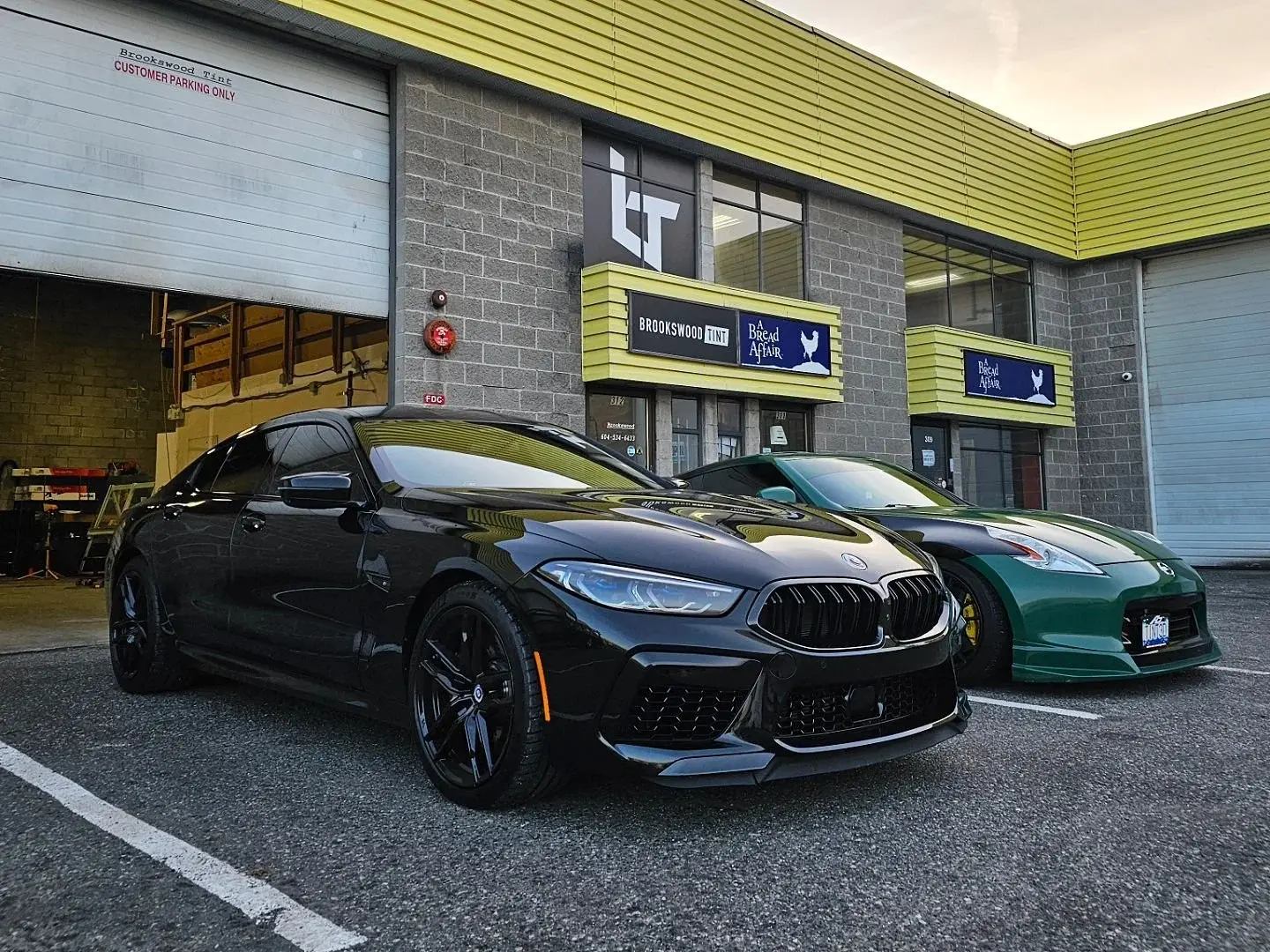
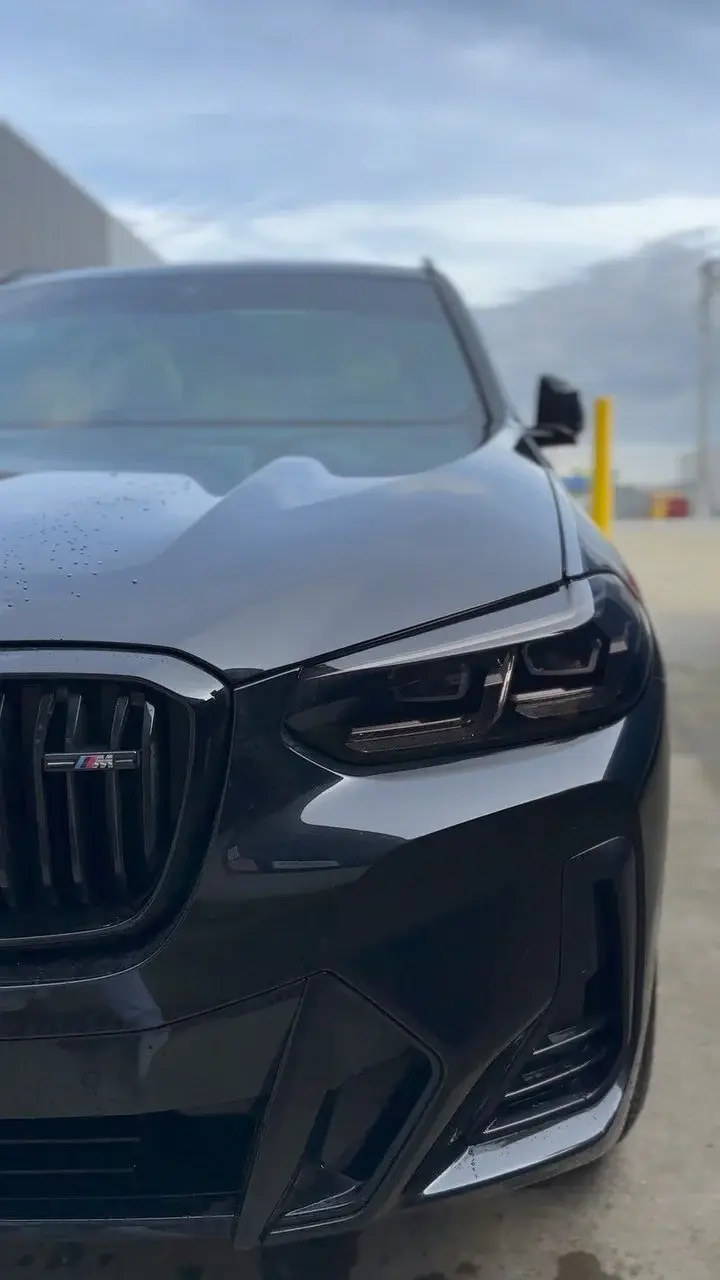
How do vinyl, paint and Plasti Dip compare for a chrome delete?
Vinyl is a thin cast film laid over the trim, Plasti Dip is a rubber coat sprayed on in layers and peeled off later, and paint is a coat that bonds to the trim permanently. The table puts each maker’s own figures side by side, along with what Brookswood Tint publishes for its vinyl work.
| Vinyl (3M 2080 or Avery Dennison SW900) | Plasti Dip | Spray paint (Rust-Oleum Trim & Bumper as the example) | |
|---|---|---|---|
| What goes on | Cast vinyl film with a pressure-activated adhesive | Air-dry rubber coating, sprayed in layers | Modified alkyd paint, sprayed in coats |
| Thickness the maker gives | 3.5 mil face on 3M’s 2080-M12; 3.2 to 4.7 mil face on SW900 | 10 to 12 mils for most uses | 1 to 2 mils per coat, 2 to 3 coats |
| Black finishes | Gloss or satin black at this shop; the makers sell matte too | Matte; a separate Glossifier coat adds shine | Matte black or charcoal grey |
| Conditions to apply | Dry application only; 3M lists 18 to 24 °C | About 21 °C, low humidity, little air movement | 10 to 32 °C, humidity under 85% |
| Coming off | Heat and/or chemicals | Peeled by hand, when applied properly | Not designed to come off |
| Who usually applies it | A trained installer | Often the owner | Often the owner, or a body shop |
| Warranty | The shop publishes 5 years on the vinyl | None published on the maker’s pages we read | None on the data sheet |
| At Brookswood Tint | The only method used; quoted per vehicle | Not offered | Not offered |
What does a vinyl chrome delete involve?
Each bright trim piece is cleaned and covered in black cast film, and badges, handles and mirror caps come off where they can so the vinyl folds around the whole part. Nothing is sprayed, and the chrome under the film is left as it was.
3M names chrome delete among the accent jobs in its 2080 wrap film bulletin, next to racing stripes and rocker panels. The same bulletin says 2080 goes on dry only, between 18 and 24 °C, and that the film is “intended for resale for professional use only.” Avery Dennison’s SW900 data sheet sets a minimum of 10 °C on flat parts and 16 °C on complex curves, and plenty of grille bars and window surrounds count as complex curves. An indoor bay keeps either film inside those numbers in January as easily as in July.
One question to settle before booking is what your trim is made of. Both makers name stainless steel as a surface their wrap films aren’t meant for, and Avery adds rubber and unpainted plastic to its list of low-surface-energy surfaces it rules out. A close photo of each piece with your quote request gets that answered early. The service itself, with its three package scopes, is laid out on chrome delete.
How does Plasti Dip work as a chrome delete?
Plasti Dip is a rubber coating sprayed on in several light coats and peeled off when you’re done with it. Its maker sells chrome delete as one of its uses and says the result “is a matte finish” that hides the chrome.
The maker is specific about how much rubber that takes. Its product page says “10-12 mils thickness is adequate” for most uses, which it puts at four to five spray coats, and its emblem guide calls for five to six light coats with 15 to 30 minutes between them. That guide also says more coats improve durability and make removal easier, which is the trade-off with dip: the layer that peels cleanly is the thick one. That target is close to three times the face thickness of 3M’s 2080 film, which is worth picturing on narrow window trim and small badge lettering.
Two more points come from the maker’s FAQ. Plasti Dip has “limited resistance to petroleum-based products,” and the conditions it calls ideal are low humidity, around 21 °C and still air. A gloss look needs its separate Glossifier coat on top.
What does painting chrome trim involve?
Painting means cleaning the trim, usually priming it, and spraying coats that bond to it for good. Of the three methods, it’s the only one with no planned way back to chrome.
Rust-Oleum’s Trim & Bumper Paint data sheet shows the spray-can version. The paint “is designed to renew and restore the OEM finishes found on many vehicles,” lists metal trim, mouldings, mirror covers and rub strips as its uses, and comes in matte black or charcoal grey. Prep is wax and tar remover, then soap and water, and the sheet recommends a Rust-Oleum primer first to improve adhesion. It wants 10 to 32 °C with humidity under 85%, two to three light coats, and 24 hours to dry fully.
Nothing on that sheet deals with taking the paint off again, because that isn’t what paint is for. If there’s any chance you’ll want the chrome back for a sale or a lease return, a painted delete leaves you stripping or replacing those parts. A body shop’s paint on trim is just as permanent as a rattle can’s.
Which chrome delete method suits Fraser Valley weather?
Vinyl does, because it goes on indoors at a controlled temperature. Both spray methods need a dry, mild stretch with low humidity, and the wet half of a Langley year makes that hard to find outdoors.
The federal climate normals for Abbotsford, the station next to Langley, record 241 mm of rain in an average November against 43 mm in July, and precipitation on 179.5 days of the year. Set that beside Rust-Oleum’s 85% humidity ceiling and Plasti Dip’s call for still, dry air, and summer is the realistic season for spraying trim outside.
Once the trim is black, winter roads test it. TranBC’s winter maintenance answers describe highway crews putting down salt, brine and abrasives, and Avery’s feature list for SW900 claims strong resistance to UV, humidity and salt spray. The shop’s own estimate for vinyl on trim is five years or more with reasonable care, shorter where an ice scraper keeps catching the belt line.
Which chrome delete is easiest to undo?
Vinyl and Plasti Dip are both made to come off, and paint isn’t. Between the first two, the difference is how predictable removal is.
For vinyl, 3M’s bulletin expects 2080 to release from most surfaces under heat or chemical remover throughout the warranty term, and Avery rates SW900 as removable for as many years as it’s rated to last. 3M’s warranty card leaves out “paint pull during film removal process,” which matters more on painted panels than on plated trim, but it’s a reminder that the surface underneath has to be sound.
For Plasti Dip, the maker says it’s “Peelable and removable off of most surfaces,” and the FAQ adds the condition “when applied properly.” Its advice to add coats for easier removal tells you which way it goes: a thin coat is the one that fights you. Lease drivers should read whether a chrome delete is reversible before choosing a method.
Vinyl, paint or Plasti Dip: which chrome delete should you choose?
Decide by how long you’ll keep the look and whether you’ll ever want the chrome back. Dip suits an experiment, paint suits a permanent change, and vinyl sits between them.
Plasti Dip suits you if
- You want to see black trim on your car before committing to anything.
- A matte finish is fine, or you’ll add the gloss coat.
- You can spray on a dry, mild day and mask the car carefully.
- You accept that a thin coat can be hard to peel later.
Paint suits you if
- You never want the chrome back, for you or the next owner.
- The trim is already pitted or peeling and needs refinishing anyway.
- Matte black or charcoal grey covers what you want from a can.
Vinyl suits you if
- You want gloss or satin black rather than matte.
- You may sell the car or return a lease and want the chrome intact.
- You’d rather it was fitted indoors than sprayed in a driveway.
- You want a written warranty on the material.
Where Brookswood Tint stands on chrome delete methods
The shop does chrome deletes in 3M and Avery Dennison cast vinyl and nothing else, because film comes off with heat and leaves the car as it was built. A weekend of dip on a car you’re experimenting with is your call; spraying coatings on trim just isn’t something we offer.
How do you book a vinyl chrome delete in Langley?
Every car’s trim is different, so each chrome delete gets its own price. Use the chrome delete quote form to share your vehicle, a few photos of the bright pieces you want gone, and your pick of gloss or satin, or text the same to 604 534 6433.
The work comes in three scopes. Window trim covers the surrounds and belt line; front and rear covers the grille, badges and bumper trim; full blackout adds door handles, mirror caps and roof rails. The factors behind each price are explained on chrome delete cost. Drop-off is at Unit 312, 20560 Langley Bypass, Monday to Saturday, 9:00 to 17:00.