What counts as “factory” PPF?
Film that the carmaker sells under its own name or through its own program. In both Canadian examples on this page, it goes on after the car is built: Toyota sells a genuine-accessory kit meant to be fitted by a Toyota-approved installer, and Tesla’s Canadian page sends you to a participating XPEL dealer.
That separates it from two other things people mix it up with. A dealer “paint protection package” frequently turns out to be a sealant or coating added at the finance desk, which is covered on dealer paint protection packages vs PPF. Aftermarket PPF is film you arrange yourself with an independent installer, choosing the brand, the film and the panels.
The film itself often comes from the same handful of makers. Toyota Canada’s accessory list names its kit “3M Pro Series Genuine Toyota Paint Protection Film”, and Tesla’s program sells XPEL. What changes between factory and aftermarket is less the chemistry than the coverage, the warranty and who does the work.
How do factory and aftermarket PPF compare?
Factory kits trade choice for convenience: a fixed kit, bought with the car, under the carmaker’s accessory warranty. Aftermarket film trades the other way. These are the differences that decide it.
| Factory or genuine-accessory PPF | Aftermarket PPF at Brookswood Tint | |
|---|---|---|
| What’s covered | A fixed kit per model, often leading edges and contact points | Packages from a partial front to every painted surface |
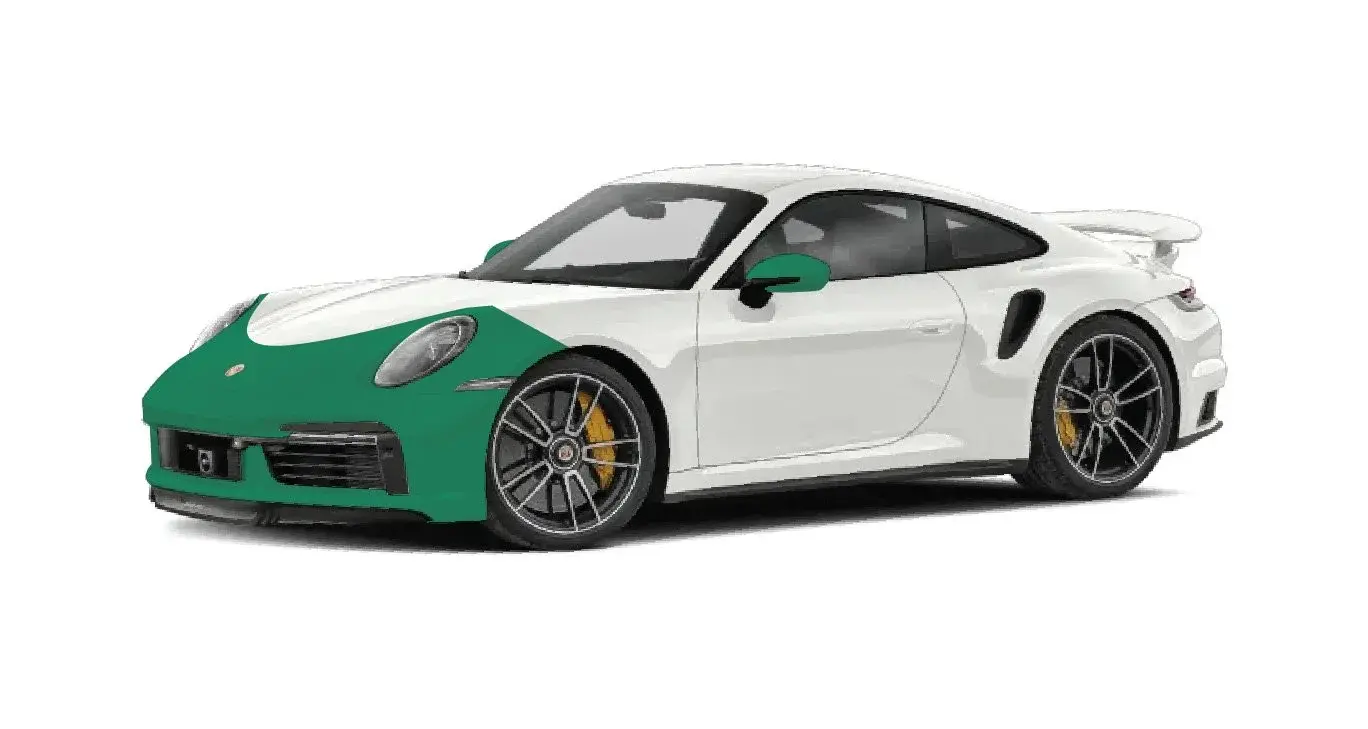
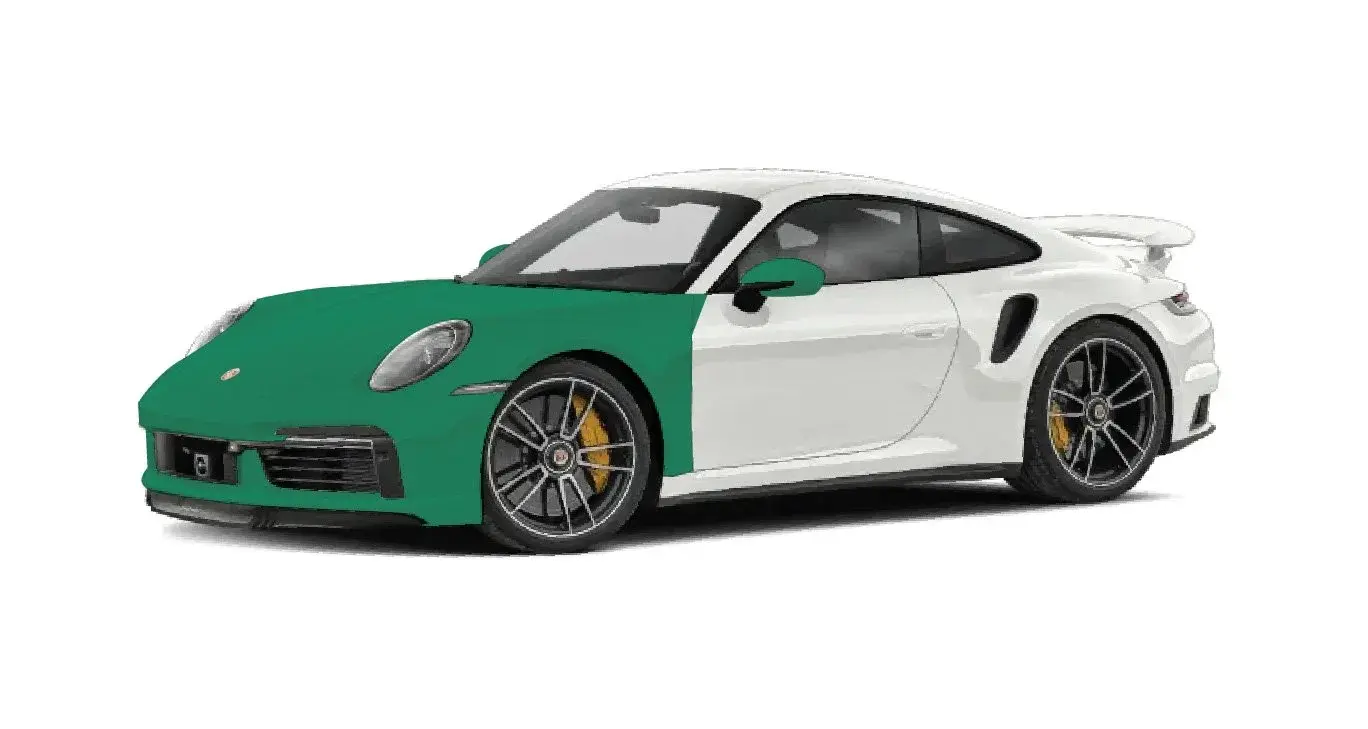
| Example coverage | Toyota Crown hood kit: leading hood edge and front fenders | Partial Front: the whole bumper, the forward part of the hood and fenders, plus headlights and mirrors |
| Film | Whatever the carmaker sources | LLumar Platinum, self-healing, gloss or matte |
| Who installs | Dealer or carmaker-approved installer | The shop, from software-cut templates |
| Warranty | Carmaker’s accessory warranty, by its terms | Ten years from LLumar, limited |
| When it can go on | Often at purchase; usually later too | Any time; paint is decontaminated and corrected first if needed |
| Price | Set by the dealer | From $850, quoted per vehicle |
What does a factory PPF kit cover?
Usually the sections the carmaker calls most prone to chips, and less than an aftermarket front-end package. Toyota Canada’s accessory list for the 2026 Crown Limited is a clear example of how a carmaker splits the car into kits.
| Toyota genuine accessory, 2026 Crown Limited | What Toyota says it covers |
|---|---|
| Pro Series Paint Protection Film, hood | “Kit includes leading hood edge and front fenders” |
| Pro Series Paint Protection Film, door cup | The recess behind each door handle, set of four |
| Pro Series Paint Protection Film, door edge | The doors’ vertical edges, kit of four |
| Rear bumper appliqué | A clear protective film on the rear bumper, with the Crown logo |
Notice what the hood kit leaves out: the front bumper isn’t part of it, even though it’s the most forward painted panel on the car. The shop’s Partial Front starts from the whole bumper and adds the leading hood and fenders, headlights and mirrors; Full Front films the whole hood and fenders as well.
Tesla’s route is broader. XPEL’s Canadian Tesla page offers full-front or full-body coverage in ULTIMATE PLUS gloss, STEALTH satin or COLOR PPF, and notes that “edges, corners, and secondary surfaces like door jambs may reveal portions of the original paint”, with enhanced coverage available at extra cost. Ask any installer, factory or not, where the film stops on each panel. Brookswood Tint wraps film around panel edges wherever the shape permits, and if a bumper calls for a relief cut, the installer marks out where it will go before starting.
How do the warranties compare?
A genuine accessory is covered by the carmaker’s accessory warranty, which runs for a few years; LLumar puts a 10-year limited warranty on Platinum. Both have conditions, and the installer matters to both.
Toyota Canada’s accessory warranty sets the term by when you buy and who installs:
| Toyota Canada accessory warranty | Coverage |
|---|---|
| Bought during the new vehicle purchase | 3 years or 60,000 km |
| Bought after the purchase, installed by Toyota | The balance of the new vehicle basic warranty, or 12 months or 20,000 km, whichever is greater |
| Bought from Toyota, installed elsewhere | Parts only, 12 months from purchase |
Toyota’s page also lists “cosmetic conditions and other deterioration caused by normal wear and tear” among the things not covered, and its film listing says the accessory warranty applies only when “a trained Toyota-approved installer” does the work.
On the aftermarket side, LLumar’s Platinum Gloss page promises Platinum a ten-year limited warranty from the manufacturer, with a footnote pointing to the dealer for the restrictions. In the shop’s published terms, the covered failures are yellowing, cracking, bubbling and peeling. Separately, LLumar’s PPF FAQ spells out one exclusion owners trip over: film edges lifted by pressure-washing or automatic car washes.
Does the car’s own warranty cover stone chips?
Not in the warranty we checked, and that gap is exactly what film is for. Tesla’s New Vehicle Limited Warranty for North America treats “paint and glass stone chips” as normal wear and lists “road debris (including stone chips)” among the environmental causes it doesn’t cover.
That holds whether your film is factory or aftermarket. The car’s paint warranty deals with defects in the paint, not with gravel off a truck tire, so the protection against chips is the film itself and the coverage it has. Other carmakers word their booklets differently, so read the paint section of yours.
The opposite question, whether adding aftermarket film affects the car’s warranty, has its own page: does PPF affect your car warranty.
Factory or aftermarket PPF: which should you choose?
Take the factory kit if you want something on the car before delivery and its coverage matches where your car gets hit. Go aftermarket if you want the bumper and full panels covered, a named film, or a longer film warranty.
A factory kit suits you if
- You want film on the car before you drive it home.
- The kit’s panels match your driving, such as door edges and cups on a car parked in tight spots.
- The car is leased and you want simple, light coverage under the carmaker’s name.
Aftermarket film suits you if
- Your commute runs along Highway 1 or gravel roads, and you want the bumper and front panels filmed in full.
- You want to choose the film, gloss or matte, and see a panel list before paying.
- You want the film itself backed by its maker for 10 years.
Combining them
The two can coexist: a genuine door-edge or door-cup kit and an aftermarket front end don’t compete for the same panels. Tell the installer what’s already on the car, panel by panel, so the new film is planned around it.
How do you book aftermarket PPF in Langley?
List the year, make and model on the PPF quote form, along with any genuine-accessory film the car already wears. Partial Front is $850 and up; the other three packages start at $1,550 (Full Front), $1,900 (Track) and $4,000 (Full Vehicle); a large car, complex panels or paint that needs correcting first moves the number up.
Expect a single day in the bay for Partial Front, and up to two for Full Front or the Track Package; Full Vehicle takes three to five. Leave the film unwashed for its first seven days, then keep to hand or touchless washing. Deciding between the first two packages is easier with partial vs full front PPF, and protecting a car from delivery day onward is covered on new car protection.