Which windows matter when children ride in the back?
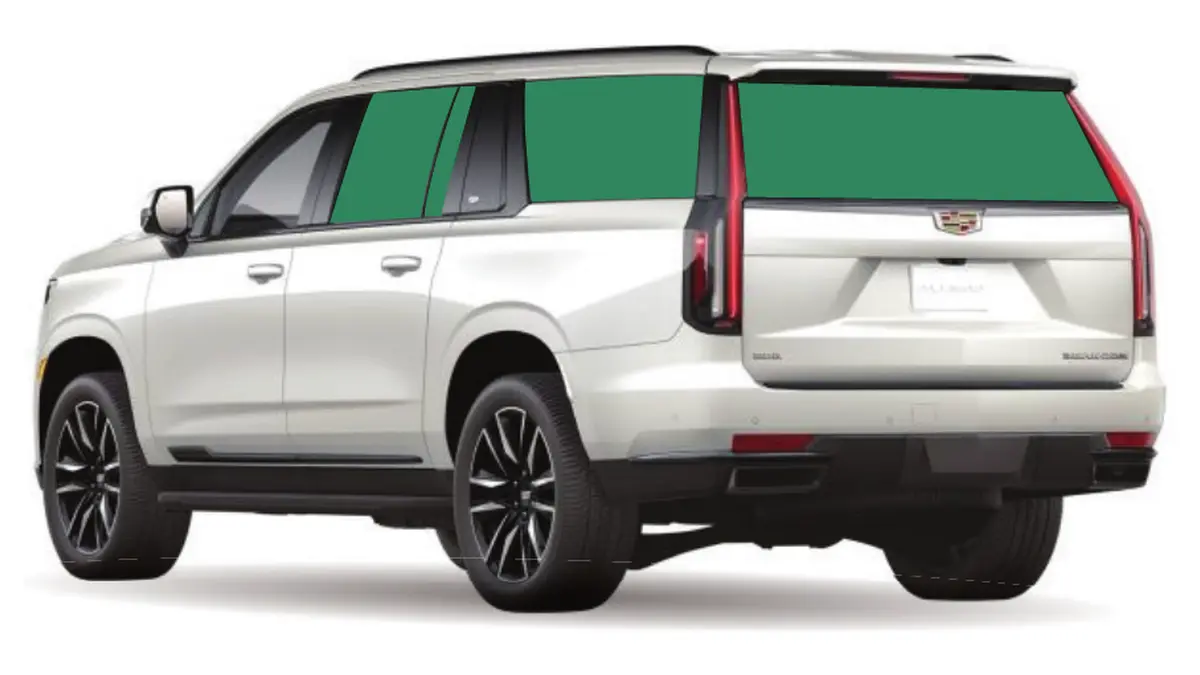
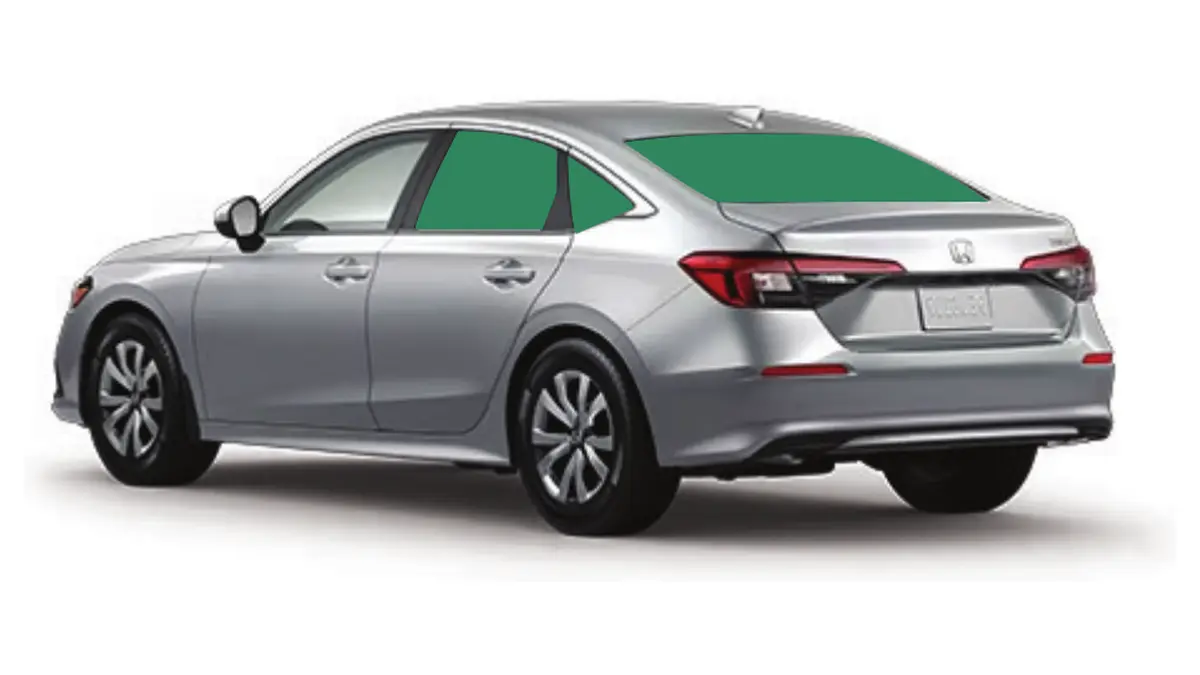
Every pane behind the driver: the rear door glass, the small quarter windows, any third-row windows and the back glass. BC’s child seating rules keep young children in those rows for years, and BC’s tint rule lets all of that glass take film at any shade.
The seating rules are in Division 36 of the Motor Vehicle Act Regulations. A rear-facing infant seat can’t be used in a seat with an active frontal airbag, and Transport Canada’s seat belt guidance notes that front airbags “can injure children” and that most provinces and territories allow children 13 and older to sit up front.
| Stage | What BC’s regulation requires | Glass closest to the child |
|---|---|---|
| Rear-facing infant seat | Until age one and 9 kg or more (s. 36.04) | The side window beside the seat; the child faces the back glass |
| Forward-facing seat | From age one and 9 kg, until 18 kg or more (s. 36.05) | The rear door window beside the seat |
| Booster seat | Until 145 cm tall, for children under 9 (s. 36.06) | The rear door window, or a third-row side window in a larger SUV or van |
On the legal side, MVAR s. 7.05(8) lets film of any darkness cover each side window behind the driver’s seat; the back window qualifies too, provided the vehicle has mirrors mounted outside on both the left and right.
How much UV gets through the back windows without film?
A few percent of UVA. Rear windows are usually tempered glass, and the Skin Cancer Foundation says tempered glass “does not block UVA rays effectively”.
In a 2025 study of 34 models built from 2015 to 2025, Axelson and colleagues found average UVA attenuation of 93.18% for the rear left window, 95.57% for the rear right and 95.36% for the back windshield. Put the other way round, roughly 4 to 7% of UVA was passing through. Each film listed on LLumar’s performance data sheet carries a UV figure above 99% over that same 300 to 380 nm band. Each window’s figure is listed in how much UV car windows block.
Should a family car get clear film or dark film?
For UV, it makes no difference, so choose on heat, glare and how private you want the back. An International Window Film Association consultant, writing for the Skin Cancer Foundation, says clear UV-protective film stops UV rays as well as a darker tint does.
| LLumar film | Visible light through | Solar energy rejected (TSER) | Glare reduction | Suits a family that wants |
|---|---|---|---|---|
| AIR 90 | 84% | 30% | 5% | UV filtering with the glass looking unchanged |
| AIR 80 | 77% | 43% | 13% | UV plus real heat rejection, still nearly clear |
| ATC 35 | 38% | 35% | 57% | A moderate shade at the starting price |
| IRX 35 | 39% | 54% | 56% | The same shade with more heat turned away |
| ATC 05 | 5% | 44% | 94% | Deep shade for naps and privacy |
Darker rear glass makes reversing and checking on the children harder after dark, a trade-off weighed in dark tint and night driving. Spec-sheet figures are measured on clear test glass, so a car with factory privacy glass will read darker once filmed. The near-clear option is described on LLumar AIR.
What can UV film do for a baby, and what can’t it?
It filters UV on the glass it covers. It doesn’t create shade: visible sunlight still falls through filmed glass onto a car seat, and Health Canada’s advice for babies is about direct sun, not only UV.
Health Canada’s tips for parents say a baby under a year old should be kept “out of direct sunlight to prevent skin damage and dehydration”, and advise against putting sunscreen on a baby less than 6 months old before asking a health care provider. The same page lists a canopy among the ways to keep a baby shaded, so an infant carrier’s own canopy and filmed glass work together.
Film also stays off the car seat itself. Transport Canada warns that adding third-party aftermarket products to a child restraint “could reduce the effectiveness” of it, and says no product should interfere with the harness. Film sits on the window, nowhere near the straps.
Parked cars: Health Canada’s instruction is short: “Never leave children in a parked vehicle.” No film changes that; local readings are on parked-car temperatures in Langley.
Why do the front windows stay bare on a family car?
Because BC bans film of every shade, clear UV film too, on the two front side windows, and permits no more than a 75 mm band across the top of the windshield. Young children shouldn’t be riding there anyway, given Transport Canada’s warning about front airbags.
The shop will fit film on front door glass if a driver asks, but tells them first that the film won’t be legal on BC roads. Officers can write a ticket, typically $109, or use a Notice & Order to have the film removed and the vehicle inspected. More on that in BC’s front window rules.
What does UV film cost for a family vehicle?
In LLumar ATC, the five-window sedan package starts at $240 and the seven-window package (full-size SUV or wagon) at $260. Moving up to ceramic IRX or clear AIR is priced per package.
| Vehicle | Windows covered | From |
|---|---|---|
| Sedan | Both rear doors, the rear quarters, the back glass | $240 |
| Full-size SUV or wagon | Second-row doors, quarter glass, the extended third-row panes, tailgate glass | $260 |
| Minivan | Sliding-door glass, third-row windows, the hatch | Quoted per van |
Expect two to four hours for a typical full tint on a sedan or SUV; vans run longer. Film and workmanship carry a lifetime warranty. Minivan specifics are on minivan window tint, and all the packages are listed on window tint pricing.
Booking film for a family car
Request a price through the tint quote form, giving the year, make and model, how many rows you use and whether UV, heat or privacy matters most, or ring or text 604 534 6433. Most cars go home the same day from Unit 312, 20560 Langley Bypass; the shop keeps the same 9:00 to 17:00 hours on Saturday as on weekdays, and doesn’t open Sundays.
For the first three to five days the rear windows must stay closed as the film cures, so switch on the driver’s window lock before the drive home. If the glass looks slightly hazy, or shows little pockets of water, during week one, leave it: both dry out by themselves. After that, the glass needs nothing more than soft microfibre and a product without ammonia, and no blade or scraper should touch the film, even to lift stickers or crayon.