How is minivan window tint priced?
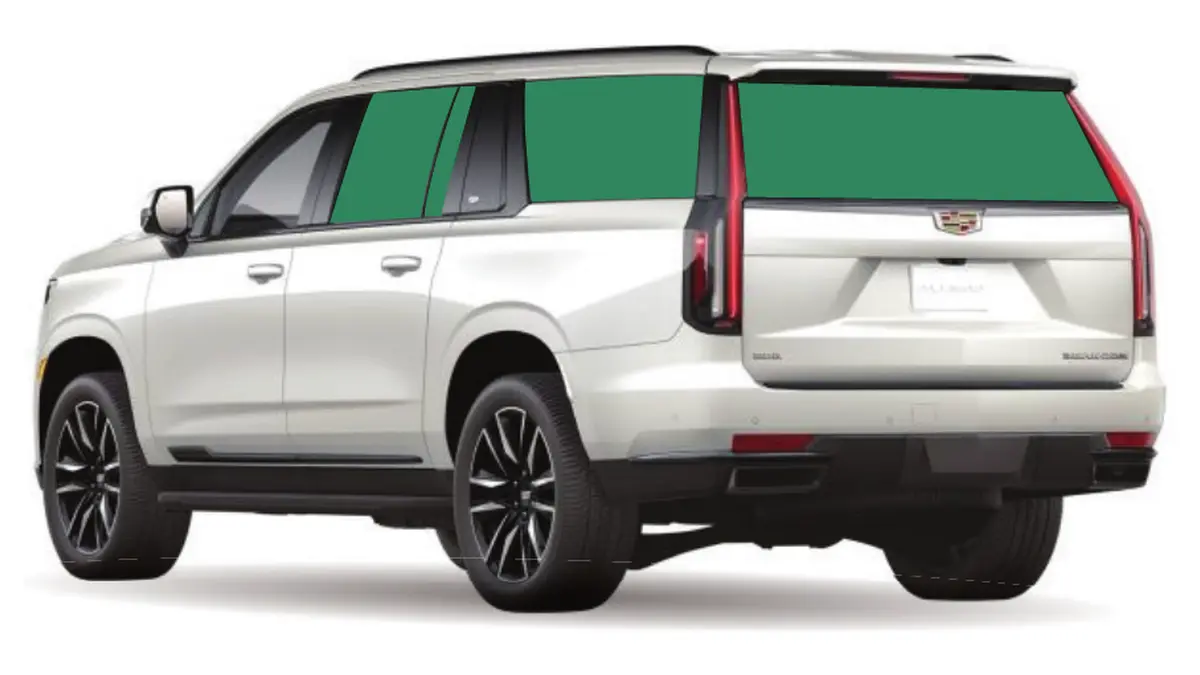
Each minivan is quoted from the van, measured against the posted full-size SUV and wagon package, which covers seven rear windows from $260 in LLumar ATC. The shop’s price list doesn’t include a minivan shape, so the count and size of your sliding-door, third-row and hatch glass set the figure.
| Minivan job | Glass | Price |
|---|---|---|
| Rear glass, LLumar ATC | Sliding-door windows, third-row windows, hatch | Quoted per van; the 7-window SUV and wagon package is from $260 |
| Rear glass, LLumar IRX or AIR | The same windows in ceramic | Quoted per package |
| Front doors | Driver’s and front passenger’s glass | Quoted, and not road-legal in BC |
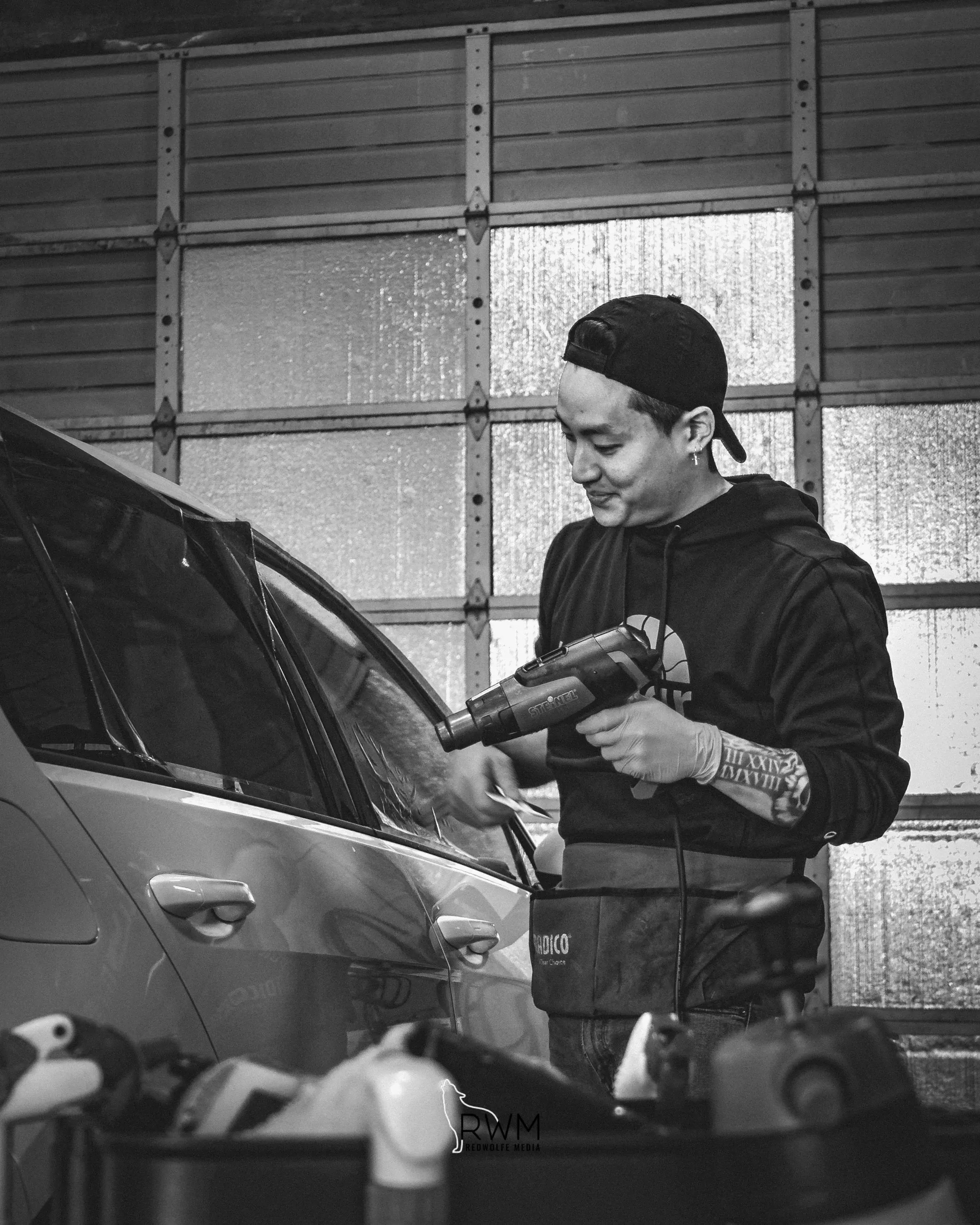
Whatever the figure, the film is genuine LLumar, cut on the shop’s plotter to a pattern for your van’s year, make and model, then heat-shaped and laid by hand, and the warranty on both the film and the labour lasts for life. Because the pattern is cut before the film reaches the van, no blade touches the glass or the door trim. Specific models have their own pages, including the Toyota Sienna and the Honda Odyssey.
Which minivan windows can be tinted in BC?
Everything from the sliding doors back: the sliding-door windows, the third-row windows and the hatch glass, at any shade. The driver’s and front passenger’s door glass can’t legally take film, however light.
That follows MVAR s. 7.05(8), which lets film sit on the side glass behind the driver anywhere, and on the rear window only if there’s a mirror outside on each side. If your van has small fixed panes ahead of the front doors, they sit forward of the driver’s seat back, so they fall under item 13d of the 2025 Vehicle Inspection Manual along with the door glass. Item 14c checks the mirrors on a van with a filmed hatch.
In BC: The shop will film a minivan’s front doors on request, after explaining that it isn’t road-legal. Mission RCMP says tint tickets typically run $109, and a Notice & Order can come with it: 30 days to clear the glass and get the van inspected, or a $598 fine.
How do sliding-door windows and built-in sunshades affect tint?
They don’t stop it, but they change how you look after the film in the first week and what the film is for. Two models show what to plan for.
Sliding-door glass that opens
Honda’s US specifications for the 2025 Odyssey list power windows with auto up and down for the front and second rows, so the sliding-door glass moves. Freshly filmed glass has to stay up for three to five days while it cures. Toyota’s 2021 Sienna Quick Reference Guide describes a window lock switch that “deactivates all passenger windows” while leaving the driver’s window working. Press it before the kids climb in, and the curing film is safe from small fingers on the switches.
Built-in sunshades
The same Honda sheet lists integrated sunshades for the second row on the EX-L and Sport-L, and for the second and third rows on the Touring and Elite. The 2021 Sienna guide shows pull-up side shades for the rear side window and, where fitted, the rear quarter window. A pull-up shade only works while it’s raised, and it blocks the view while it is; film works all the time, keeps the view out, and blocks UV with the shade stowed. Mention built-in shades when you book so the shop knows what’s in the door trim. Honda also lists acoustic glass in the front and rear doors of the US Odyssey Elite; if your van has laminated acoustic side glass, say so too, and read can you tint acoustic laminated side glass.
Should you tint over a minivan’s factory privacy glass?
Only to add heat control, or to go darker on purpose. Honda lists rear privacy glass as standard on every 2025 Odyssey trim in its US specifications, so on a van like that the privacy is already built in.
Film multiplies with that glass. A dark film on top quickly turns the back of the van very dark, which matters when you’re reversing into a school drop-off lane at dusk. Near-clear LLumar AIR goes the other way: on its AIR page, LLumar points out that factory privacy glass “lacks good heat control”, and its test figures for AIR 80 show 60% of infrared energy rejected with 77% of visible light still passing. Clear heat-rejecting film explains the film; tinting over factory tint does the arithmetic for darker options.
How much UV reaches the second and third rows?
It varies from vehicle to vehicle, and that uncertainty is the argument for film. The Skin Cancer Foundation notes that side and back windows are usually tempered rather than laminated glass, and studies have found them less consistent at blocking UVA than windshields.
When Dr. Brian Boxer Wachler measured 29 cars in 2016, the side glass stopped 71% of UVA on average, with only 4 cars above 90% (JAMA Ophthalmology study, via EurekAlert). Researchers testing 34 vehicles in 2025 found rear side windows on gas models close to the windshield’s UVA attenuation, but the hybrids and EVs in the sample didn’t follow that pattern (Axelson et al.). Rather than guess where your van falls, film takes the question away: LLumar rates every film the shop sells, from the 5% shade to near-clear AIR, as stopping more than 99% of UV.
Do the rules change if the minivan goes to Washington?
Possibly in your favour. Washington’s RCW 46.37.430 sets a 24% minimum on cars’ side and rear windows, but a vehicle the manufacturer identifies as a multipurpose passenger vehicle may carry darker film behind the driver, with both outside mirrors and reflectance no higher than 35%.
Whether your minivan qualifies depends on how its maker classifies it, so check before relying on it for regular trips south. The front doors are a different matter: BC’s rule applies to them the moment you’re back across the border. Work vans with cargo areas are covered separately on van window tinting.
How do you book minivan tint in Langley?
Send the year, make, model and trim, which windows you want done, whether the back glass is already privacy glass, and any built-in shades. The shop replies with the dyed and ceramic prices for your van.
Allow more than a sedan’s two to four hours, because vans take longer by the shop’s own reckoning, and more again if old film has to come off first. After pickup, keep the sliding-door windows up for three to five days and use the window lock. Any first-week haze or tiny water pockets will clear as the film dries. Use only soft microfibre and ammonia-free products on the film, and no scrapers. Request a price on the minivan tint quote form or by text at 604 534 6433. The seven-window package your quote is measured against is drawn on the SUV window tint page.