
What is acoustic laminated side glass?
Two sheets of glass bonded to a plastic interlayer that’s formulated to damp sound. The other common type of door glass is a single sheet of tempered glass.
Hyundai’s 2023 service bulletin for the Palisade lays out the difference. Tempered glass is heated and rapidly air-cooled, and breaks into small fragments. Laminated glass has polyvinyl butyral (PVB) film inserted between the sheets; when it breaks, “the PVB film holds the small fragments together.” The PVB also damps wind and road noise, and acoustic laminated glass “uses a different type of PVB film that is specifically designed for improved sound insulation.” Porsche builds its optional version in more layers: its noise-insulated glass has “five layers: glass, three layers of film, and then glass again”, with acoustic properties in the middle film.
Does window film work on laminated glass?
Yes, the same way it works on tempered glass. Film bonds to the inner surface of the pane, and on a laminated window that surface is plain glass, with the acoustic layer sealed away behind it.
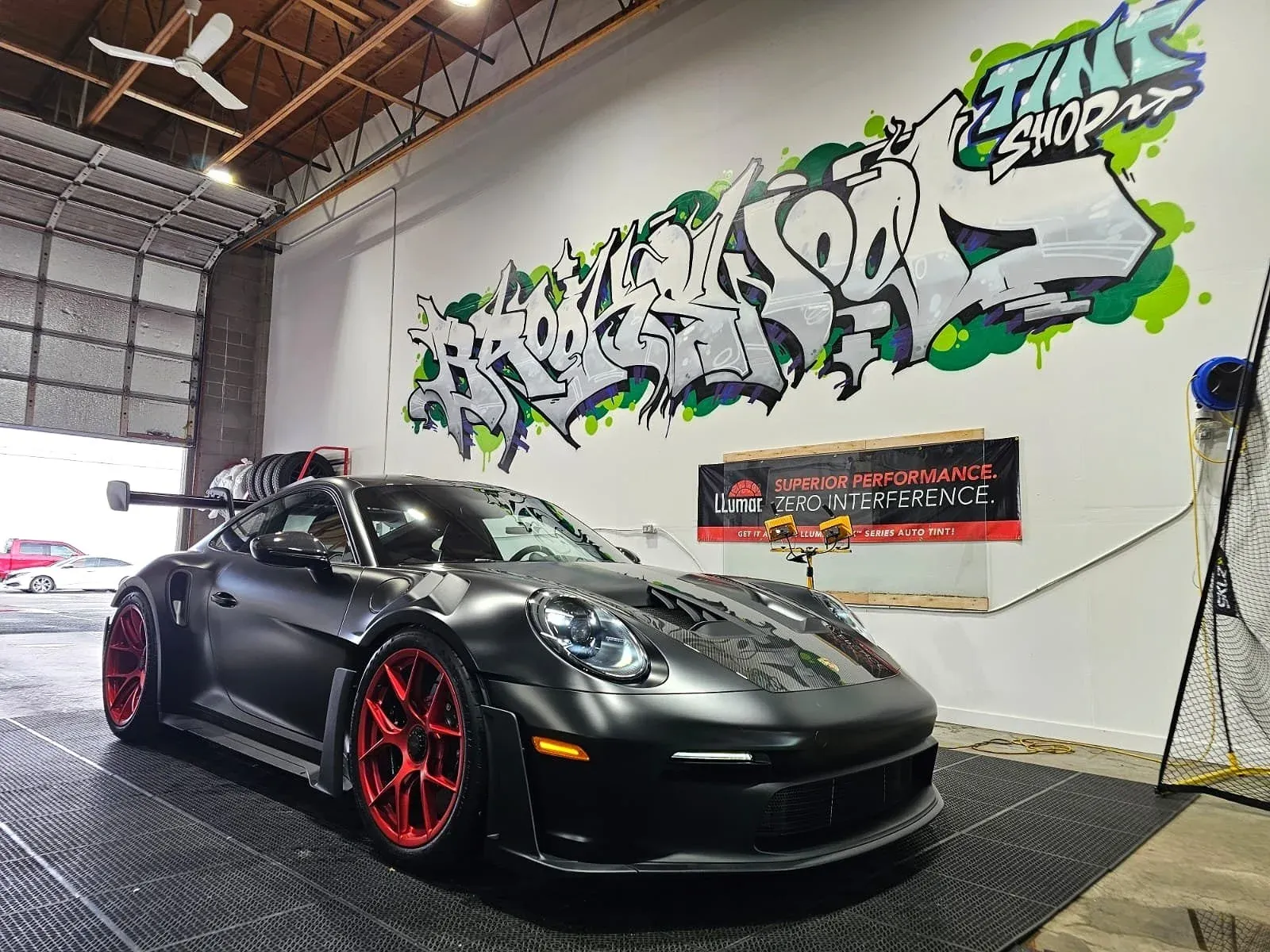
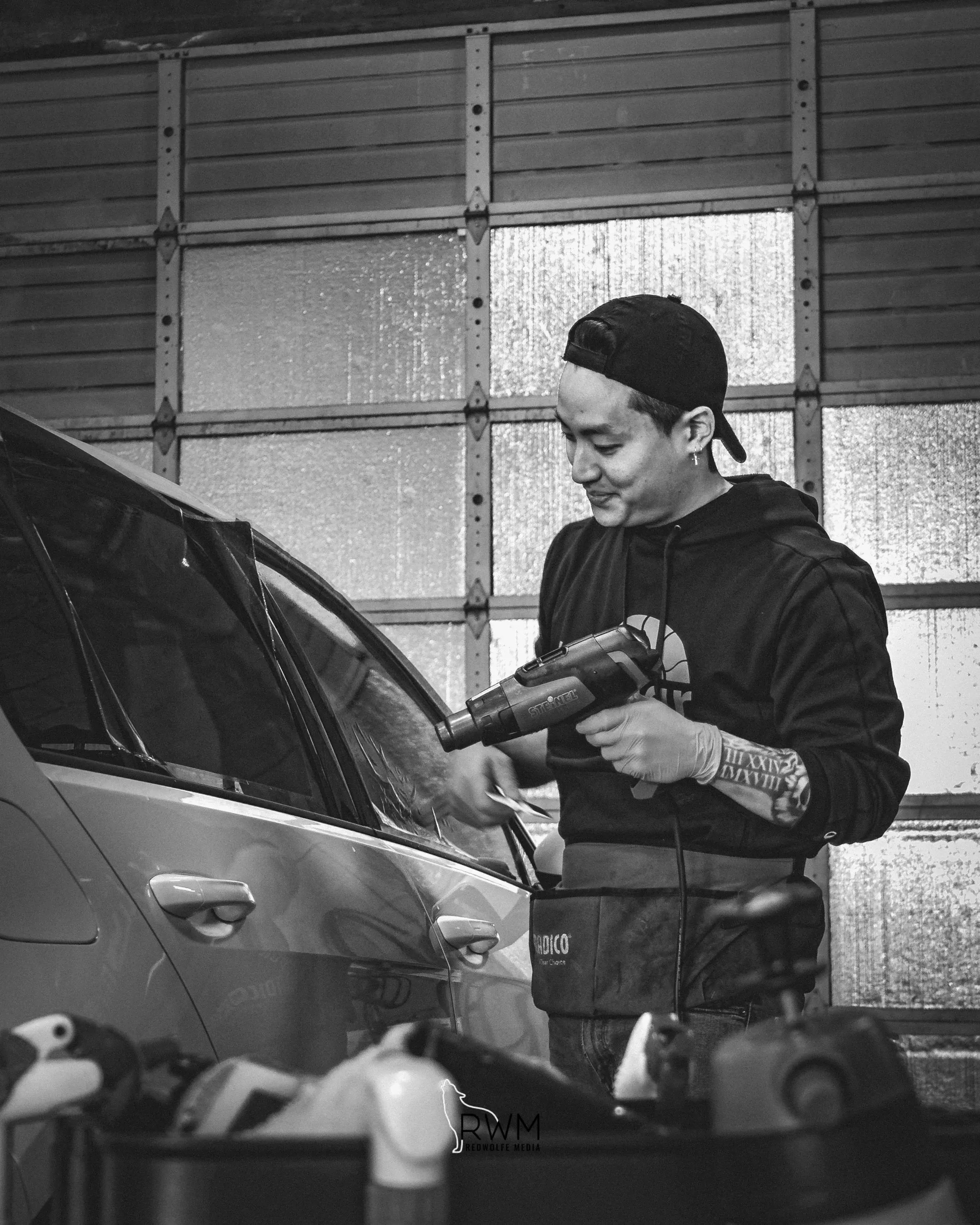
LLumar’s tint FAQ notes that car tint is typically applied to the interior glass surfaces. Nothing about the installation changes. At Brookswood Tint each piece comes off a computerized plotter already cut for the exact vehicle, then it’s heat-shrunk to the curve of the window and fitted by hand. If it ever has to come off, the shop softens it with steam and dissolves the adhesive from the surface. What laminated glass does when someone breaks it, with or without film, is covered on whether window tint holds glass together in a break-in.
Which car windows have acoustic laminated glass?
It depends on the model, the trim and even the model year. Makers tend to list it in their trim specifications, and the examples below show how much it varies.
| Vehicle | Where the maker says acoustic glass goes | Filmable in BC? |
|---|---|---|
| Honda Pilot, 2024, Touring and Elite | Front-door windows | Front doors: no |
| Hyundai Palisade, 2023, upper trims | Rear-door privacy glass; front doors on most trims | Front: no. Rear: yes |
| Hyundai Palisade, 2020 to 2022 | Laminated, non-acoustic privacy glass in the rear doors | Rear doors: yes |
| Porsche four-door models, optional | “Throughout, including in the tiny triangular panes” | Rear doors and quarter panes: yes |
Honda’s Pilot feature guide says the Touring and Elite “add acoustic glass in the front-door windows for further noise reduction.” Porsche says its thermally and noise-insulated glass “is available for all four-door Porsche models.” If you don’t know what your car has, mention it at booking; the shop works from the year, make, model and trim.
Does tint still help on laminated glass?
Yes, for heat and glare. The UV gain is smaller, because laminated glass already stops most UVA on its own.
A 2025 study in Archives of Dermatological Research summarizes the two glass types: laminated glass “blocks almost all UVR, allowing only 2% transmission of UV-A radiation”, while tempered glass blocks “only roughly 21% of UV-A.” Every LLumar film on the spec sheet blocks over 99% of UV, which matters most on tempered panes. On laminated ones, the reasons to add film are the other columns: IRX ceramic rejects 50 to 62% of total solar energy and about 60% of infrared, clear AIR 80 rejects 60% of infrared while letting through 77% of visible light, and the darker shades cut glare by up to 94%.
What does BC law say about tinting acoustic glass?
The glass type makes no difference; the window’s position does. Front side windows can’t take film in BC, acoustic or not, and rear side windows can take any shade.
BC’s rule, MVAR s. 7.05(8), is about position: film may go on the side glass behind the driver, on the back window if both outside mirrors are fitted, and on a 75 mm strip at the top of the windshield. Clear film counts as film. That matters on cars like the Pilot Touring, where the acoustic panes are the front doors: they’re the windows BC keeps clear. Brookswood Tint will put film on front doors on request, but only once the customer has heard that it isn’t road-legal and can bring a $109 ticket or a Notice & Order that sends the car for inspection. The full rule is on tinting front windows in BC.
What should you check before tinting laminated privacy glass?
How dark it already is, and whether it looks hazy in sunlight. Both come from the glass, not the film.
Hyundai’s bulletin explains that laminated privacy glass gets its shade from a dark PVB interlayer, and that privacy glass typically lets through less than 20% of visible light. Any film you add multiplies with that: a 20% film over glass passing 20% leaves about 4%. The same bulletin says some acoustic laminated privacy glass can look slightly hazy in direct sun and calls it normal for that glass. If yours does, point it out at drop-off. On that kind of glass, a near-clear film like LLumar AIR adds heat rejection without making the window much darker.
Booking tint for a car with acoustic glass
Tell the shop the year, make, model and trim, and which doors you know are laminated. A sedan or pickup’s five rear windows start at $240 in LLumar ATC, a full-size SUV’s seven at $260 and a coupe’s three at $220, with IRX and AIR quoted as upgrades; the ceramic options are laid out on ceramic window tint. Tinting all the glass on a sedan or SUV is typically a two-to-four-hour job. Ask for a price on the window tint quote form, or phone 604 534 6433 (texts work too).