What is SiO2?
Silicon dioxide, a compound of silicon and oxygen. PubChem, the US National Library of Medicine’s chemistry database, gathers the standard descriptions: silicon dioxide, or silica, is “an oxide of silicon with the chemical formula SiO2,” and a natural compound “found mostly in sand.”
It comes in two broad kinds. Crystalline silica has three main varieties, quartz, tridymite and cristobalite; amorphous silica is the non-crystalline form.
How does SiO2 show up on a car?
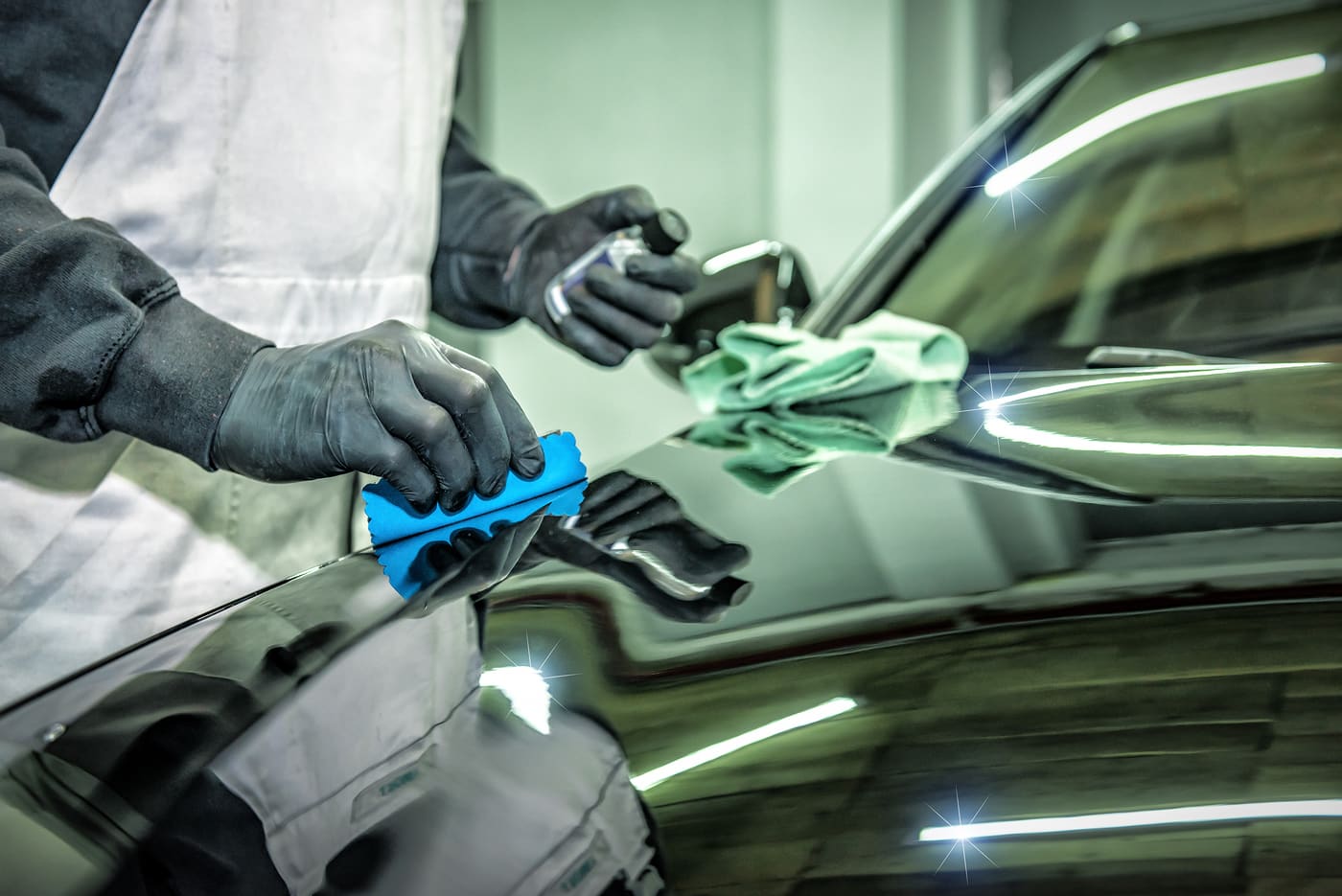
In coatings, and in at least one carmaker’s matte paint. CRC’s Ceramic Armour data sheet describes a silicon dioxide-based coating that “chemically bonds to the vehicles’ paintwork” and “creates a hydrophobic layer.” The label isn’t universal, though: 3M’s Ceramic Coating 39901 lists its chemistry as a “siloxane polymer blend.” The word “ceramic” on a bottle tells you less than the data sheet does.
Kia shows a different use. Its matte paint bulletin for the 2022 EV6 and Sportage diagrams silicon dioxide in the matte surface diffusing reflected light, and tells technicians never to rub it with anything that could polish it. Coating a matte finish follows different rules, covered on matte paint coating.
One thing SiO2 isn’t: the ceramic in window tint. Ceramic tint is a nano-ceramic film on the inside of the glass, and ceramic tint versus ceramic coating separates the two.
What does SiO2 mean for a coating at Brookswood Tint?
The shop’s coating is a graphene-ceramic, built on SiO2 with graphene added; what graphene adds is weighed on graphene versus ceramic coating. Essential is one layer, Performance is two layers over a two-stage paint correction, and Signature is four layers over full correction.
Expect the car to stay 1 to 3 days, and the coating needs a dry first day after you drive away. Taking a coating off later means abrasion: I-CAR passes on PPG’s advice to buff it off with a heavy-duty compound on a wool pad. Coatings are quoted per vehicle through the ceramic coating page.