What does “graphene” mean on a coating label?
It names an ingredient. Graphene is a form of carbon, and a coating that carries the word has graphene, or a processed form of it, mixed into its liquid formula.
Australia’s national science agency, CSIRO, defines the simplest graphene as a single sheet of carbon atoms bonded in a repeating hexagon pattern, and notes that it can also be made as films, powders and dispersions whose properties are tuned for particular products. A car coating uses it in one of those processed forms. XPEL’s PRO SERIES GRAPHENE data sheet is a useful real-world example: it names “Polyzylezene and graphene oxides” as what the product is engineered with and gives a cured thickness of 2 to 3 µm. Those are one maker’s figures, not the shop’s.
How is a graphene coating applied?
By hand, one panel at a time, onto paint that has already been cleaned and polished, then left alone to cure. XPEL’s sheet lists a foam block and a microsuede towel as the tools for its product.
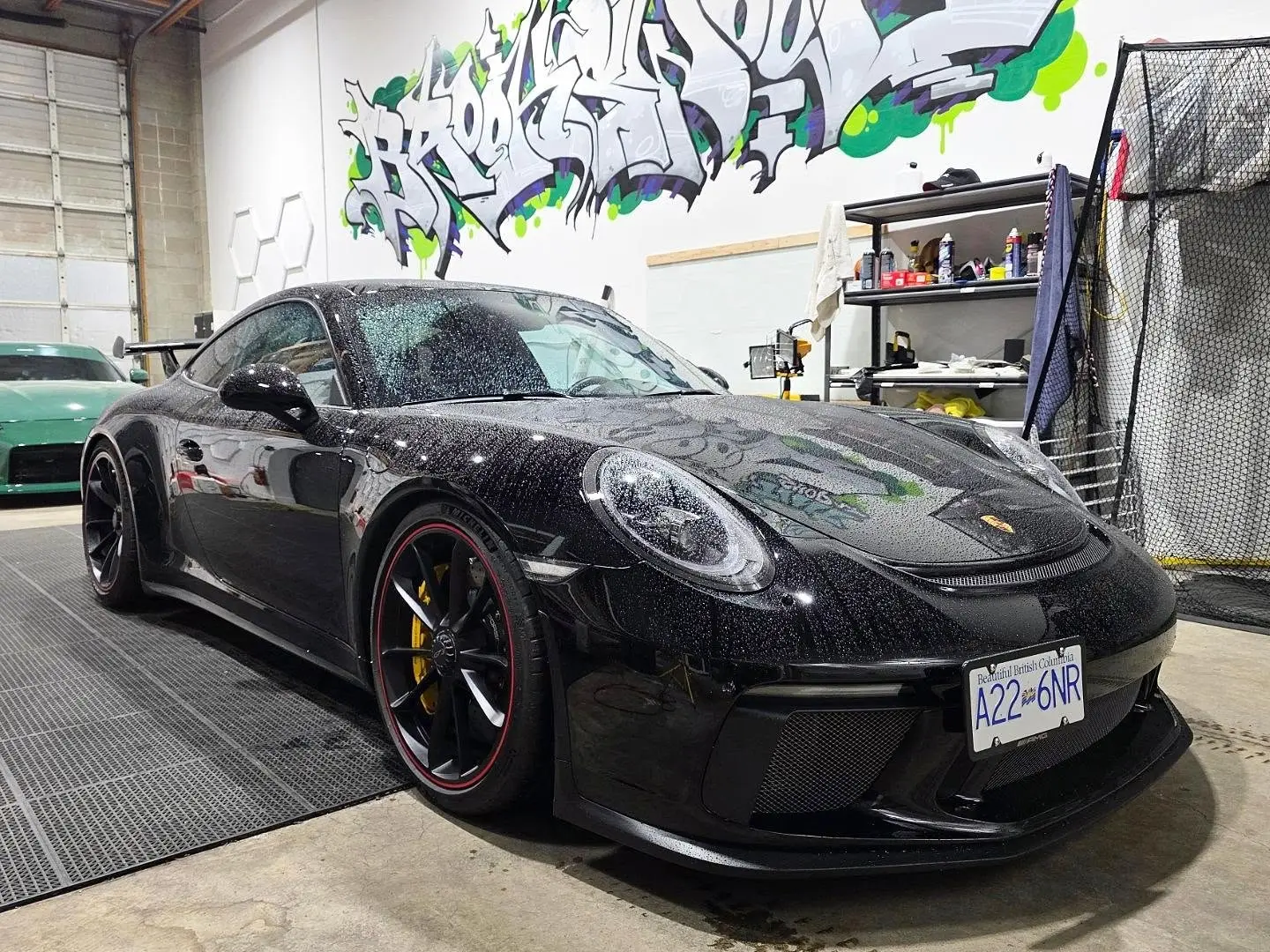
At Brookswood Tint the paint is prepared before any coating touches it: washed to strip bonded grime, clayed, measured for thickness, then machine polished in one stage or more. From there the packages differ in how many layers go on:
| Package | Layers of graphene-ceramic | Paint work beneath |
|---|---|---|
| Essential | 1 | Cleaned, clayed paint with a polish |
| Performance | 2 | Compound, then polish |
| Signature | 4 | Correction in full |
The car stays one to three days, and it should stay dry for 24 hours after pickup. For help picking a layer count, see the guide to coating layers.
Why does a graphene coating matter on a car in BC?
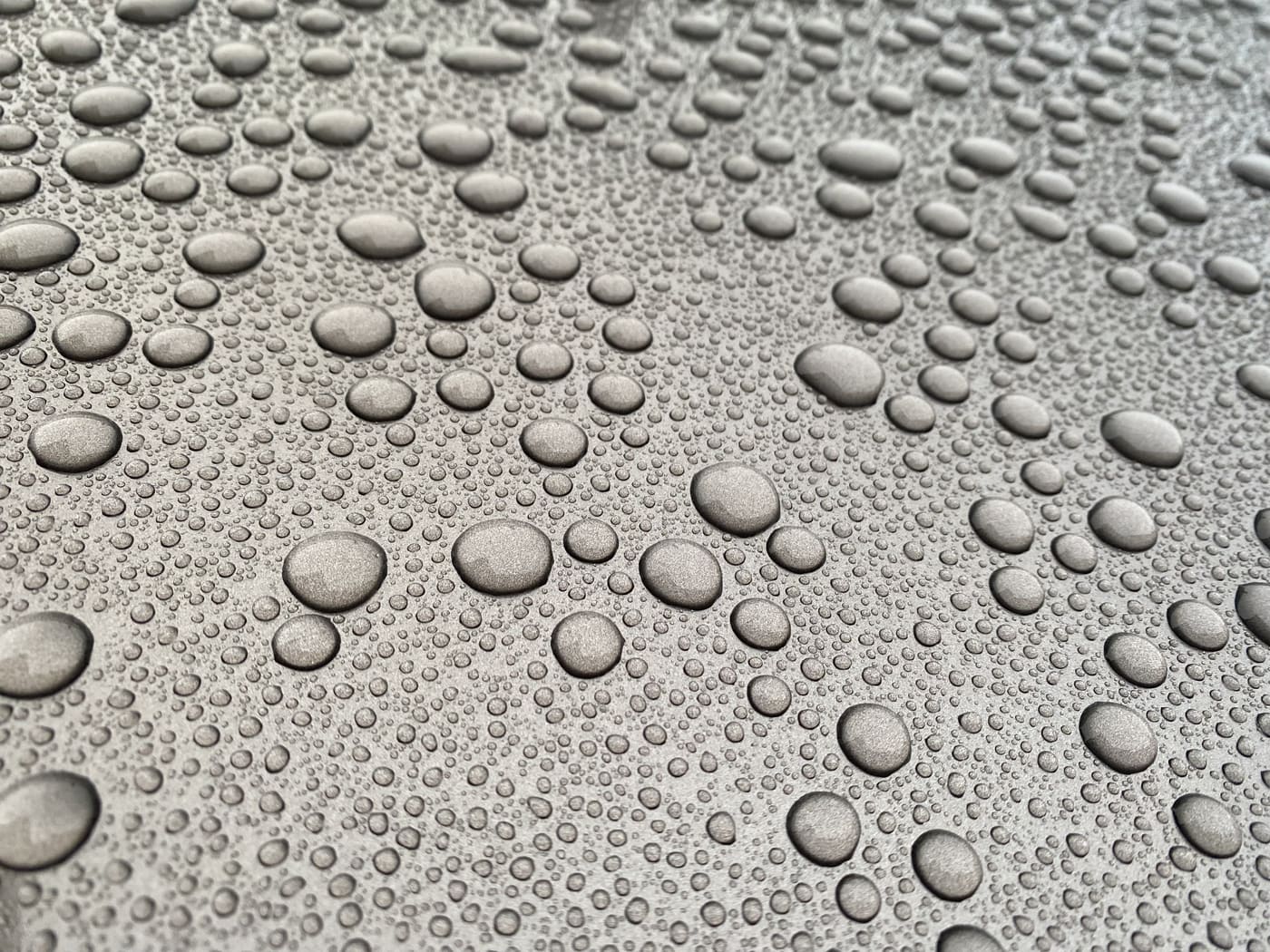
Mostly because of water and winter grime. A slick, water-repelling layer lets rain, road film and salt residue rinse away with less scrubbing, which is the job it does through a Fraser Valley winter.
Rain is seasonal here: Environment and Climate Change Canada’s Abbotsford normals put November’s average rain at 241 mm, while July gets just 43 mm. On the highways, TranBC says its contractors work with salt and brine, anti-icing agents and abrasives. What a few microns of coating can’t do is absorb a flying stone, so chip protection on the front end is a film job, compared in PPF vs ceramic coating.
Where graphene coating comes up at Brookswood Tint
On every coating the shop sells. Its menu calls the product graphene-ceramic, and all three packages use the same one; the shop does not publish a lifespan in years.
The service itself, with what each package covers, is on graphene coating in Langley. If you’re weighing a graphene-labelled product against a plain ceramic one from another shop, graphene vs ceramic coating sets the two side by side. The water behaviour these products are sold on is defined under hydrophobic, and SiO2 has an entry of its own.