How do ceramic tint and ceramic coating compare side by side?
Ceramic tint is a film for your windows and a ceramic coating is a treatment for your paint. They solve different problems, go on different surfaces and are priced differently, so one never stands in for the other.
| Ceramic window tint (LLumar IRX) | Ceramic coating (graphene-ceramic) | |
|---|---|---|
| What it is | Window film with nano-ceramic particles | Liquid polymer bonded to the surface |
| Where it goes | The inside face of the glass | Paint, and with some packages wheels, glass and trim |
| Main job | Less solar heat, UV and glare in the cabin | Gloss, water beading, easier washing |
| Published numbers | TSER 50–62%, IRER 59–61%, UV over 99% | None published by the shop |
| Choices | Shades of 5, 15, 35 or 50% | One, two or four layers |
| Starting price | Quoted per package, on top of ATC rear glass from $220 | Quoted per vehicle |
| Time in the shop | Same day for most cars; 2 to 4 hours for a full sedan or SUV | 1 to 3 days |
| Right after | Windows up for 3 to 5 days | Keep the car dry for 24 hours |
| Warranty | LLumar lifetime limited on the film, plus the shop’s lifetime workmanship warranty | Ask when you get a quote |
The tint figures are LLumar’s own, from its performance data sheet LL0116NAEN, measured on single-pane 6 mm clear glass, so a real car’s glass will read somewhat differently.
What does ceramic window tint do?
Ceramic tint cuts the heat, UV and glare that come through your windows. LLumar says IRX relies on “nano-ceramic technology” aimed at infrared heat, and its spec sheet rates every IRX shade above 99% UV rejection.
| IRX shade | Measured visible light | Total solar energy rejected (TSER) | IR energy rejection (IRER) |
|---|---|---|---|
| IRX 05 | 6% | 62% | 60% |
| IRX 15 | 20% | 59% | 61% |
| IRX 35 | 39% | 54% | 60% |
| IRX 50 | 54% | 50% | 60% |
Because there’s no metal in it, IRX leaves phone, GPS and radio signals alone; LLumar lists “easy electronic connectivity” among its features on the IRX page. How it stacks up against the shop’s dyed film is covered in ceramic vs dyed window tint, and whether it’s worth paying extra for in is ceramic window tint worth it.
In BC: under MVAR s. 7.05(8), the rear side windows can take film of any darkness, and so can the back window once both outside mirrors are fitted, though inspection item 14c also fails back-glass tint that is reflective, isn’t allowed under ANSI/SAE Z26.1, or materially impairs the driver’s view. Glass beside the driver and front passenger may not carry film of any shade, ceramic included, and a windshield may only take it in its top 75 mm. Film in those places can bring a $109 ticket (Mission RCMP) or a Notice & Order to remove it. The shop fits it only on request, after explaining that risk.
What does a ceramic coating do?
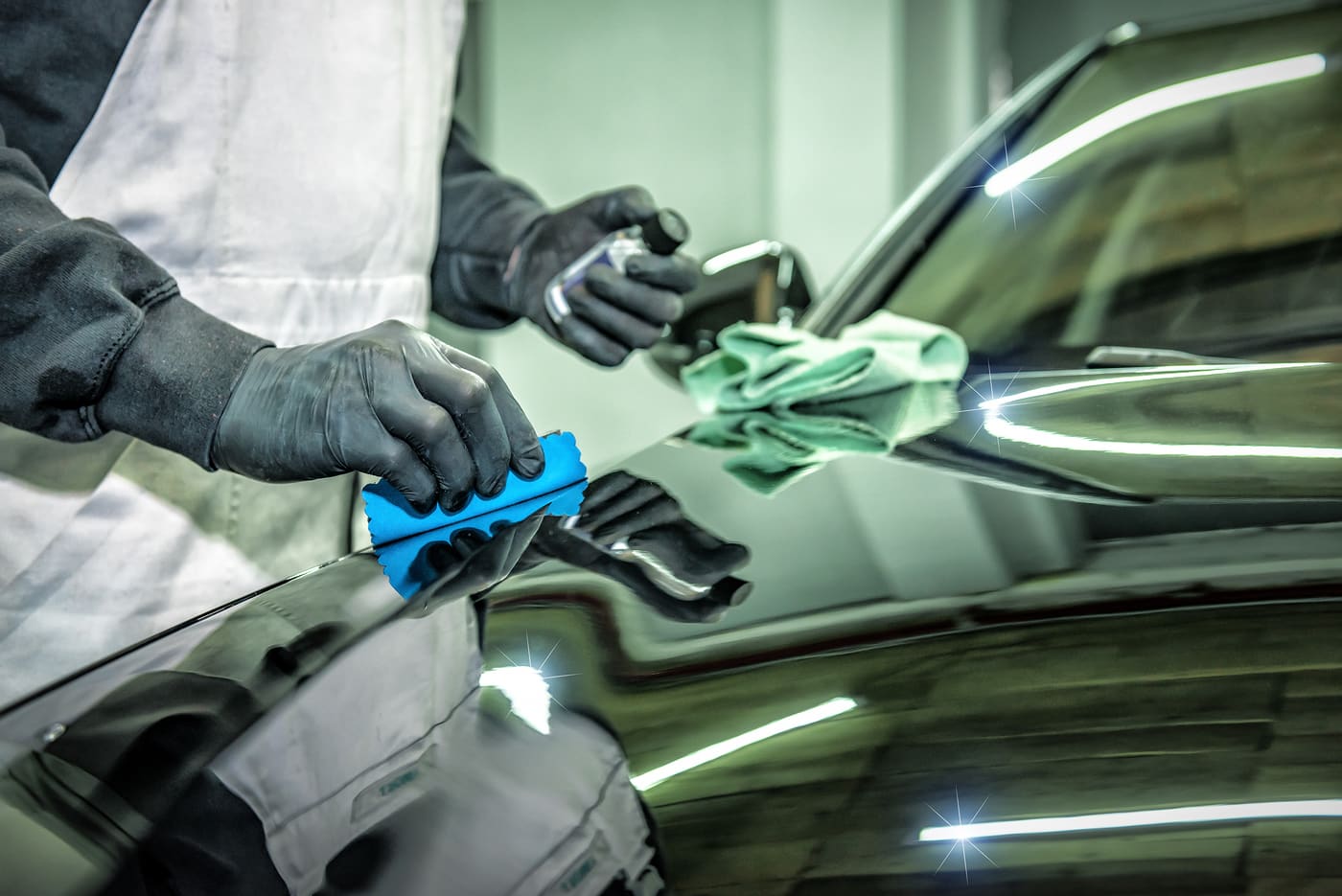
A ceramic coating protects the paint from what lands on it and sits there: road grime, winter salt, droppings and bug residue. It adds gloss and makes the car easier to wash, but it doesn’t cool the cabin and it doesn’t stop rock chips.
The shop’s coating is a graphene-ceramic liquid polymer that it describes as bonding chemically to the paint. There are three packages: one layer (Essential), two layers on paint given a two-stage correction (Performance), or four layers after full correction (Signature). Prep comes first on every one, with decontamination, clay and machine polishing, since the coating seals in whatever it covers. The car is with us for one to three days and stays dry for 24 hours after pickup. What it changes in a climate this wet is set out in how a coating copes with BC rain, and the packages on ceramic coating.
Why do people confuse ceramic tint with ceramic coating?
Because the same word sits on two products that are both sold as protection, sometimes by the same shop, this one included. In tint, “ceramic” describes particles inside a film; in a coating, it describes the chemistry of a liquid layer.
LLumar’s own tint FAQ lists four kinds of window film: “ceramic, metallized, dyed and clear construction options”. There, ceramic is a type of film, set against dyed and metallized. A coating calls itself ceramic for a different reason: the shop describes its product as a ceramic (SiO2) coating with graphene added.
The confusion grows because coatings can go on glass too. The shop’s Performance and Signature coating packages include glass, so “ceramic on my windows” can mean a film on the inside or a coating on the outside. The two do different things, and one has a hard limit: for EyeSight-equipped Legacy and Outback models from 2013 on, a Subaru service bulletin says “Inside or outside water-repellant windshield coatings must never be used,” because of the system’s stereo camera. Calling a product ceramic also changes nothing about BC’s tint rule, which bars film on the front side windows whatever it’s made of.
Can you have ceramic tint and a ceramic coating on the same car?
Yes, and they don’t get in each other’s way. Film sits on the glass’s inner face and the coating on the paint, so both can be done in one visit, and the aftercare rules overlap rather than conflict.
A full tint fits easily inside the one to three days a coating takes. For the first day, keep the car dry for the coating; for the first three to five, keep the tinted windows up. Adding paint protection film changes the sequence only on the paint side: any correction comes first and the film goes on before the coating, while the glass can be tinted at any point in the visit. The timing for all three together is worked out in booking tint, film and a coating together.
How much do ceramic tint and a ceramic coating cost?
Ceramic tint is priced by the glass: the posted package price in dyed ATC film, with IRX quoted on top for your vehicle. A coating is priced per vehicle, mostly by how much correction the paint needs and how many layers you choose.
| Job | What sets the price | Posted starting point |
|---|---|---|
| IRX on a sports coupe’s rear glass (3 windows) | The package, plus the IRX upgrade | $220 in ATC, IRX quoted on top |
| IRX on a sedan or pickup’s rear glass (5 windows) | The package, plus the IRX upgrade | $240 in ATC, IRX quoted on top |
| IRX on a full-size SUV or wagon’s rear glass (7 windows) | The package, plus the IRX upgrade | $260 in ATC, IRX quoted on top |
| Essential, Performance or Signature coating | Layers, surfaces and paint correction | Quoted per vehicle |
Tinting several windows in one visit normally costs less than their separate prices combined, and the shop quotes that per car. Ask for the tint in both ATC and IRX on one quote and you’ll see the ceramic difference in dollars. If you’re comparing IRX with the shop’s near-clear ceramic, see LLumar IRX vs LLumar AIR.
Ceramic tint or ceramic coating: which should you choose?
Choose by the complaint. A hot cabin, sun on the back seats or glare calls for ceramic tint; paint that’s hard to keep clean and dull after winter calls for a coating; if you have both complaints, book both.
Ceramic tint suits you if
- The cabin bakes in summer, or passengers in the back complain about the sun.
- You want UV protection and privacy on the rear glass.
- You’d like a lighter shade that still handles heat.
A paint coating suits you if
- The car is parked outside and the paint never seems clean.
- You want water to bead and the car to rinse clean.
- The paint is new or about to be corrected.
Tint and a coating together suit you if
- The car is new, you’ll keep it, and both heat and upkeep matter to you.
Where Brookswood Tint stands on the two ceramics
We sell both and would rather you buy the one that fixes your real problem. A coating won’t cool the back seat, and no window film makes paint bead. If a quote you’ve been given says “ceramic” without saying whether it’s film or a coating, ask which, and which surface it goes on.
Booking ceramic tint or a coating in Langley
For tint, list the car and the windows on the tint quote form and ask for ATC and IRX side by side; the service is described on ceramic window tint. For a coating, use the coating quote form and mention the paint’s condition. Booking both? Say so on either form and the shop will plan one visit.