How do you tell a water spot you can wash off from one that needs polishing?
Wash and dry the panel, then look at it in good light. If the rings are gone, they were sitting on the paint; if a dull ring stays on clean, dry paint, the drop has etched the clear coat and needs machine polishing.
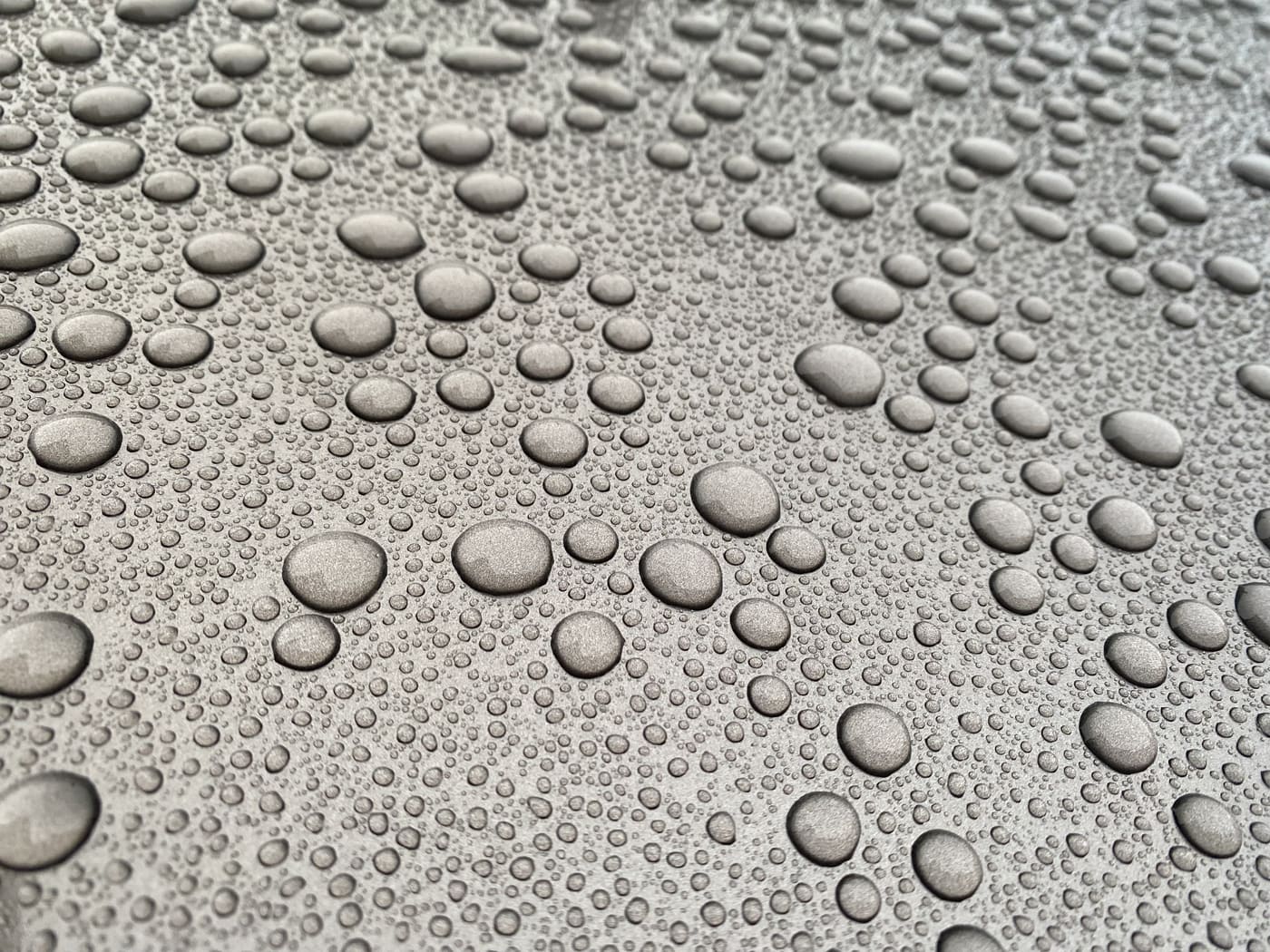
PPG, the paint maker, describes water spotting as “dulling of gloss in spots or large areas due to water droplets sitting on the surface.” What you see after a careful wash tells you which stage the damage has reached:
| After a careful wash and dry | Where the damage is | What removes it |
|---|---|---|
| Rings are gone | Residue on the surface | Nothing more; dry the car properly next time |
| Chalky rings remain and feel slightly rough | Minerals bonded to the surface | A water-spot remover made for car paint, or a clay bar |
| Smooth, dull rings that catch the light | Etched into the clear coat | Machine polishing |
| Rings still visible after correction, or showing a different colour | Through the clear coat | Sanding and refinishing |
The middle two rows look alike at a glance. Run a clean fingertip over the spot: residue usually feels like a bump, while an etch is smooth and only shows when light hits it at an angle.
What causes water spots on cars around Langley?
Drops that dry where they land, mostly on hot paint. PPG names “washing vehicle in the sun” as a cause and tells owners to “wash vehicle in the shade and wipe dry completely.”
The Fraser Valley’s weather sets up both halves of that. For the Abbotsford airport station, the federal climate normals for 1981–2010 give July an average high of 24.0 °C and 43 mm of rain, against 241 mm in November. The dry, warm months are when a driveway wash or a sprinkler’s spray is most likely to dry on the paint before it runs off.
What’s in the drop matters too. PPG’s entry on acid rain and contamination lists “agricultural and horticultural sprays” and industrial effluent among the sources, and notes that the damage “may be accelerated with time and higher temperatures.” By that account, warm weather and a long stay beside sprayed fields, nurseries or industrial sites both work against the paint.
How does the shop remove etched water spots?
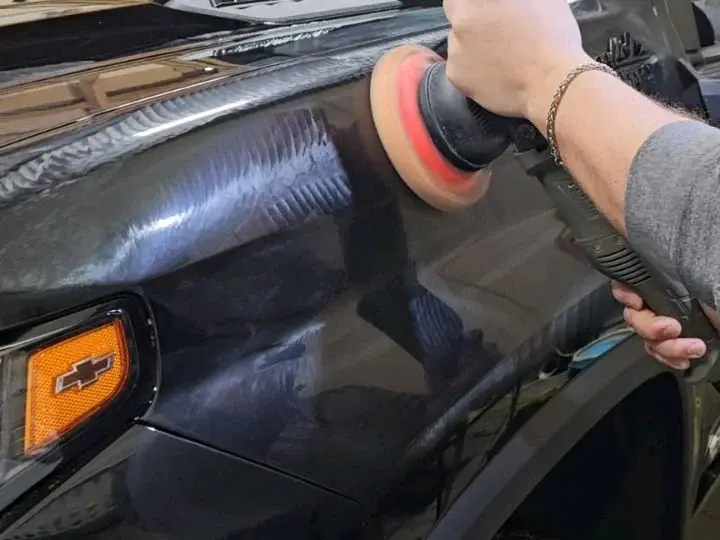
By machine polishing, lightest stage first, after the paint thickness has been measured. The reading shows how much clear coat is available before any is removed.
Polishing removes etching by taking the clear coat around each ring down to the bottom of the mark, so every pass costs a little paint. That’s why the order of work matters. A Chrysler collision bulletin, 31-001-13, on removing overspray that it says can come from industrial fallout, tells technicians to “always begin using the least aggressive method”, moving from washing to clay, then polishing, then wet sanding only when the previous step fails. It caps clear coat removal at 0.2 mils for polishing and 0.5 mils for wet sanding and polishing, and puts typical clear coat at 1.5 mils.
The shop’s three correction levels follow the same logic:
| Level | What it is | Time | For water spots |
|---|---|---|---|
| Enhancement polish | One fine-polish stage | About a day | Built for light swirls and haze; faint marks at most |
| Two-stage correction | Compound to cut, then polish to refine | 1–2 days | The level the shop lists for water spots |
| Multi-stage restoration | Wet sanding if the paint can take it, then heavy compounding and refining | 3+ days, quoted after inspection | Deep or widespread etching on paint with clear coat to spare |
The thickness readings decide how far each panel can go. The full process is on paint correction, and the middle level has its own page, two-stage paint correction.
When can’t water spots be polished out?
When the etch goes deeper than the clear coat can safely give up. PPG says “severe cases may need to be sanded and refinished”, and no polish puts back paint that has been eaten away.
Three other situations change the plan:
- Thin clear coat. If readings show earlier polishing or a respray has left little to work with, the shop will say so and leave the faintest rings rather than thin the paint further.
- Ceramic-coated paint. Polishing out an etch removes the coating on that panel along with it, so the panel needs coating again.
- Matte or satin paint. Polishing adds gloss, so a factory matte finish can’t be corrected this way. Ask before booking.
How do you stop water spots coming back after correction?
Control how the car dries, and give the paint a layer that sheds water. Corrected paint is bare clear coat, so the habits that spotted it will spot it again.
PPG’s prevention list for contamination is short: avoid contaminated air where you can, wash the car often, clean anything that lands on it straight away with mild soap and water, and keep the topcoat protected. Dry the car by hand after every wash, wash early or late in the day, and park out of sprinkler range.
The shop’s own advice is to protect corrected paint with a graphene-ceramic coating or with PPF. The Performance package is two layers over two-stage correction, the level the shop lists for water spots, so the two can be booked as one job. A coating reduces spotting without ending it, as does ceramic coating prevent water spots explains, and the wash routine for coated paint still applies.
Booking water spot removal in Langley
Wash and dry the car, then photograph the spots in daylight from an angle, close up and from a step back, and send them with the year, make, model and colour through the paint correction quote form. Mention any coating, respray or matte finish.
Allow a day or two for two-stage correction and more for multi-stage work. Correction is priced after the paint has been looked at and measured, and what affects paint correction pricing covers how that quote is built. Cars are dropped off at Unit 312, 20560 Langley Bypass, and the shop’s day runs 9:00 to 17:00, with Sundays closed.