What happens when a hood is wrapped?
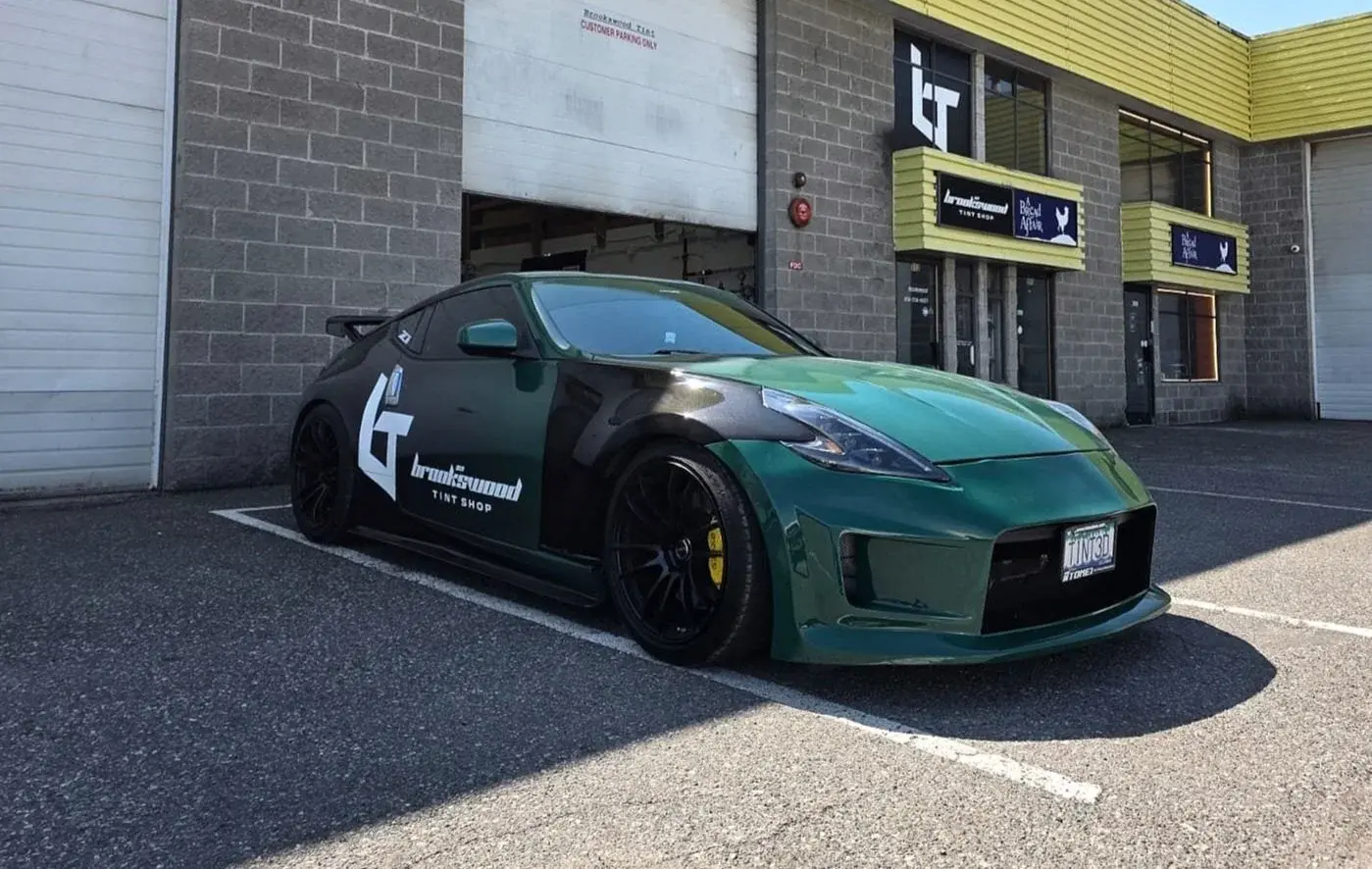
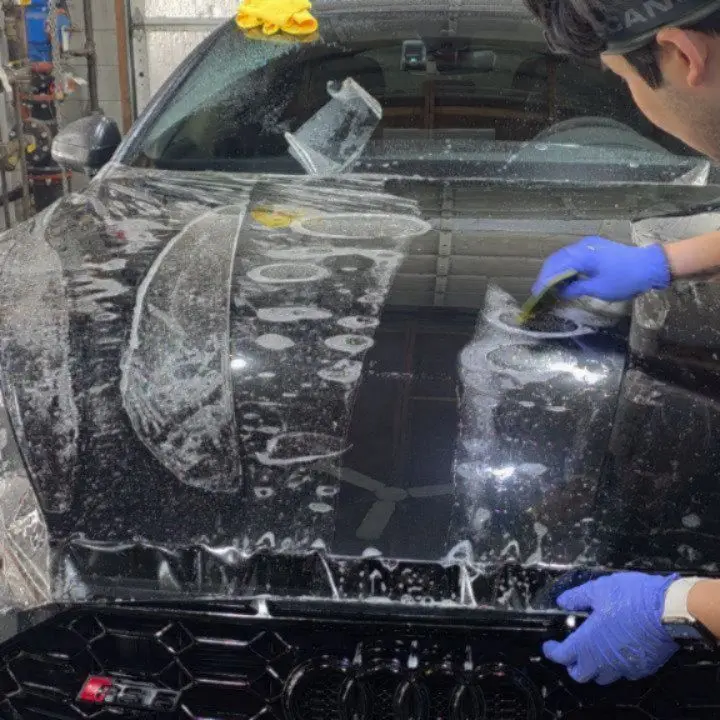
The hood is cleaned down to bare paint, covered in cast vinyl, in a single piece wherever the roll width allows, and finished around its outer edges. 3M lists a hood as one of its own examples of partial coverage for its 2080 film, alongside the roof, in its 2080 product bulletin.
3M’s warranty for 2080 depends on installers following its bulletins, and its vehicle colour change instructions set the stages a hood goes through:
- Inspect with the owner. 3M recommends a signed pre-installation record that marks any unsound paint before film goes on.
- Clean beyond the panel. Soap and water first, then isopropyl alcohol on the hood edges and gaps, and clay to lift bonded grit.
- Lay and shape. The film goes down from the flat centre outward and is warmed to 40 to 50 °C where it has to follow a curve, vent or crease.
- Cut at the panel gaps. 3M says film left bridging a seam pulls away as the body flexes, so it’s cut at the hood’s edges and finished around the panel.
- Post-heat. Stretched areas are brought to 80 to 95 °C, checked with an infrared thermometer, which 3M says reduces the internal stress in the film.
- Let it settle. 3M asks for 12 hours above 16 °C before the car meets cold or rain, and no washing for 72 hours.
The heat steps are the reason a hood is done indoors, and the turned edges are what wrapped edges means on a quote.
Which hood finish is rated to last longest?
Black. Avery Dennison rates its black and white films for longer on flat panels than any other finish in its SW900 range, and its carbon fibre and colour-shift films for the shortest time.
A hood counts as a horizontal panel for both makers. The SW900 data sheet treats only a surface within 10° of upright as vertical and rates anything tilted further back at its horizontal figure. Here is what that gives a hood, in Avery’s Zone 1 terms:
| SW900 finish family | Rating on a horizontal panel (Zone 1) | Example colour and code |
|---|---|---|
| Black and white | 3 years | Satin Black SW900-197-O |
| Solid colours | 2 years | Any non-metallic colour |
| Metallic and pearlescent | 2 years | Matte Metallic Gunmetal SW900-840-M |
| Extreme Textures | 1 year | Carbon Fiber Black SW900-194-X |
| ColorFlow (colour-shift) | 1 year | Gloss Rising Sun SW900-447-S |
Codes come from Avery’s North American Supreme Wrapping Film overview. Avery’s horizontal ratings fall to six months in its Zone 2 and four months in Zone 3.
3M doesn’t split its 2080 warranty by finish. It counts a surface as vertical only within 15° of upright, places Canada in Zone 2 on its warranty zone list, and its warranty card gives Zone 2 a 2-year horizontal term. Brookswood Tint’s own published cover is five years from the manufacturer on the vinyl, so ask which term a hood gets in the film you pick.
Can a hood wrap give a carbon fibre look?
Yes. Both makers sell a textured black carbon fibre film: 3M lists Carbon Fiber Black CFS12 in its 2080 brochure, and Avery sells Carbon Fiber Black SW900-194-X.
Texture changes the job. 3M cautions that textured 2080 film reacts badly to overstretching and can “dent” when it’s heated and worked in small patches, so the installer heats and stretches large areas at once. Avery’s carbon fibre film has a 4.2 mil (107 µm) face, and Avery says film with a face of 4 mil or thicker can be less conformable. A hood with deep vents or a sharp power bulge is harder to cover in carbon film than a smooth one, and it carries the 1-year horizontal rating in the table above. If you want carbon fibre and the longest life, black satin or gloss on the hood with carbon accents elsewhere is the alternative to ask about.
Does a vinyl hood wrap stop rock chips?
No. Vinyl shields the paint from sun and grime, but it isn’t built to absorb stone hits, and 3M’s warranty card leaves out any denting from stones or road debris.
The front of the hood faces oncoming stones, which is why the shop’s PPF packages start there. Under TranBC’s rules, no piece of main-highway winter abrasive may exceed 9.5 mm, and it notes that a stone’s hit carries nearly double the energy at 110 km/h compared with 80. The material built for that is paint protection film. The shop’s Partial Front PPF package starts at $850 and covers part of the hood along with the bumper, headlights and mirrors, and Full Front, from $1,550, takes the film over the entire hood. If you want a new colour and chip protection on the same panel, ask how the two films would be combined on your car before you book.
Chips that are already there don’t disappear under vinyl either; wrapping a car with rock chips explains what to fix first.
What should you tell the shop before wrapping a hood?
Mainly the paint’s history and anything mounted on the hood. Those two things decide how long the job takes and whether the vinyl will come off cleanly later.
- A repainted hood. If yours has been resprayed, after chip repairs for example, say so. 3M recommends that installers get written limitations of liability for unsound paint, and its inspection record states that the owner waives all product warranties if graphics go onto paint that failed inspection.
- Emblems, washer jets and vents. Say what’s fitted to your hood so the quote can account for working around or under each piece.
- Sensors or cameras. 3M recommends never laying 2080 over sensors, radar or driver-assist equipment.
- Your plans for it. If the hood will go back to body colour at a lease return or sale, mention it now; wrap removal covers that later job.
How do you book a hood wrap in Langley?
Message 604 534 6433, or open the vinyl wrap quote form, and include the year, make and model, the finish or film code you’re leaning towards, and a daylight photo of the hood. Every hood is quoted per vehicle, since size, vents and parts on the panel change the work.
A hood is usually ready to collect on the day or within two. Hoods are done at 20560 Langley Bypass, Unit 312, where cars are taken in from 9:00 and handed back by 17:00, Monday to Saturday. If the hood is the first step towards a two-tone look, a roof wrap in the same film pairs with it, and a matte black wrap explains the flattest finish before you commit.