Does BC have separate tint rules for work vehicles?
No. MVAR s. 7.05(8) applies to “a motor vehicle”, and the Motor Vehicle Act defines that as any vehicle not run on rails that is designed to be self-propelled. A one-ton pickup, a cargo van, a taxi, a limousine and a city bus all fall inside it, with no carve-out by weight, use or licence class.
The Passenger Transportation Regulation, which governs vehicles carrying passengers for pay, doesn’t mention tint or windows at all. So the pattern is the same on every vehicle:
| Glass | Every BC motor vehicle, commercial or not |
|---|---|
| Driver and front passenger side windows | No film |
| Windshield | Film in the top 75 mm only |
| Side windows behind the driver | Any shade |
| Back window or rear door glass | Any shade, with outside mirrors left and right |
Washington works differently. Its RCW 46.37.430(5)(b) lets hearses, limousines, passenger buses carrying people for pay, ambulances, and vehicles the maker classes as trucks, motor homes or multipurpose passenger vehicles go below 24% behind the driver. BC has no list like that, because it has no percentage to relax.
Which commercial vehicles are inspected regularly in BC?
The ones named in Division 25 of the regulations. Section 25.01(2) of the vehicle inspection rules brings these into the inspection program:
- taxis
- buses, including school buses running under a Division 11 permit
- commercial vehicles with a licensed gross vehicle weight over 8,200 kg
- vehicles other than motorcycles whose operator needs a licence or temporary operating permit under the Passenger Transportation Act
- vehicles owned, leased or rented by a driver training school
- commercial trailers and semi-trailers
Section 25.07 then bars driving, operating or parking such a vehicle on a highway without an unexpired inspection certificate fixed to it. A private car usually meets a designated inspection facility only when it’s newly registered from outside BC or ordered in by police, as CVSE’s inspection program description sets out. A taxi or a heavy truck meets one on a schedule, so front film on those vehicles comes up at the next scheduled inspection.
Are the inspection tint items the same for heavy trucks and buses?
Yes. The 2025 Vehicle Inspection Manual sorts vehicles into inspection classes, and the three tint items list the same classes beside them:
| Inspection class | Vehicles | Tint items 12e, 13d and 14c apply? |
|---|---|---|
| 1 | Light motor vehicles, 5,500 kg or less | Yes |
| 2 | Heavy motor vehicles, 5,501 kg or more | Yes |
| 4 | Buses | Yes, plus item 29d |
| 5 | School buses | Yes, plus item 29d |
Item 12e covers windshield film below the top 75 mm; 13d covers side glass forward of the seat back, whether the tint is film, another material or a coating; and 14c covers rear-window film without two outside mirrors. Reflective tint is rejected under all three.
What extra tint rule applies to buses?
Buses can’t have film on the windows directly beside the driver, door windows included. Item 29d of the manual, for passenger compartment windows on buses, rejects aftermarket tint or sun screen on the panes immediately beside the driver on either side. On a school bus it also rejects film on any window that the applicable requirements say must be double-paned.
The item doesn’t reject tint on the other passenger windows. On a transit or charter bus, passenger glass further back is treated like any glass behind the driver, while the panes beside the driver can’t take film and the windshield is limited to its top 75 mm.
How do mirrors and blank rear doors change things on vans and trucks?
They decide whether the back glass can be filmed at all. Film on the rear window of any vehicle needs outside mirrors on both sides, and s. 7.04(3) already requires a second outside mirror whenever the inside mirror can’t show the road behind, as on a cargo van with blank rear doors.
A pickup’s slider and a van’s rear door glass are both handled under that rear-window allowance. The van side of this, glass layout included, is laid out on van window tinting.
Who gets the ticket when a company vehicle has illegal tint?
Usually the driver, because the tint rule is written against whoever drives or operates the vehicle on a highway. A CVSE Notice & Order can go to the driver or the registered owner, and it puts the vehicle through a complete inspection; for a fleet, that’s a unit off the road. The ticket itself is $109, or $84 if it’s paid early.
Rental fleets carry an extra duty. Under s. 219(1) of the Motor Vehicle Act, nobody may “rent a motor vehicle” that isn’t equipped in all respects in compliance with the Act and regulations.
Setting up legal tint across a fleet
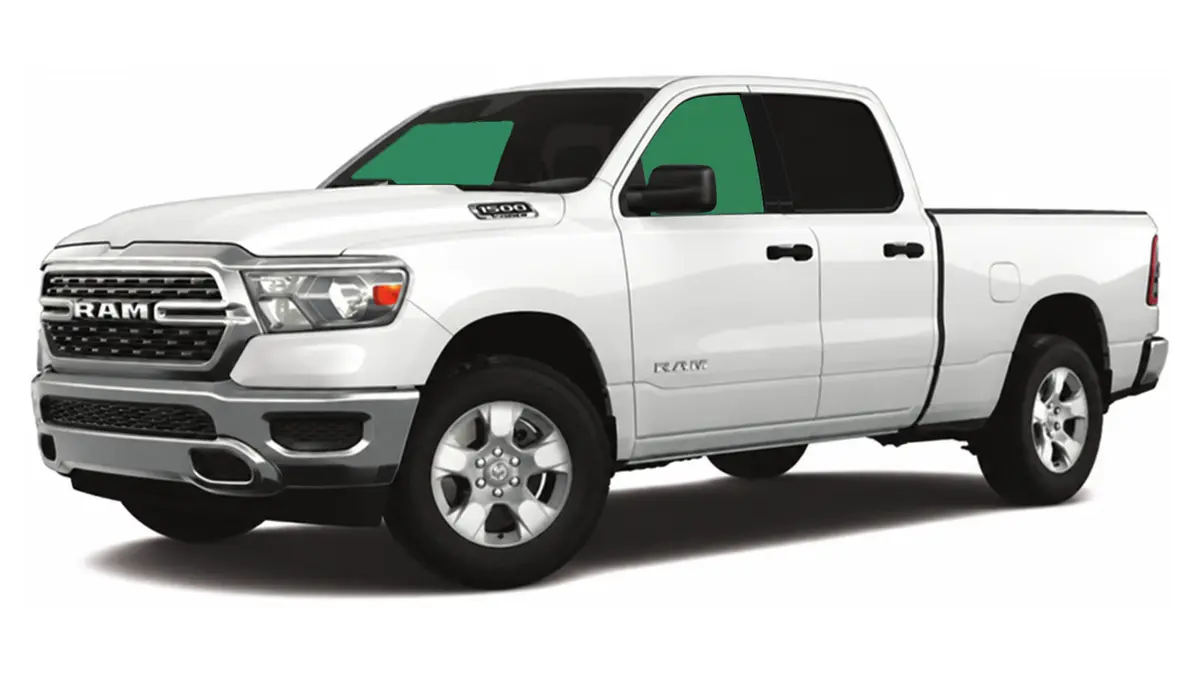
Give every vehicle type its own shade for the glass behind the driver and keep the front side windows bare. That’s how Brookswood Tint’s fleet tinting runs: a shade profile per vehicle type, units booked in blocks, and invoicing to the company. Rear packages in LLumar ATC start at $240 for a pickup’s five windows and $260 for a full-size SUV’s seven; vans are quoted per vehicle because their glass varies so much.
Front door film is fitted only on a customer’s request, after the shop explains that it isn’t road-legal on any BC vehicle, and that on a vehicle inspected on a schedule it won’t survive the next visit. For the planning side, from shade choice to scheduling, read the fleet window tint guide, or ask for a fleet quote through the fleet request form or at 604 534 6433.