What can a BC business legally tint on its vehicles?
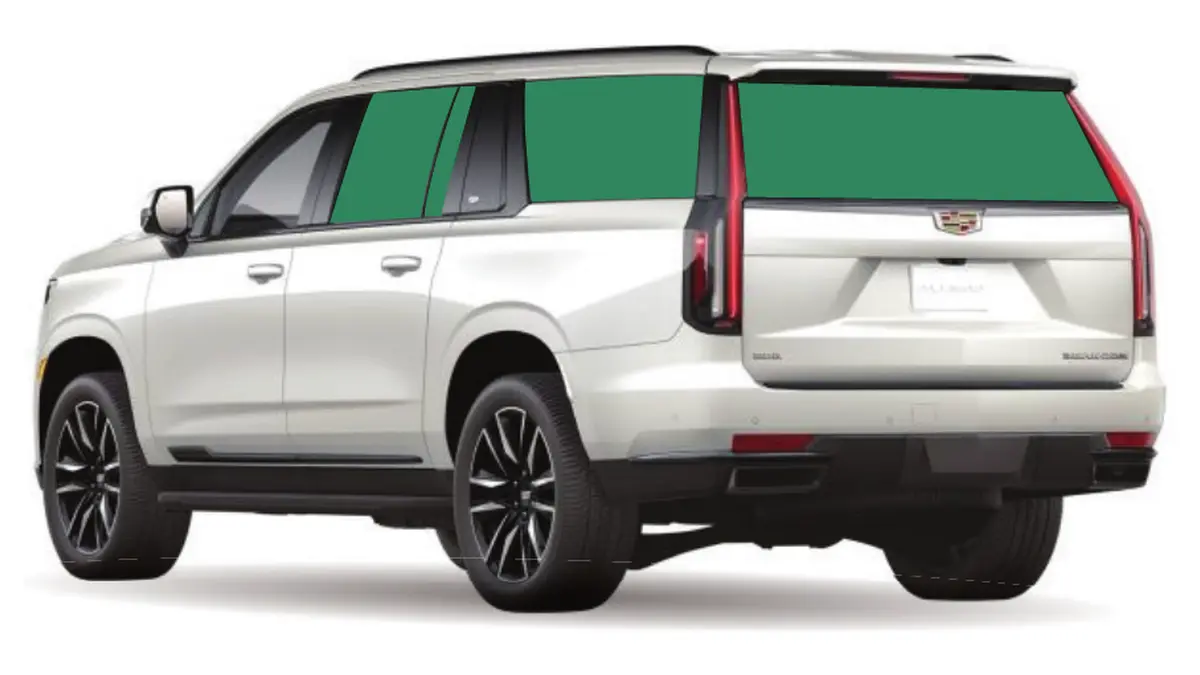
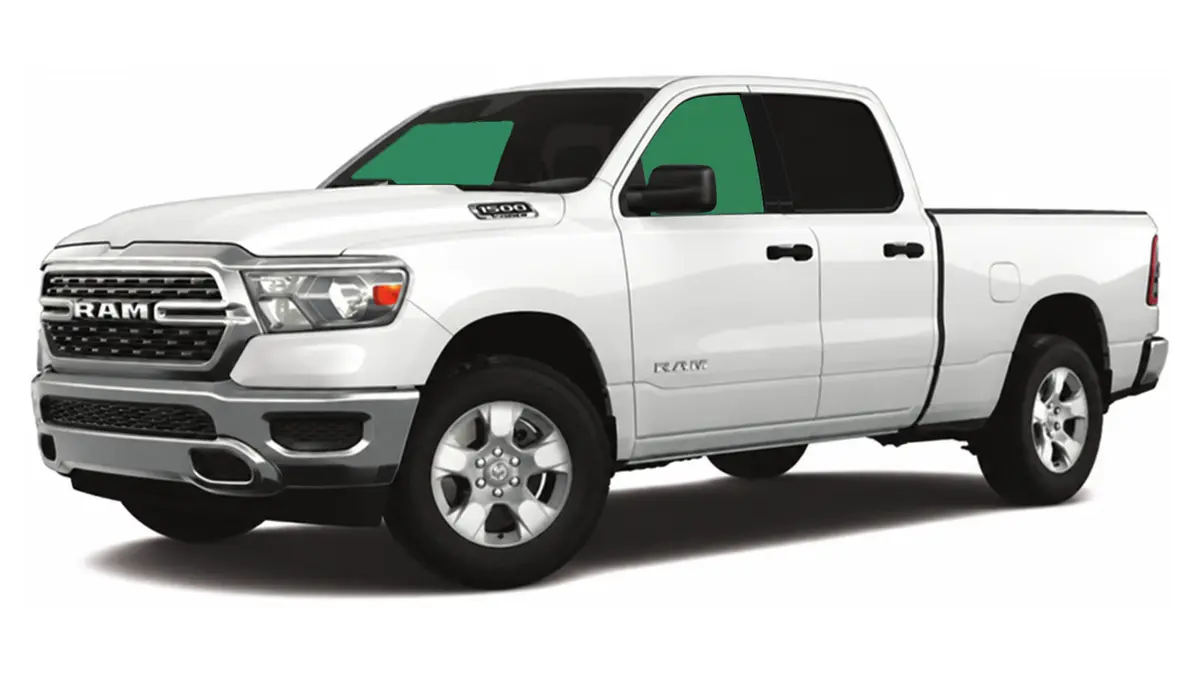
All side glass behind the driver, as dark as you like, plus the back glass on any unit with a mirror outside on each side. Front door glass takes nothing, and the windshield takes film in its top 75 mm and nowhere else. The rule covers every motor vehicle in the province, so a company van gets no exception a private car doesn’t.
The rule is MVAR s. 7.05(8), and it sets no percentage: behind the driver, 5% film is as legal as 50%. What does vary by vehicle class is how often someone checks. The 2025 Vehicle Inspection Manual applies its windshield, side window and rear window tint items to light vehicles (Class 1, up to 5,500 kg), heavy vehicles (Class 2, 5,501 kg and up), buses (Class 4) and school buses (Class 5).
| Glass | The rule for every fleet unit | Inspection item |
|---|---|---|
| Windshield | Top 75 mm strip only | 12e |
| Side glass ahead of the driver’s seat back | No film, coating or other material | 13d |
| Side windows behind the driver | Any shade | None for darkness |
| Rear window | Any shade, with an outside mirror on each side | 14c |
| Windshield, front side glass, rear window | Reflective film rejected | 12e, 13d, 14c |
Buses and school buses
Buses get an extra item. Under 29d, a bus fails if aftermarket tint or sunscreen sits on the windows immediately left and right of the driver, door windows counted, and a school bus also fails with tint on any window that the rules require to be double-paned. A shuttle or bus profile leaves those panes clear.
Units that cross the border
Washington and Alberta set their own rules, which matters for vans and trucks that work both sides of the line. The comparison is on BC vs Washington state tint laws, and whether commercial classes change anything in BC is answered in are tint rules different for commercial vehicles in BC.
Which fleet vehicles go through scheduled inspections?
Commercial vehicles and trucks over 8,200 kg licensed gross weight, buses, taxis and limousines, and driver-training vehicles are all on the province’s list of vehicles subject to inspection. On those units, film on the front doors doesn’t wait for a roadside stop to be found; it fails at the next inspection.
The province’s vehicles subject to inspection page, updated December 9, 2025, lists these among others:
| On the list | What it means for tinted units |
|---|---|
| Commercial vehicles, trucks and truck tractors over 8,200 kg licensed GVW | Inspected against items 12e, 13d and 14c |
| Buses, including school buses permitted under Division 11 | Item 29d adds the windows beside the driver |
| Taxis and limousines operating under the Passenger Transportation Act | The same glass items as a private car |
| Vehicles owned or leased by a driver training school, other than motorcycles | The same glass items as a private car |
| Emergency vehicles over 8,200 kg licensed GVW | The same glass items |
| Private vehicles under 3,500 kg net registering in BC from another jurisdiction | A unit bought out of province meets this first |
| Any vehicle issued a Notice & Order by a peace officer | Everything on the vehicle, tint included |
Vans, pickups and company cars under those weights aren’t on a periodic schedule, but the same page notes that a peace officer can direct any vehicle to a designated inspection facility on grounds that it’s mechanically unsafe or non-compliant. Units bought in Alberta or Ontario face the out-of-province inspection described in the out-of-province inspection guide.
What does non-compliant tint cost a business?
More than the ticket. A driver’s fine is typically $109, but a Notice & Order takes a working unit off its route while the film comes off and the vehicle passes a full inspection, and a missed deadline adds a $598 fine.
| What happens | What it means for the fleet |
|---|---|
| Violation ticket | Typically $109, according to Mission RCMP |
| Box 2 Notice & Order | Film off, then a full mechanical inspection at a designated facility, all within 30 days |
| Deadline missed | $598 fine under MVAR 25.30(4) |
| Box 1 Notice & Order | The vehicle is taken off the road immediately |
| Inspection fee | Generally $150 to $250, says Mission RCMP |
| Selling or trading the unit | An outstanding order sits on ICBC’s Vehicle Information Database and blocks licensing and insurance on a sale |
The order details come from the CVSE Notice & Order sheet, and the fine and fee figures from Mission RCMP.
Disposal is the cost fleets forget. Motor Vehicle Act s. 222 bars anyone from selling, or even displaying for sale, a motor vehicle that doesn’t comply with the Act and its regulations, so dark front film has to come off a unit before it goes to auction or a buyer. Tint removal after a Notice & Order covers the fix, and what is the fine for illegal tint in BC breaks down the ticket.
How should a fleet choose film and shade for each vehicle type?
Set one film and one shade per vehicle type, chosen for what the glass behind the driver has to do: hide cargo, keep a crew cab cooler, or cut UV while staying easy to see through. The shop keeps that choice on file as the type’s shade profile, so the tenth van leaves matching the first.
What the spec sheet says about each option
| LLumar film and shade | Visible light, measured | Total solar energy rejected | Suits |
|---|---|---|---|
| ATC 05 | 5% | 44% | Cargo glass at the lowest starting price |
| ATC 35 | 38% | 35% | Light privacy on company cars |
| IRX 05 | 6% | 62% | Cargo glass with the most heat rejection |
| IRX 35 | 39% | 54% | Crew cab rear seats that need to stay bright |
| AIR 80 | 77% | 43% | Near-clear glass where outward view matters most |
LLumar’s performance data sheet is the source for every number in the table; it tests on a single 6 mm pane of clear glass, and a vehicle’s own glass changes the result. UV doesn’t separate the options: all of these films stop over 99% of it in the 300 to 380 nm band. The sheet measures energy stopped at the glass, not fuel or battery use, so treat any savings figure with care.
Factory privacy glass changes the result
When a vehicle type comes with factory privacy glass behind the driver, film on top multiplies with it: 20% film over 20% glass lets through about 4% of visible light. Set shade profiles by model and trim for that reason, and see window tint vs factory privacy glass for how the two combine.
A starting shade profile by vehicle type
| Vehicle type | Glass usually filmed | Notes |
|---|---|---|
| Cargo van | Rear door glass, plus side glass aft of the driver where fitted | Some cargo vans have no glass behind the driver at all; see Ford Transit, Mercedes-Benz Sprinter and Ram ProMaster |
| Crew cab pickup | Rear door glass plus the back window or slider | The slider is a rear window, so both outside mirrors stay on; work truck tint has the detail |
| Company sedan or SUV | Rear doors, quarter windows, back glass | One vehicle starts at $240 for a sedan’s rear glass or $260 for a full-size SUV; fleet rates go by type and volume |
| Passenger van or shuttle | Every window behind the driver | Large glass, quoted per vehicle |
| Bus | Passenger windows away from the driver | Item 29d keeps film off the panes beside the driver |
What does rear-glass film do for drivers and cargo?
It keeps loads out of sight, cuts heat and UV in the rear seats and cargo area, and gives the fleet one consistent look. It can’t help the driver’s own window, because BC doesn’t allow film on the front side glass.
UV through side glass
Side and rear car windows are tempered glass, which the Skin Cancer Foundation says “does not block UVA rays effectively”; a UV-blocking film, by its account, stops upward of 99% of both UVA and UVB. In a 2016 study of 29 cars, side windows blocked 71% of UVA on average against 96% for windshields, and only 4 of the 29 had side windows above 90% (Boxer Wachler, JAMA Ophthalmology, via EurekAlert). In a 2016 release on outdoor work and skin cancer, WorkSafeBC listed delivery and courier service drivers among the BC occupations most at risk.
The limit is worth stating plainly. Studies have found UV through side glass associated with more skin damage on the driver’s side, yet the window next to a driver counts as a front side window and stays unfilmed in BC. Rear-glass film protects passengers, back-seat crew and whatever is in the cargo area. The wider health picture is in the car window film and UV health guide.
Heat in the cab and cargo area
Total solar energy rejected runs from 28 to 44% across the ATC range and 50 to 62% across IRX on LLumar’s sheet. For vans that sit loaded in the sun or crew cabs carrying people all day, that difference is the main reason to consider IRX over ATC on the rear glass.
Cargo out of sight
At 5 or 6% visible light, rear glass hides tools and stock from the street. The shop also takes the view that film helps hold broken glass together; how much that’s worth is weighed in does window tint hold glass together in a break-in.
How does fleet booking work at Brookswood Tint?
Units come to the shop in blocks scheduled around your routes, each vehicle type gets its shade profile, and the company deals with one contact and one invoice. All tinting happens in the bay, never on your lot.
- Block booking. Several vehicles a day or a week, with early drop-off and end-of-day pickup.
- Time per unit. A car is normally in and out the same day; a sedan or SUV getting every legal window done typically needs 2 to 4 hours. Vans, complex rear glass and stripping old film all add time.
- Curing. Windows that were tinted stay closed for 3 to 5 days. Some haze, or small pockets of water under the film, can show for the first week; both dry out without help.
- Old film. Removal is priced per window, done with steam on heated rear glass so the defroster grid survives, and discounted when the window is re-tinted.
- Paperwork. Monthly invoicing where wanted, and a record of the work done on each unit.
- In the shop only. In the shop’s own words, “dust, wind and cold ruin an install,” so units come to the bay, which has the height for Sprinter, Transit and ProMaster vans.
- In the same visit. Chrome delete and vinyl lettering can be booked while a unit is in; commercial graphics are quoted per design through commercial vehicle wraps.
Every unit gets genuine LLumar film with LLumar’s lifetime limited warranty on the film and the shop’s lifetime warranty on workmanship, the same terms as a private car. How fleet prices are built is on fleet tinting prices.
What belongs in a company’s fleet tint policy?
A one-page written standard keeps every unit legal and matching after the person who set it up has moved on. Seven lines cover it.
- Film and shade per vehicle type, recorded by model and trim, with a note wherever the factory glass is already tinted.
- Glass zones. Film goes behind the driver and on the back glass, nowhere else. Front door glass and the windshield below its top 75 mm stay clear, whatever a driver asks for.
- Mirrors. Any unit with filmed back glass keeps outside mirrors on both sides.
- Records. Unit number or VIN, film, shade, date and invoice for each vehicle, so warranty questions and insurance questions have an answer on file.
- Driver care. Tinted windows closed for 3 to 5 days, then nothing on the glass but microfibre and an ammonia-free cleaner; the window tint aftercare guide makes a good handout.
- Before sale or lease return. Check every unit for front film before it leaves the fleet.
- New units. Anything bought used, especially from another province, is checked for front film before it goes into service.
If a manager or driver asks for front-door or full-windshield film, the shop can install it, but at no shade is it road-legal in BC. Before anyone decides, the shop walks through the ticket, the Notice & Order and the inspection, and on a fleet that risk repeats on every unit that carries the film.
How do you get a fleet tint quote?
Send the list: each vehicle type with year, make, model and trim, the number of units, which glass sits behind the driver, any units with old film, and how your schedule runs. Photos of each side and the back of one unit per type save a visit.
Send it through the fleet quote form, or phone or text 604 534 6433 during shop hours, 9:00 to 17:00 Monday through Saturday. Units drop off at the Langley Bypass bay, Unit 312 at number 20560. What a fleet account includes is set out on fleet window tinting, and dealerships setting up a similar arrangement should read dealership services.