Why does timing matter so much for paint protection film?
Because film keeps the paint exactly as it was on install day. A chip that lands a week before the appointment is sealed under clear film for as long as the film stays on, so the right time is always before the damage, not after it.
Season matters too, because paint doesn’t take a stone the same way in January as in July. Mazda’s owner’s manual explains that paint chipping happens when gravel thrown by another vehicle’s tires hits your car, and adds: “In low temperatures a vehicle’s finish hardens. This increases the chance of paint chipping.” Cold mornings, treated roads and highway speed all line up in the same months, and those are the months film is for.
When does chip season start in the Fraser Valley?
Around the start of November. The federal climate normals for Abbotsford Airport (ECCC, 1981–2010), roughly 20 km east of the shop, date the average first fall frost to around November 1, with the last spring frost near April 7.
| Abbotsford A normals | Oct | Nov | Dec | Jan | Feb | Mar |
|---|---|---|---|---|---|---|
| Average daily high | 15.0 °C | 9.3 °C | 5.9 °C | 6.7 °C | 9.0 °C | 11.6 °C |
| Days with a low below −2 °C | 0.2 | 3.3 | 8.7 | 7.8 | 5.3 | 1.7 |
| Days with snowfall | 0 | 1.3 | 3.6 | 3.7 | 1.9 | 1.4 |
| Days with freezing rain | 0 | 0.1 | 0.6 | 0.5 | 0.2 | 0.1 |
October is mild and nearly frost-free. From November the cold days stack up, and so does road treatment. Langley City crews lay brine on priority routes ahead of forecast snow, then salt during snowfalls, with sand mixed in for steep streets. TranBC limits each piece of winter abrasive on the main provincial routes to 9.5 mm: small, but still enough to mark paint at highway speed.
Why is early fall the strongest window for most cars?
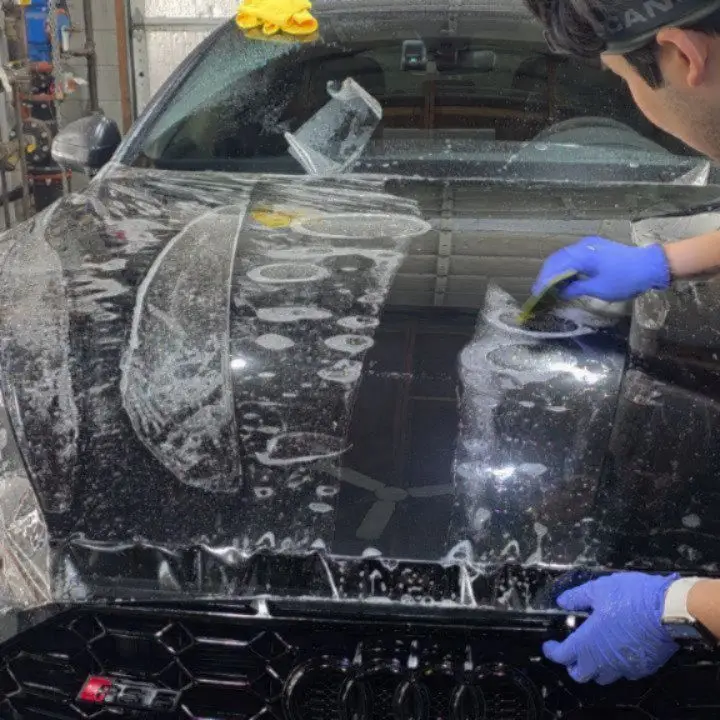
September and October leave time for the whole job to finish before the first frost. A PPF appointment is more than the film: before any film goes on, the paint gets decontaminated, and corrected where it needs it, and that prep can add days.
| Step | Typical time |
|---|---|
| Enhancement polish, if the paint needs it | About a day |
| Two-stage correction, if it needs more | 1–2 days |
| Partial Front film | Usually one day |
| Full Front or Track Package film | 1–2 days |
| Full Vehicle film | 3–5 days |
| Before the first wash | A week, by the shop’s advice |
Book in late September and a full front with a two-stage correction is done, settled and washed once well before November’s frosts. Book in late November and the car has already done weeks of treated roads on bare paint.
What if the car is new, or already has chips?
A new car doesn’t wait for fall. Delivery week is the moment for film whatever the month, because the factory paint has collected nothing yet; that case is covered in full on whether to get PPF on a new car right away.
A car that already has chips needs a different order: repair first, then film. Clear film over an old chip keeps it visible, which is explained on whether PPF hides existing rock chips. If a body shop has repainted a panel, count forward before you book: LLumar’s PPF FAQ says fresh paint commonly needs 30 days to outgas before film, and that the film is meant for original paint.
Can PPF go on in the middle of winter?
Yes. Installs happen indoors, so a January appointment runs like a September one, and LLumar says its film “can withstand winter cold” with proper care. The details of a cold-season install have their own page: can PPF be installed in winter.
Two seasonal quirks are worth knowing:
- Self-healing works best warm. Per LLumar’s FAQ, the majority of light scratches heal when the film is warmed, by sun for instance. Swirls picked up in December may linger until a warm day, or until warm water does the job.
- Removing old film is a mild-weather job. Pulling film during a hard frost is the thing to avoid: LLumar’s FAQ advises against removing PPF in extreme cold, since the film can part from its adhesive. If worn film is coming off before new film goes on, wait out the cold snap.
How do the four seasons compare for booking PPF?
Every season works for the install itself; what changes is how much damage the car collects while you wait.
| When you book | What the paint is facing | Verdict |
|---|---|---|
| September–October | Last mild, frost-free weeks before treated roads | Strongest window: film on before the cold |
| November–March | Frost, brine, salt, sand and highway abrasive | Still worth doing now: each week of waiting adds chips |
| April–June | Whatever winter left behind | Assess chips, repair or correct, then film |
| July–August | Dry, warm driving (43–46 mm of rain a month at Abbotsford) | Easy timing: film settled long before November |
If you’re choosing between packages, partial vs full front PPF explains what the extra coverage buys, and the winter rock chip guide covers driving through the season itself.
How do you book PPF ahead of the cold?
Pick the package, then pick a date that lets prep, film and the first wash all finish before November. Brookswood Tint fits LLumar Platinum, backed by LLumar’s 10-year limited warranty. Starting prices:
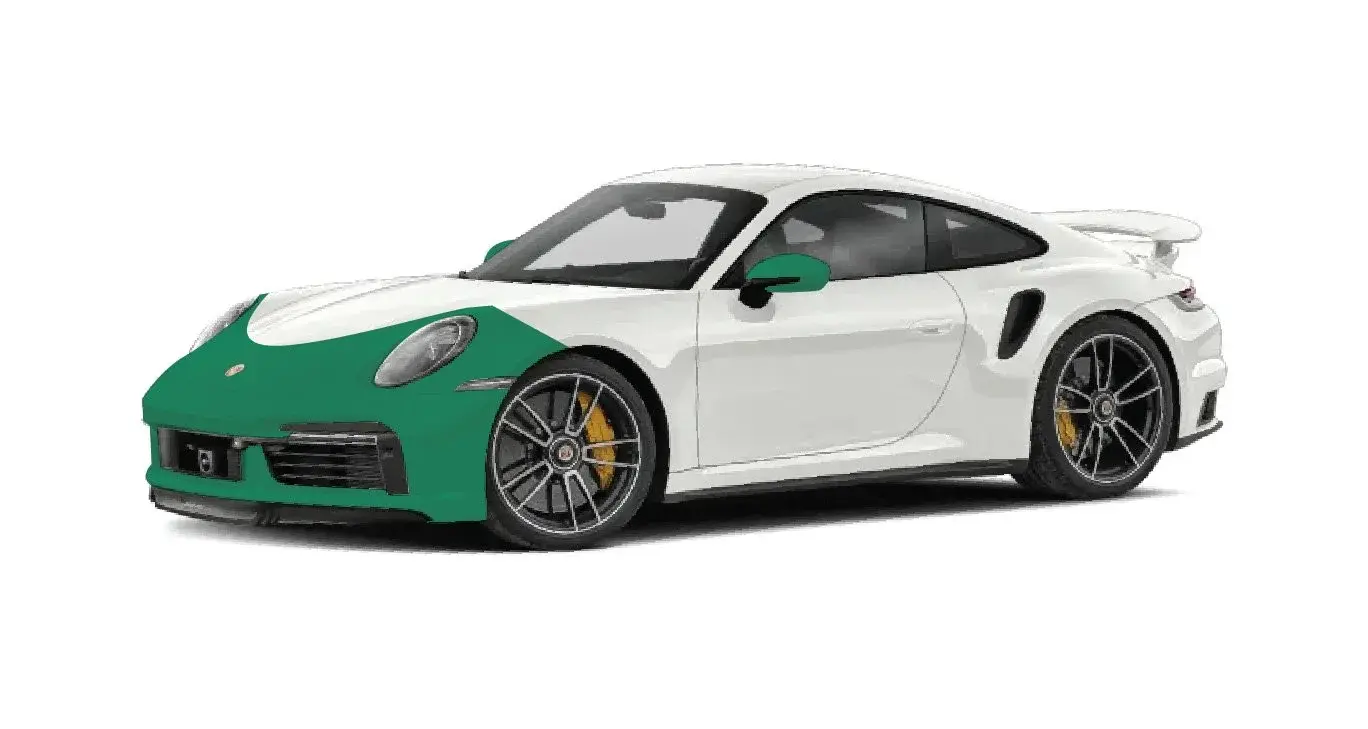
- Partial Front, from $850: bumper, headlights, mirrors and the leading edges of hood and fenders.
- Full Front, from $1,550: the whole hood, both fenders, bumper, headlights and mirrors.
- Track Package, from $1,900: everything in Full Front, adding the A-pillars, the rockers and a strip of roof.
- Full Vehicle, from $4,000: every painted surface and the headlights.
Every package puts clear film on the headlights. Under the 2025 Vehicle Inspection Manual, a headlight lens “covered in any manner” can fail, so even clear film there may be questioned; mention any upcoming inspection when you book.
Final prices depend on the vehicle’s size, its panel shapes and the state of its paint. See the packages on paint protection film, call or text 604 534 6433 (Monday to Saturday), or send the year, make and model, plus the week you have in mind, through the PPF quote form.