When is rock chip season in the Fraser Valley?
Treat October to April as chip season. The province requires drivers to obey winter tire and chain signs from October 1 to April 30, and that’s the stretch of the year in which road crews put brine, salt and abrasive down on Fraser Valley roads.
Valley winters are frosty far more often than snowy, and that shapes what goes on the road. Environment Canada’s 1981–2010 climate normals for Abbotsford Airport show the pattern:
| Month | Frosty days (low of 0 °C or below) | Snowfall (cm) | Days with snowfall | Rainfall (mm) |
|---|---|---|---|---|
| November | 7.2 | 6.7 | 1.3 | 241 |
| December | 13.8 | 16.5 | 3.6 | 171 |
| January | 12.4 | 18.5 | 3.7 | 194 |
| February | 10.7 | 8.6 | 1.9 | 123 |
| March | 6.1 | 4.4 | 1.4 | 145 |
| Whole year | 52.9 | 55.2 | 12.2 | 1,483 |
About 53 frosty days against 12 snowy ones means a lot of the season’s road treatment is aimed at ice, not snow. Abbotsford’s own anti-icing step, for example, goes down “before any snow has fallen or frost/ice has formed”. Add the rain, about 241 mm in November alone, and most winter driving here is wet driving on treated roads.
The provincial winter driving page notes that on some highways outside mountain passes and high-snowfall areas the tire requirement ends on March 31, a month earlier than the rest. In the valley, the frost numbers above suggest March is still part of the season.
What do Langley, Abbotsford and highway crews put on the road?
A mix of liquid brine, rock salt, and sand or small crushed stone, depending on who maintains the road and how steep it is. The abrasive is what chips paint. The salt is what Abbotsford’s own snow page says “damages vehicles, roads, and our waterways”.
| Who maintains it | What it uses | Source |
|---|---|---|
| Province: Highway 1, Highway 11, and Mt. Lehman Road south of Highway 1 to the airport | Salt, salt brine, anti-icing agents and abrasives (sand or small aggregate), matched to the weather; on main highways no abrasive piece over 9.5 mm, and up to 12.5 mm on less-travelled paved highways | TranBC, City of Abbotsford |
| City of Langley | Brine ahead of forecast snow on priority routes; salt across the city; salt mixed with sand on steep streets | City of Langley |
| Township of Langley | Salt brine as an anti-icing treatment; sanding and salting at intersections on residential roads when conditions warrant | Township of Langley |
| City of Abbotsford | Liquid sodium chloride before snow or frost; a sand and salt mix, pre-wetted with a sodium chloride solution, during and after snowfall | City of Abbotsford |
Why the highway mix is stone, not sand
TranBC explains that sand is light enough for wind and passing trucks to blow it off the road within minutes. The abrasive has to be heavy enough to stay put and large enough to keep working after fresh snow or freezing rain, which is why it’s small stone. Crews sometimes wet it with brine so it sticks to compact ice.
Where the material goes down
The Township’s first-priority routes include hilly areas, school zones and bus routes alongside the main roads. On the highway, TranBC says spreader trucks may stop spreading briefly on flat, straight sections to avoid spraying oncoming traffic, but they have to keep treating hills and corners. So the freshest grit tends to sit where you climb, brake and turn.
How can you drive to collect fewer chips?
Leave more room, slow down on fresh grit, and stay behind any truck that’s spreading. All three habits come from TranBC’s own advice, and none of them costs anything.
Distance
TranBC calls keeping your distance from other vehicles “your best protection”. In practice that means a longer gap than you’d leave in summer, and a longer one still behind trucks.
Speed
Impact energy climbs with the square of speed, so small changes matter. Per TranBC, a stone’s impact energy almost doubles between 80 and 110 km/h. The same arithmetic works in your favour: easing off from 100 to 80 km/h cuts a stone’s impact energy by about a third.
Sanding trucks and plows
Don’t pass a truck that’s spreading abrasive. TranBC’s advice is to stay back, which keeps you out of the spray and on the surface it has just treated, and to be patient, because contractors regularly pull over to let traffic by when it’s safe. The Township of Langley also asks drivers not to try to stop municipal vehicles that are sanding, salting or plowing.
Highway 1 work zones
Two widening phases are under construction between Langley and Abbotsford: 10 km from 216th Street to 264th Street, and 13 km from 264th Street to Mt. Lehman Road. If your commute runs through them, the same three habits apply, and how to protect your car from Highway 1 rock chips covers that drive in more detail.
What should you do before the first frost?
Repair the chips you already have, decide how much of the car gets film, and book the install early enough that the first-week wait before washing is over before the roads turn. For most drivers that means booking in September or early October.
Fix existing chips first
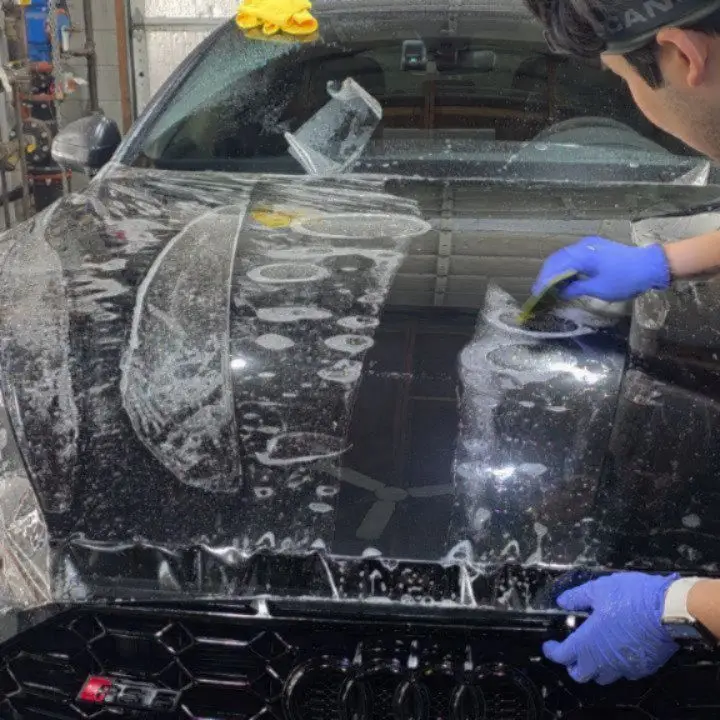
Clear film seals in whatever is underneath it, so a chip on the hood today is still visible under PPF tomorrow. If the panel should look perfect, the paint gets fixed before the film; will PPF hide existing rock chips explains why. Before film goes on, the shop decontaminates the paint and corrects it where it needs it.
Choose the coverage
| LLumar Platinum package | From | Panels | Time in the shop |
|---|---|---|---|
| Partial Front | $850 | Bumper, headlights and mirrors in full; the leading part of the hood and fenders | Usually 1 day |
| Full Front | $1,550 | Hood, fenders and bumper edge to edge, with headlights and mirrors | 1 to 2 days |
| Track Package | $1,900 | Everything in Full Front, plus A-pillars, rockers and a section of roof | 1 to 2 days |
| Full Vehicle | $4,000 | All painted surfaces and the headlights | 3 to 5 days |
These are starting prices: bigger vehicles, fussier panels and tired paint all push a quote above them.
LLumar’s Platinum Gloss page counts flying rocks, road salt and sand among the everyday hazards the film is meant to handle. It pitches Valor more directly at winter, promising protection “against rocks, road debris, winter salt and sand” under a 12-year limited warranty; Valor isn’t one of the shop’s packages, so raise it when you book. For daily highway drivers, PPF for Highway 1 commuters and what PPF coverage Highway 1 commuters need go further, while partial front PPF and full front PPF explain the two most common choices.
Leave time before the roads turn
Brookswood Tint’s advice is to leave new film unwashed for a week, while LLumar’s FAQ allows washing after three days. An install in September or early October means the film is settled and washable before November’s rain and the first frosty mornings. If you miss that window, can PPF be installed in winter covers what changes for a midwinter install.
What winter wash routine keeps film and paint in shape?
Get the salt off regularly, by hand or touchless, with the pressure wand held off the film’s edges and no brush washes at all. Film protects the paint it covers; salt and grit still settle on everything else.
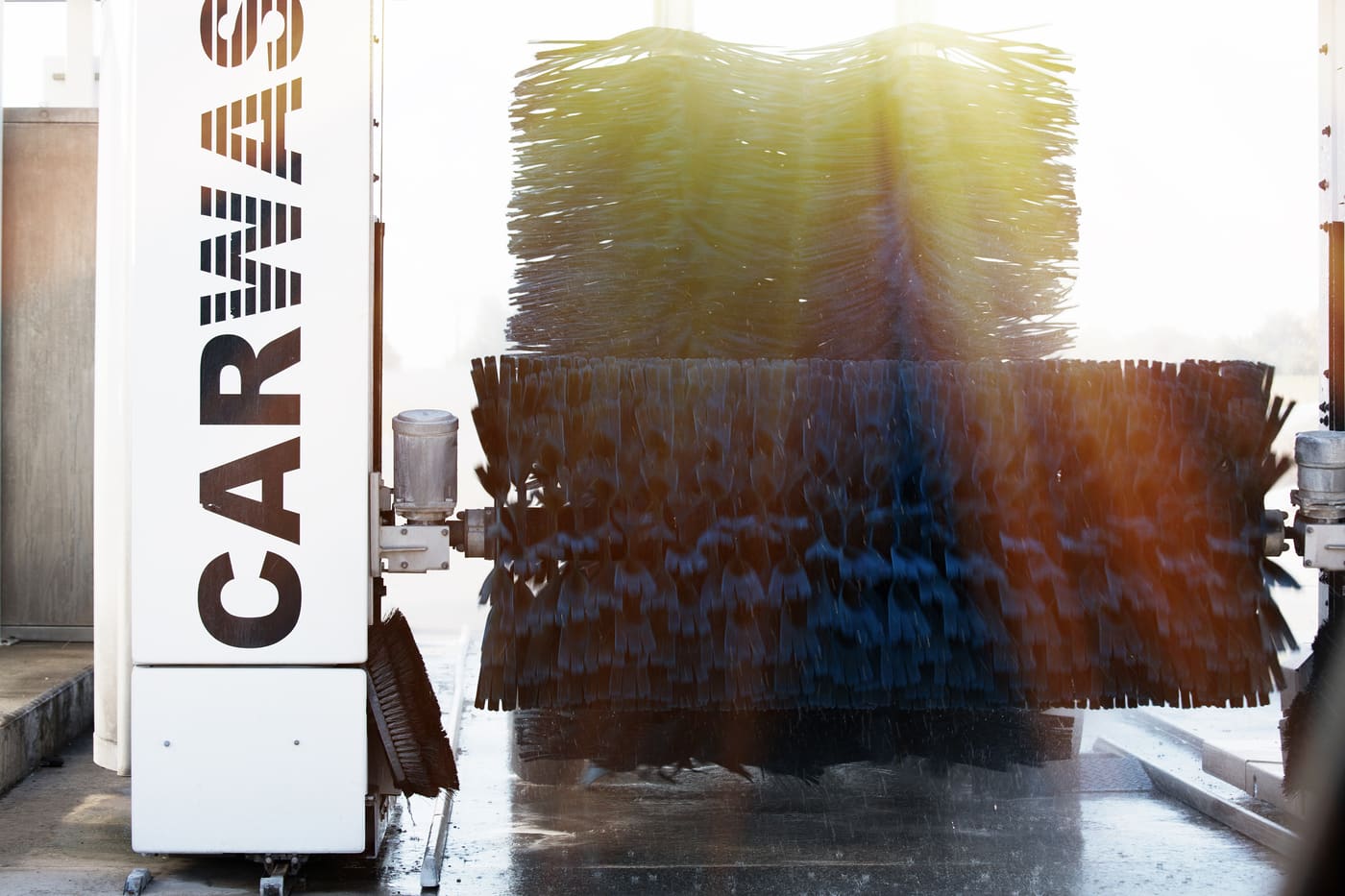
LLumar’s PPF FAQ discourages pressure washing and automatic car washes on film because they “can cause lifting”, particularly at the edges, and lifting caused that way isn’t covered by its limited warranty. A winter routine that keeps the film and the paint around it in good shape:
- Soap, water and a soft, clean cloth, by hand: LLumar’s preferred way to wash its film.
- Rinse the lower panels and wheel arches as well as the hood and roof.
- Hold pressure wands well back from every film edge.
- Run a hand along the hood’s front edge and the bumper after each wash to feel for new chips or nicks in the film.
The full film routine is in the PPF aftercare guide, and how to protect car paint from road salt in BC covers bare paint.
What should you do when a stone hits anyway?
Deal with the windshield first, because ICBC’s free repair only applies while the damage is small. Then check the paint or film, and if you think road maintenance caused it, write down when and where it happened.
Windshield chips
ICBC Comprehensive coverage repairs a windshield with no deductible when the damage is “smaller than a loonie”, isn’t a long crack, and the repair leaves no residual damage greater than ¼ inch in the driver’s line of vision. Chip repairs are covered only at an ICBC-approved glass repair facility, and the deductible applies only when the glass has to be replaced. TranBC’s advice is to have a chip fixed right away. Windshield film isn’t an option here, since the shop doesn’t fit exterior windshield protection film.
Paint chips and damaged film
A chip in unprotected paint is touch-up or body-shop work. A stone that cuts PPF won’t heal. Heat from the sun, warm water or a running engine lets LLumar’s top coat close up fine surface scratches, but a cut stays a cut. Impact damage also isn’t among the film defects the shop’s warranty lists, which are yellowing, cracking, bubbling and peeling. Can damaged PPF be patched explains what happens next.
Claims against road maintenance
The province’s claims page sets the bar for a highway-related claim plainly: “there must be proof that there was negligence on the part of the ministry and/or highways contractor.” It suggests going through your own insurer first so repairs can start straight away. If you do claim, the form asks for the exact location with the nearest city, and the exact date and time.
Booking winter chip protection in Langley
Book PPF in early autumn, before the first frost and ideally before the November rain. Send the year, make and model, how much highway driving you do, whether the car lives in a garage or outside, and photos of any existing chips through the PPF quote request, or call or text 604 534 6433.
A partial front is priced from $850 and usually takes one day; full front starts at $1,550 and takes one to two days. You’ll find the shop on the Langley Bypass at number 20560, Unit 312, open 9:00 to 17:00 six days a week and closed Sundays. If you’re still deciding whether film is the answer at all, does PPF stop rock chips sets out what it can and can’t do.