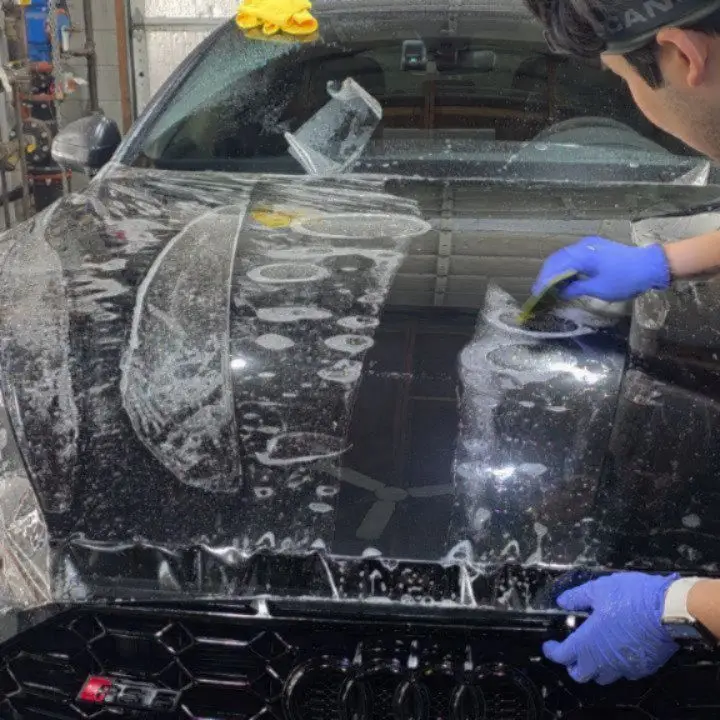
How do you treat new PPF in its first seven days?
Drive the car, but don’t wash it, don’t touch the film edges and don’t let anyone else clean it. Brookswood Tint asks for seven days before the first wash; LLumar’s PPF FAQ gives 72 hours as its minimum, and waiting the longer of the two costs you nothing.
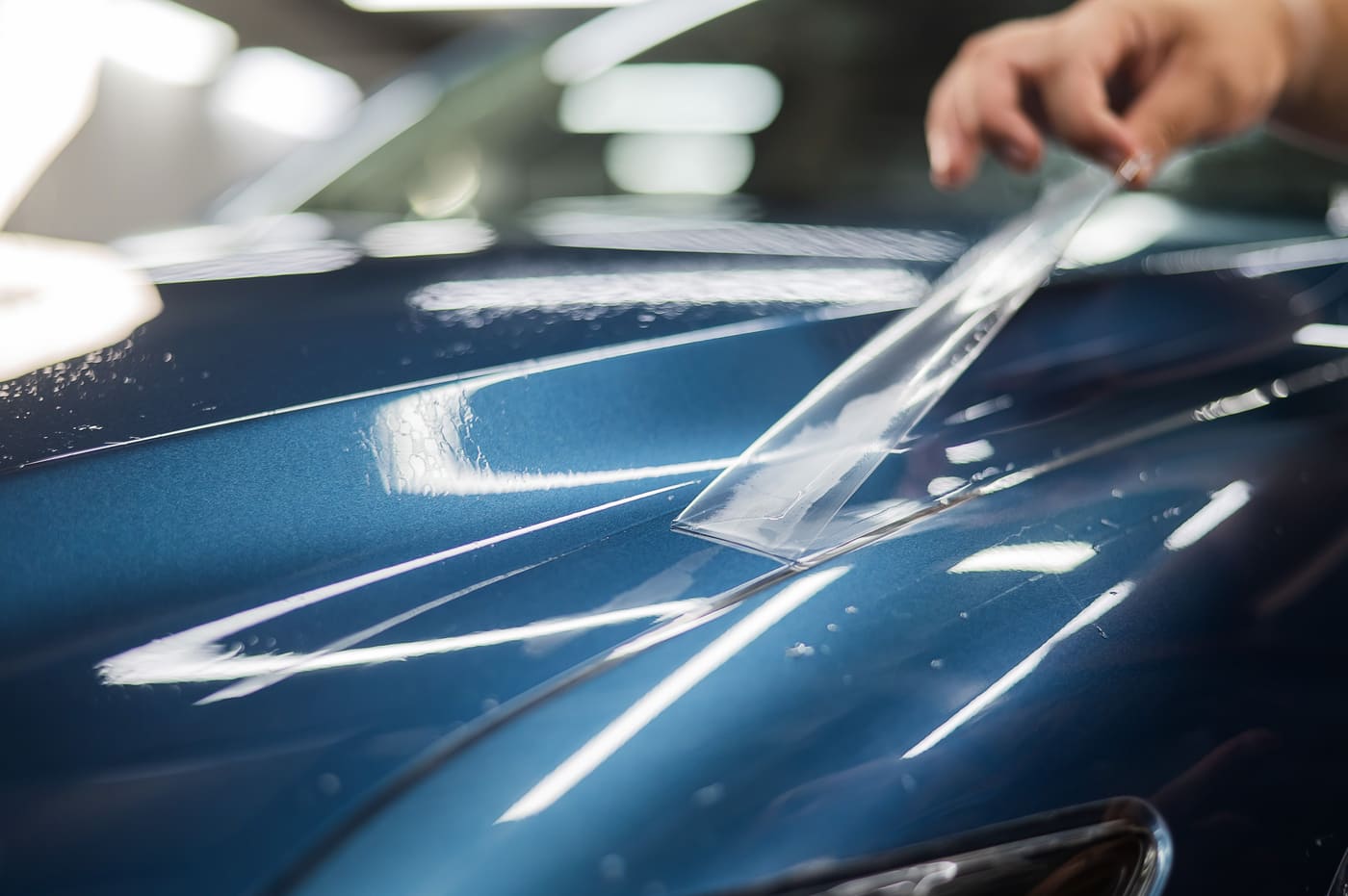
Film goes on wet. The installer floats each piece on a slip solution, positions it, then squeegees the liquid out and works the edges down by hand. LLumar frames its 72-hour wait as a way “to help ensure desired performance” of new film, and the edges are the part a careless wash catches first.
| When | What to do | What to avoid |
|---|---|---|
| Pickup day | Drive home normally | Car washes, detailers, peeling a corner to “see the film” |
| Days 1 to 3 | Leave the car alone; LLumar’s minimum wait | Any washing, including a rinse aimed at the front |
| Days 4 to 7 | Keep waiting, as the shop asks | Pressure washers and automatic washes |
| First wash | Gentle hand wash or touchless | Brushes, scrubbing at edges, hard pressure |
| First month | Walk around the car after each wash and look at the edges | Trimming or pressing anything you find |
If something shows under the film
Look, photograph it, and show the shop. Pressing a spot flat or lifting an edge to “let it out” can turn a settling issue into damage. What tends to clear by itself and what doesn’t is explained on bubbles under new PPF, and the reasoning behind the waiting period is on when you can wash a car after PPF.
Bugs and droppings in week one
If a bird hits the hood on day two, don’t leave it for a week. Lay a soft cloth soaked in clean water over the spot to soften it, then lift it off without rubbing. That isn’t a wash; it’s removing a stain before it sets.
How do you wash a car with PPF?
By hand, using soap and water on a clean, soft cloth, or through a touchless wash, with every jet kept off the film edges and no brushes at any stage. LLumar’s first choice is a hand wash. Pressure washers and automatic washes it advises against, since either can lift the film where it ends, and LLumar won’t pay for lifting they cause.
The shop’s rules line up with LLumar’s: hand or touchless only, the wand held back from every edge, and no brush washes. The risk lives at the edges, so it helps to know where yours are.
| Package | Where the film edges sit | Where to keep the nozzle away |
|---|---|---|
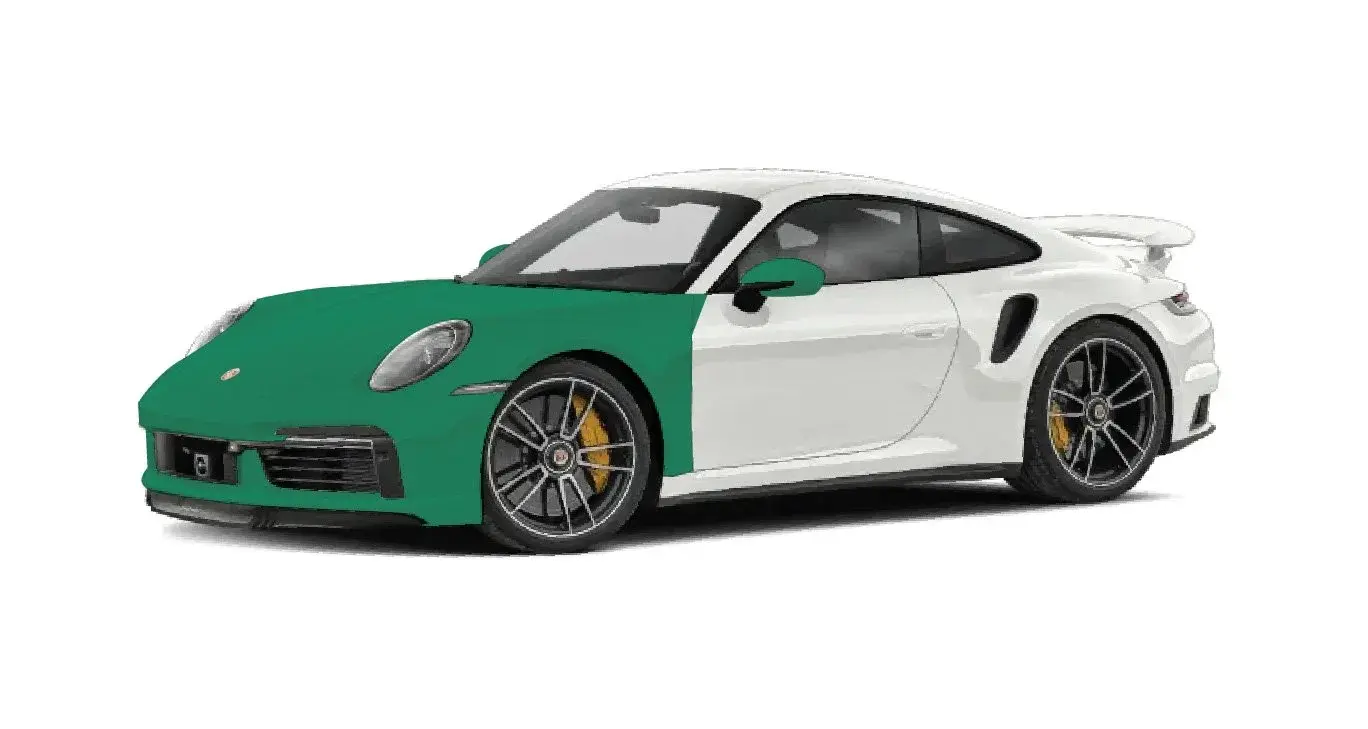
| Partial Front | A cut line across the hood and fenders, bumper seams, mirror caps, headlight rims | The line across the hood and fenders |
| Full Front | Hood edges at the cowl and fender gaps, fender edges at the doors, bumper seams | Panel gaps at the front of the doors and along the hood |
| Track Package | Full front edges plus the A-pillars, a cut line on the roof and the bottoms of the doors at the rockers | The roof line and the rocker edges, which sit low and take spray head-on |
| Full Vehicle | Every panel gap, door edge and opening | All of them; use the wand gently and from a distance |
A wash routine that suits film
- Rinse loose grit off with a gentle flow of water, working from the top down.
- Wash with soap and a soft mitt or cloth, in straight passes along the panel.
- Wash along an edge, never into it, so the mitt can’t catch and roll the film.
- Rinse again, then dry with a clean microfibre, patting at the edges.
Specific methods, mitt by mitt, are on washing a car that has PPF, and the automatic-wash question on whether a filmed car can use an automatic wash.
Products: what LLumar allows
LLumar keeps it simple. Its care advice is frequent hand washing and, if you wax, a non-abrasive wax, and its Platinum Gloss page says owners can “wash, wax, and drive” without worry. Read that as a rule about abrasives: cutting compounds, polishing pastes and scouring pads have no place on the film.
What should you clean off film right away?
Bird droppings first, then sap, bug splatter, tar and oil spots. LLumar calls droppings a staining hazard and asks for prompt removal, and its Platinum pages describe the HydroGard top coat as resisting stains from dirt, oil, tar and bugs, which is help, not immunity.
Timing matters most in the sunny months. ECCC’s normals for Abbotsford Airport log 276.7 hours of bright sunshine in July and 263.2 in August, against about 65 hours in each of November and December, so a midsummer dropping can spend many more hours under strong sun before you get to it.
| Contaminant | Where it lands | What to do |
|---|---|---|
| Bird droppings | Hood, roof, mirrors | Soak with water under a soft cloth, lift without rubbing |
| Tree sap | Hood and roof, under trees | Soften and lift gently; ask the shop before using a solvent |
| Bug splatter | Bumper, mirrors, headlights | Wash soon after highway trips; don’t scrape |
| Tar and road film | Lower bumper, rockers | Regular washing; don’t scrub at film edges |
Whether film actually stops etching from these, and what happens to unfilmed paint beside it, is answered on PPF versus droppings and sap. For a car parked under trees, keeping sap and pollen off a parked car covers parking and cleaning habits.
How do you heal swirls and light scratches in the film?
With warmth, not polish. LLumar says its top coat lets most surface scratches heal when they’re exposed to heat, and names three sources: the sun, warm water, and a body panel warmed by the running engine.
That works differently through a Fraser Valley year. In July and August, an afternoon parked in the sun usually does the job. Between November and February, when Abbotsford averages roughly 65 to 100 hours of sunshine a month, the quicker route is a warm-water rinse over the marked area, or a drive that leaves the bonnet warm, then a look in good light.
ECCC grades its sunshine series as less complete than its temperature records, so treat these as a guide to the seasons rather than exact hours.
| Month (Abbotsford A normals) | Bright sunshine | Easiest heat source for healing |
|---|---|---|
| July | 276.7 hours | Sun on a parked car |
| September | 201.9 hours | Sun, or a warm-water rinse |
| November | 64.7 hours | Warm water or engine heat |
| January | 68.3 hours | Warm water or engine heat |
What heat won’t fix
Self-healing is for the top coat. A stone that cuts through the film, a key scratch or a gouge from a sharp edge leaves damage heat can’t close. Don’t polish it or trim it; bring it in. Whether a damaged section can be patched or the panel needs new film is weighed on patching damaged PPF, and the science of the top coat on what self-healing PPF means.
Can you wax, seal or ceramic coat PPF?
Yes, with products that aren’t abrasive. LLumar includes non-abrasive waxes in its definition of proper care, and coating over film is routine at the shop: the four-layer Signature package lists PPF in its coverage next to the paint, wheels, glass and trim.
Wax and sealant
A non-abrasive wax or sealant can go on film like it goes on paint. Check the label for “cleaner wax” or polish content, which usually means mild abrasives, and leave those off. For effort and staying power, waxes are set against a coating on the coating, wax and sealant comparison.
Ceramic coating over film
A coating makes filmed panels easier to rinse clean and keeps the film and the bare paint beside it behaving the same way in the rain. It adds nothing to stone protection. LLumar’s Valor page notes that how long that film’s water repellency lasts depends partly on road treatment chemicals and on what you clean it with and how often, which is a reminder that any slick top layer wears with washing. Coating film, and the timing after an install, is set out on ceramic coating over PPF; looking after the coating itself through a wet winter is the subject of ceramic coating care in a rainy climate.
Matte film
Platinum Matte is built to stay flat, with the same HydroGard top coat. Anything that adds gloss works against it, so ask the shop before putting a wax or glaze on matte film.
How do you care for PPF through a Fraser Valley winter?
Rinse salt and grit off often, especially from the lower panels, keep scrapers and stiff brushes off filmed paint, and wash gently even when the car is filthy. Film that’s already on copes with cold: LLumar points to installs in Calgary, Colorado and Norway and says its film, properly cared for, can withstand winter cold.
What the film meets is the issue. The City of Langley brines its main routes when snow is forecast, and salts them, with sand on hills, once it’s falling. Abbotsford’s normals add about 55 cm of snow a year, 35 cm of it in December and January, and 12 to 14 nights at or below freezing in each of those two months.
Brine on the film
Brine dries to a white film on the bumper and rockers. Rinse it off after treated-road drives rather than letting it build up over weeks, and wash it off before you wipe anything, because dried salt and sand are abrasive. Does PPF protect against road salt explains what the film shields and what it leaves exposed.
Snow and ice
Brush snow off filmed panels with a soft snow brush, lightly, and never chip ice off a filmed hood or bumper with a scraper. Let the car warm up and the ice let go instead.
Grit on the front end
Winter is when the front end takes its hits. After a sanded stretch, look over the bumper and hood for small cuts in the film. Chips in the film itself are the film doing its job; the winter rock chip guide covers the rest of the car.
Removal in cold weather
Should the film ever need to come off, have a professional do it indoors. LLumar cautions that in severe cold the film and its adhesive can part company, and it sets 13 °C (55 °F) as the floor for removal.
What should you check on the film, and when is it a warranty issue?
Every month or two, walk around the car after washing it and look at the edges, the leading surfaces and any spot that looks different from the paint beside it. Most findings need a cleaning; a few need the shop and your invoice.
| What you see | Likely cause | What to do |
|---|---|---|
| Dark line along an edge | Grime caught at the film edge | Wash along the edge gently; don’t pick at it |
| Corner or edge lifting | Pressure, a brush wash or a knock | Stop washing over it; show the shop |
| Light swirls or haze in the film | Wash marring in the top coat | Warmth: sun, warm water or engine heat |
| A cut or tear | A sharp stone or contact | Bring it in; heat won’t close it |
| Film looks yellow next to bare paint | Possible film discolouration | Compare in daylight, then bring the invoice |
| Stain in one spot | Something sat on the film too long | Clean it, then show the shop if it stays |
Platinum carries LLumar’s 10-year limited warranty, with restrictions and a referral to the dealer for details. Yellowing, cracking, bubbling and peeling make up the defects the shop names, while LLumar rules out lifting from pressure washers and automatic washes. Read every term on the shop’s warranty page; telling real yellowing from grime is covered on does PPF turn yellow.
Film on the headlights
Clean headlight film like the rest: soap, water, a soft cloth and no abrasives. If a provincial inspection is coming up, bear in mind that BC’s 2025 inspection manual fails lamps with anything over the lens (item 1.0(a)), and clear film is not excepted; phone the facility first.
When should you bring the car back to Brookswood Tint?
Bring it in for anything you’d otherwise be tempted to fix yourself: a lifted edge, a cut, something under the film after the first week, or a spot that won’t clean.
Attach photos and the invoice to the PPF contact form, or reach the shop by phone or text at 604 534 6433. Walking in? Look for Unit 312 at 20560 Langley Bypass; hours run 9:00 to 17:00, six days, with Sunday closed. Planning more coverage, or a coating on top of the film? Film packages and prices are on the PPF service page; coatings are quoted per car from the ceramic coating page.