How does Fraser Valley weather wear on a ceramic coating?
Mostly through what the rain carries, not the rain itself. From October to March the Fraser Valley is wet on most days, and that water arrives at your paint as road spray loaded with grime, brake dust and, in winter, salt and grit. A coating’s job is to let that slide off; your job is to wash off what doesn’t.
Thirty years of Environment and Climate Change Canada records (1981 to 2010) from the Abbotsford Airport station, a short drive east of Langley, show how the year divides:
| Month | Days with precipitation | Days with 10 mm+ of rain | Nights at or below 0 °C | Humidity at 3 p.m. |
|---|---|---|---|---|
| January | 20.1 | 6.7 | 12.4 | 73% |
| February | 16.2 | 4.2 | 10.7 | 63% |
| March | 19.1 | 5.2 | 6.1 | 60% |
| April | 16.3 | 4.0 | 1.5 | 56% |
| May | 14.4 | 3.5 | 0 | 56% |
| June | 13.0 | 2.3 | 0 | 57% |
| July | 7.3 | 1.2 | 0 | 55% |
| August | 7.1 | 1.4 | 0 | 53% |
| September | 9.6 | 2.6 | 0 | 56% |
| October | 15.8 | 5.4 | 1.2 | 66% |
| November | 20.8 | 8.9 | 7.2 | 74% |
| December | 19.8 | 5.7 | 13.8 | 74% |
| Year | 179.5 | 51.1 | 52.9 | 62% |
Three things in that table shape the care routine. Heavy-rain days, 10 mm or more, cluster from October to March, which is when road spray is worst. Afternoon humidity sits in the 70s from November to January, so a washed car dries slowly on its own and is better dried by hand. And frost nights run from November into March, which is when salt and brine go down and when wash water left in the gaps can freeze.
Whether a coating is worth having in this weather is a separate question, answered on is ceramic coating worth it in BC’s rain.
What should you do in the first days after a coating?
For a full day after pickup, the coating has to stay dry. Book so that day is forecast dry, or so the car can go straight into a garage.
The shop keeps a coated car for one to three days, most of it spent on prep, correction and curing rather than the coating itself, then asks for that first day dry. In a November week with rain on two days out of three, that means checking the forecast before you book the pickup, not after. If showers catch the car on the drive home, don’t panic and don’t wipe it; rain right after a coating explains what to do, and how long ceramic coating takes to cure covers the days beyond the first.
| Stage | What happens | Your part |
|---|---|---|
| Drop-off | Wash, decontamination and the correction your package includes | Mention anything sticky or stained |
| In the shop, 1–3 days | Layers applied: one, two or four, by package | Nothing; the shop controls the conditions |
| Pickup day and the next 24 hours | The coating needs to stay dry | Pick a dry day or garage the car |
| First wash | Hand or touchless | Ask the shop when to do it and with what |
Booking in winter has its own considerations, covered on can you ceramic coat a car in winter.
How should you wash a coated car in the wet season?
By hand with two buckets and a pH-neutral soap, or through a touchless wash, and never through an automatic brush wash. Those are the shop’s own rules for coated paint: brushes eventually leave fine scratches in any finish, coated or not.
Rain doesn’t set the schedule; the roads do. Wash when road film dulls the paint, when brine has been down, or when the beading on the hood starts to look weaker than on the roof. In the wet months that tends to mean more often than in summer, not less, even though the car is rarely dry.
A wet-season wash, step by step
- Rinse from the bottom up first, wheel wells and lower doors, where spray and grit collect, then the rest from the top down.
- Wash from the roof down with a soft mitt, two buckets and pH-neutral soap, so the dirtiest panels come last.
- Rinse thoroughly, letting the water sheet and bead off.
- Dry the car with clean microfibre or a blower rather than leaving it to the damp air.
- Check the door shuts and mirror bases, where water hides and drips onto clean paint.
Mitts, towels and the rest of the method are on washing a coated car properly, and which car washes are safe is on can a ceramic-coated car go through a car wash. Swirls mostly come from the wash itself, which is why how to prevent swirl marks is worth reading too.
Wheels
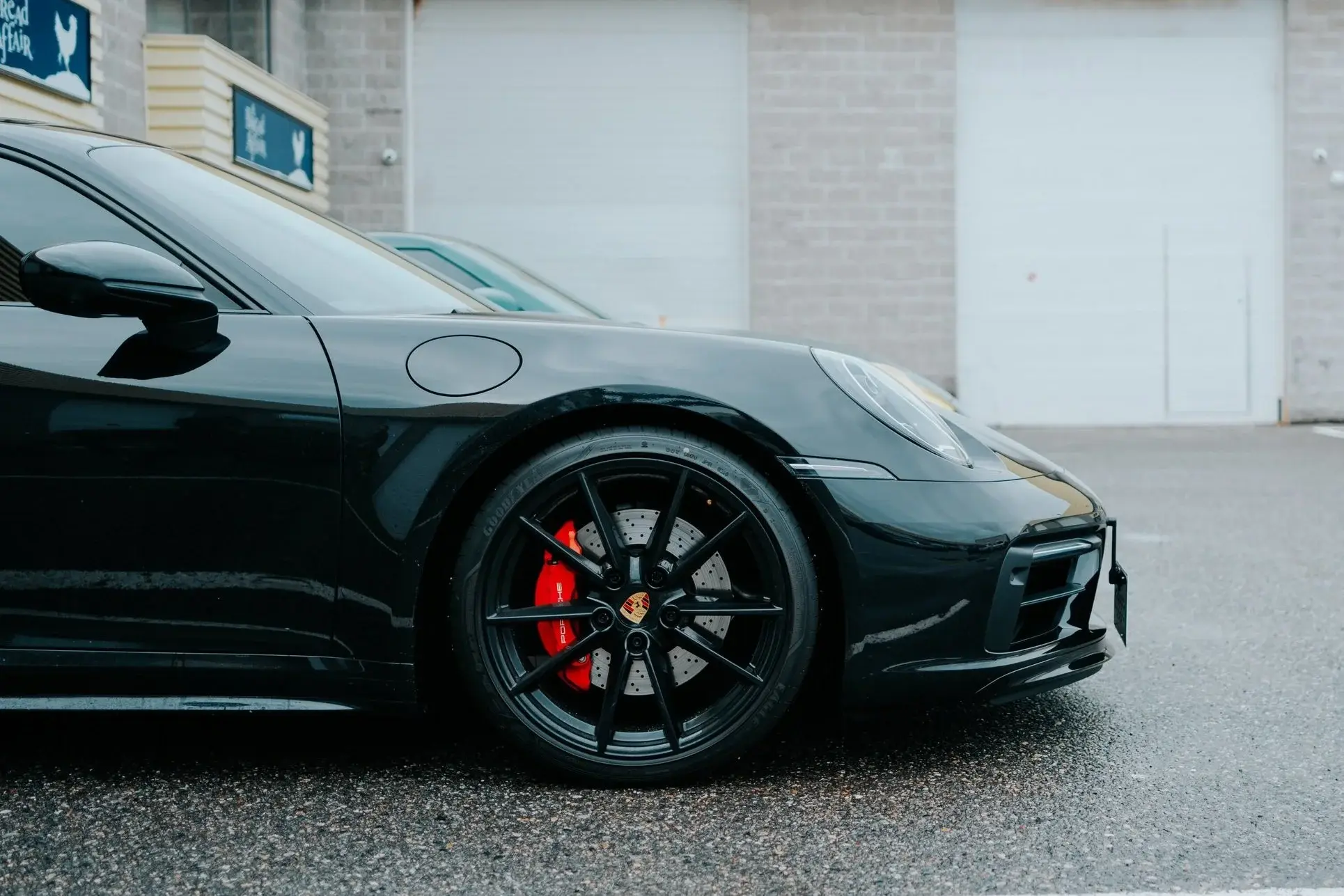
Wheels collect brake dust and road grime faster than any panel. The shop’s wheel coating is there to keep brake dust from bonding, so a gentle wash should be enough; ask the shop before using a strong wheel cleaner on coated wheels. Wheel ceramic coating explains what’s covered.
Glass
A coating on the windshield helps rain clear in the wet, and the Performance and Signature packages both include glass. One exception matters: on Subarus with EyeSight, a Subaru service bulletin forbids water-repellent windshield coatings, inside and outside alike. Tell the shop your model, and see glass ceramic coating for the rest.
Where can you wash a car in Langley without breaking the rules?
At a commercial wash, or at home only if the wash water soaks into lawn, garden or gravel instead of running to the street. In the City of Langley that’s written into the sewer bylaw.
In the City of Langley: Under section 6.19 of Bylaw No. 3210, nobody may let wash water reach a storm sewer, a street, the neighbour’s lot or a watercourse. For washing at a home, the bylaw prefers the water be steered onto landscaping, grass or gravel and left to soak in or evaporate, and it bars detergents, “including biodegradable, phosphate-free” ones, from the storm system.
That matters more in a rainy climate than it sounds. A driveway that slopes to the street sends soap and grime down the nearest catch basin. Practical options:
- Park on the lawn or a gravel pad for a home wash, so the runoff soaks in where it lands.
- Use less water: a bucket wash with a gentle hose rinse produces far less runoff than a running hose.
- Use a commercial wash with a touchless option when the yard is waterlogged; the same bylaw requires non-residential properties to send car-wash water to the sanitary sewer.
Other municipalities, the Township of Langley among them, set their own rules; look yours up before a driveway wash.
How do you dry a coated car and avoid water spots?
Dry it yourself with clean microfibre or a blower, every time, even on a grey day. Water that evaporates on the paint leaves behind whatever it was carrying, and in a damp climate it takes a long time to evaporate.
The tap water itself isn’t the main villain in the City of Langley. The City’s 2025 water quality report says its supply comes from Metro Vancouver’s Coquitlam source, and its metal tests found total calcium of 825 to 1,040 µg/L, about 1 mg/L, and magnesium below 100 µg/L. Those are the two minerals behind hard-water rings, and there’s very little of either. Water from a private well is a different matter: its mineral content depends on the well, so dry the car promptly if that’s your supply.
What’s left is grime. A clean, dried car sheds the next shower with little left behind; a car left to air-dry after a wash, or one that sat under dirty spray, keeps marks where the drops dried. If spots have already etched into the finish, washing won’t remove them; does ceramic coating prevent water spots explains why, and water spot removal covers the correction route.
| Situation | What to do |
|---|---|
| After a home or touchless wash | Dry with clean microfibre or a blower |
| After rain on a clean car | Usually nothing; the coating sheds it |
| After rain on a dirty car | Rinse and dry; don’t wipe dirty droplets |
| Well water at home | Dry the car straight away |
| Spots that stay after a wash | Ask about correction before scrubbing |
How do you protect the coating from salt, sap and winter grit?
Rinse salt off the lower car often, lift sap and droppings as soon as you see them, and never wipe grit across the paint. A coating gives contamination less to grip and buys you time; it doesn’t stop chips or stand up to a dragged handful of sand.
Road salt and brine on a coating
On provincial highways, TranBC says maintenance crews use salt, brine, anti-icing products and abrasives, alone or combined. In town, the City of Langley pre-treats key routes with brine and salts its streets during snowfall. Rinse the wheel wells, rockers and lower doors after drives on treated roads, then wash properly when the weather allows. Does ceramic coating protect against road salt and the BC road-salt guide for paint go further.
Sap and droppings
Soften sap and droppings with water and lift them off promptly; don’t scrape. Does ceramic coating protect against tree sap covers what the coating does with sap.
Grit and chips
Sand from the roads is abrasive. Rinse before anything touches the paint. Stones are another matter entirely: a coating can’t stop a chip, as does ceramic coating prevent scratches or rock chips explains, so drivers who want chip protection pair it with paint protection film on the front end.
How do you tell when a coating needs attention?
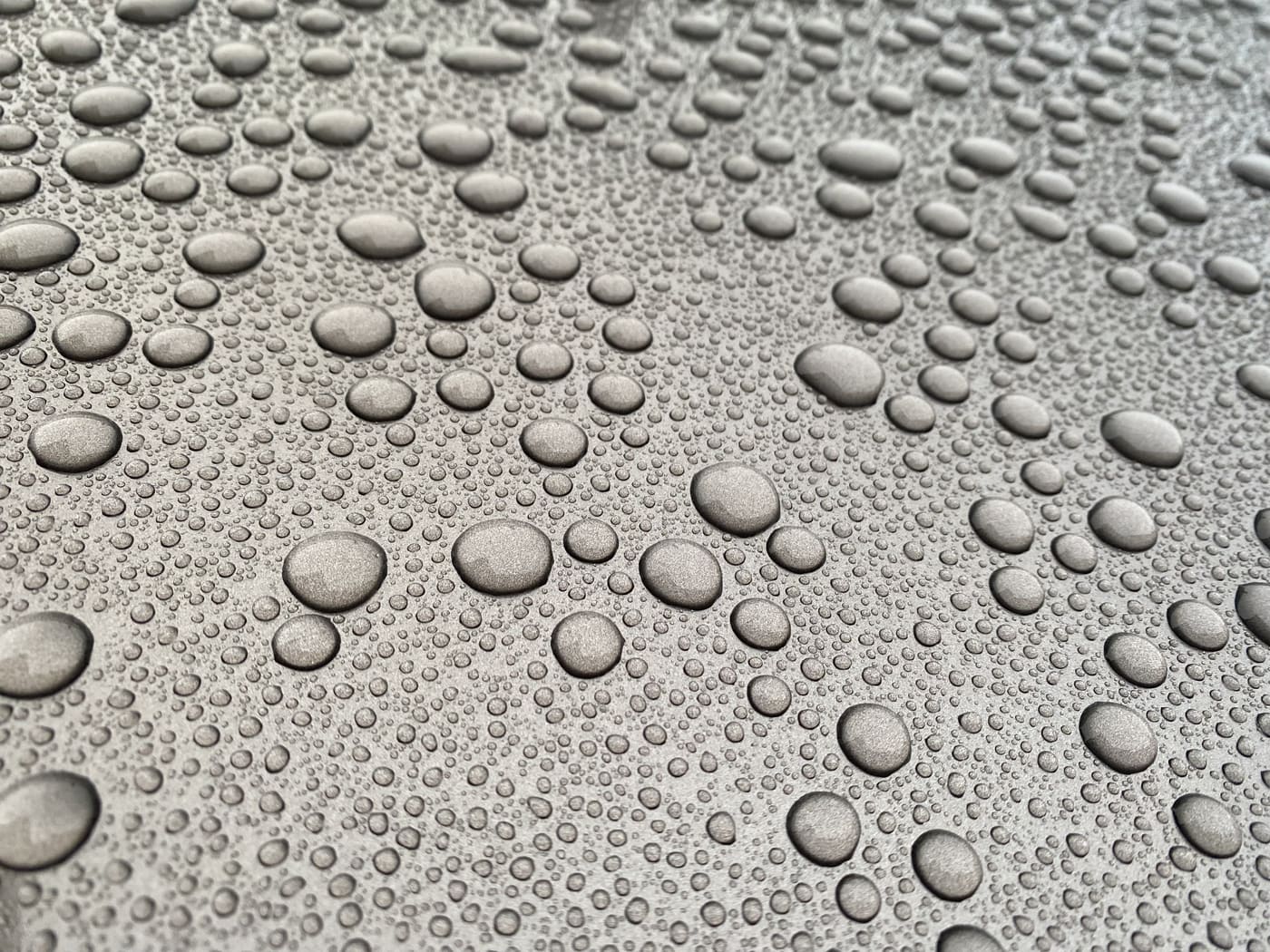
Watch the water. A healthy coating throws rain into tight beads and lets it run off; when one area starts holding water in flat sheets while another still beads, that area needs a proper wash, a decontamination or a check by the shop.
Every car carries its own test panel. The roof and upper panels see the least scrubbing; the lower doors, rockers and front bumper see the most road grime and the most washing. Watching how water behaves on each tells you where the coating is working and where dirt is masking it.
| What you see | Likely reason | Next step |
|---|---|---|
| Even beading everywhere | Coating clean and working | Keep the routine |
| Weak beading on lower panels only | Road film sitting on the coating | A thorough hand wash |
| Weak beading after a thorough wash | Bonded contamination | Ask the shop about decontamination |
| Rough feel under a clean hand | Grit or fallout stuck to the surface | Don’t rub; have it decontaminated |
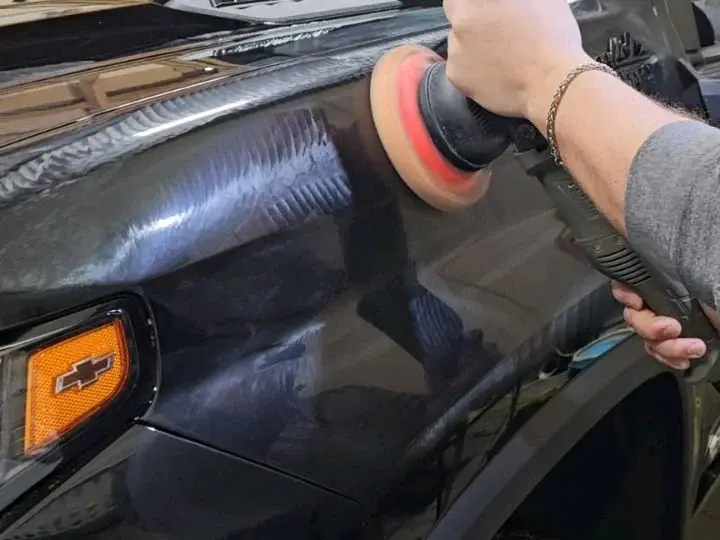
| Fine scratches in good light | Wash marring | Ask about a polish before adding layers |
Topping up with a spray product or wax is weighed on can you wax over ceramic coating, routine upkeep on does ceramic coating need maintenance, and these checks in more depth on signs a coating is still doing its job. Wipe-on alternatives are lined up against coatings in coating versus wax and sealant.
Which coating should a wet-climate driver book, and how?
Choose by ownership horizon and by how much of the car should be coated, then aim the pickup at a dry forecast. All three of the shop’s packages are graphene-ceramic and quoted per vehicle.
| Package | Layers | Prep included | Coverage |
|---|---|---|---|
| Essential | One | Decontamination, clay and a machine polish | Painted panels |
| Performance | Two | Correction in two stages | Painted panels, glass, faces of the wheels |
| Signature | Four | Correction in full | Painted panels, film, wheels, glass and trim |
If you want the glass and wheel faces coated as well, that starts at Performance. Expect one to three days in the shop. Describe the car and the state of its paint on the coating quote form, or ring or text 604 534 6433. The shop itself sits in Unit 312 of 20560 Langley Bypass and keeps 9:00 to 17:00 hours six days a week, Sunday off. Packages and add-ons are on the ceramic coating page.