What is LLumar CTX window film?
CTX is the LLumar ceramic tint pitched just below the top of the range: a charcoal film with no metal and no mirror look, made to cut heat and glare in a shade as dark or light as you choose. LLumar’s CTX product page says it is “designed to improve comfort and add a sleek look” and comes in “color-stable charcoal shades, from deep limo-dark to subtle gray”.
The same page claims CTX “excels at blocking heat”, “shields you from 99% of harmful UV rays” and “offers added protection against injuries from shattered glass.” LLumar’s spec sheet is a little more precise on UV, rating every CTX shade above 99% between 300 and 380 nm. The one-line pitch on that sheet is “excellent heat rejection without blocking electronic signal transmission”.
LLumar CTX specs, shade by shade
LLumar makes CTX in seven shade codes. Every number below is LLumar’s, taken from LL0116NAEN, the 03/26 edition of its performance data sheet. LLumar tested to NFRC guidelines on quarter-inch (6 mm) clear test glass, so factory-tinted or laminated glass in a real car will shift them.
| Shade | Visible light (VLT) | TSER | IRER | SIRR | Glare reduction | Visible reflection | UV |
|---|---|---|---|---|---|---|---|
| CTX 05 | 5% | 58% | 50% | 72% | 94% | 5% | >99% |
| CTX 15 | 20% | 53% | 49% | 69% | 78% | 5% | >99% |
| CTX 25 | 28% | 50% | 47% | 66% | 69% | 5% | >99% |
| CTX 30 | 34% | 49% | 48% | 68% | 62% | 6% | >99% |
| CTX 35 | 37% | 48% | 48% | 69% | 58% | 6% | >99% |
| CTX 40 | 44% | 47% | 49% | 69% | 50% | 6% | >99% |
| CTX 50 | 55% | 43% | 48% | 68% | 37% | 7% | >99% |
What the CTX table tells you
Infrared control barely changes with darkness: IRER stays between 47 and 50% from the darkest code to the lightest. What does change is total solar energy, which falls from 58% to 43% as the film lets in more daylight, and glare reduction, which drops from 94% to 37%. So a light CTX shade still handles infrared about as well as a dark one; the darker codes add privacy and glare control on top. IRER includes infrared the film soaks up and re-radiates into the cabin; the sheet calls it “a more complete measurement” than SIRR, the larger figure adverts like to use.
Where does CTX sit in LLumar’s window film line?
CTX sits in the middle. It rejects far more heat than LLumar’s dyed ATC film, beats the metallized ATR series at most shades without any metal, and trails IRX, the line LLumar’s sheet credits with “our best heat rejection”.
| Code | ATC dyed: TSER / IRER | CTX ceramic: TSER / IRER | ATR metallized: TSER / IRER |
|---|---|---|---|
| 05 | 44% / 22% | 58% / 50% | 61% / 54% |
| 15 | 40% / 22% | 53% / 49% | 48% / 38% |
| 30 | 36% / 22% | 49% / 48% | 44% / 38% |
| 35 | 35% / 22% | 48% / 48% | 44% / 40% |
| 40 | 33% / 22% | 47% / 49% | 41% / 38% |
| 50 | 28% / 22% | 43% / 48% | 35% / 32% |
CTX against ATC dyed film
At every code both lines share, CTX keeps out 13 to 15 more points of total solar energy, and its 47–50% IRER is more than double ATC’s flat 22%. ATC is the film in the shop’s starting prices; the LLumar ATC page has its full table.
CTX against ATR metallized film
ATR only comes out ahead at 05, its darkest code, with 61% TSER against 58% for CTX 05. From 15 to 50, CTX leads on both heat columns. LLumar’s sheet describes ATR as giving “a slightly reflective look”, and its visible reflection runs up to 8%; CTX stays at 5–7%. Neither film is on the shop’s menu.
CTX against IRX
IRX holds IRER near 60% in every shade, about 10 to 12 points above CTX at the same code, and it is the ceramic the shop quotes. The shade-by-shade comparison is on LLumar IRX vs LLumar CTX, and the film itself on LLumar IRX nano ceramic.
Can you get CTX at Brookswood Tint?
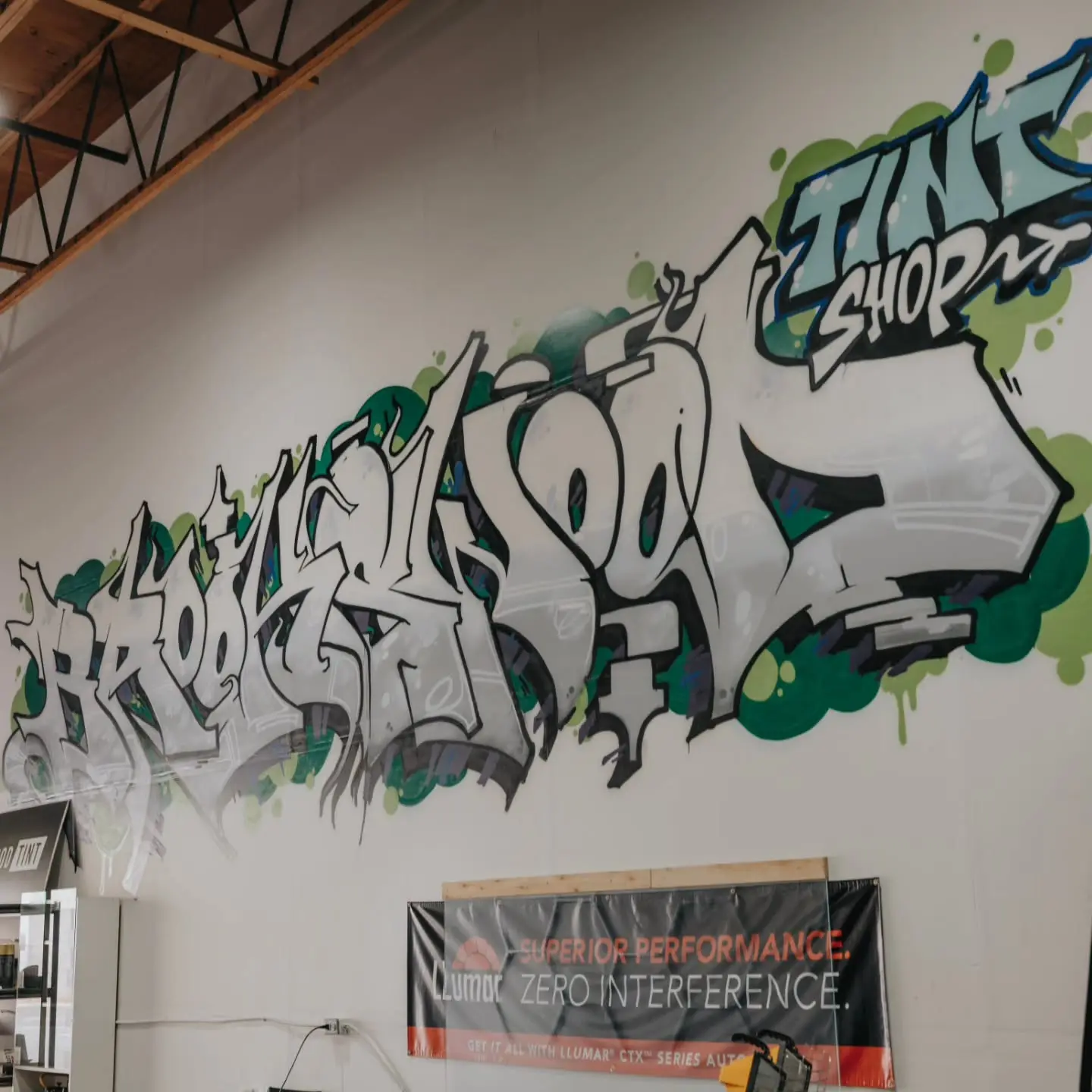
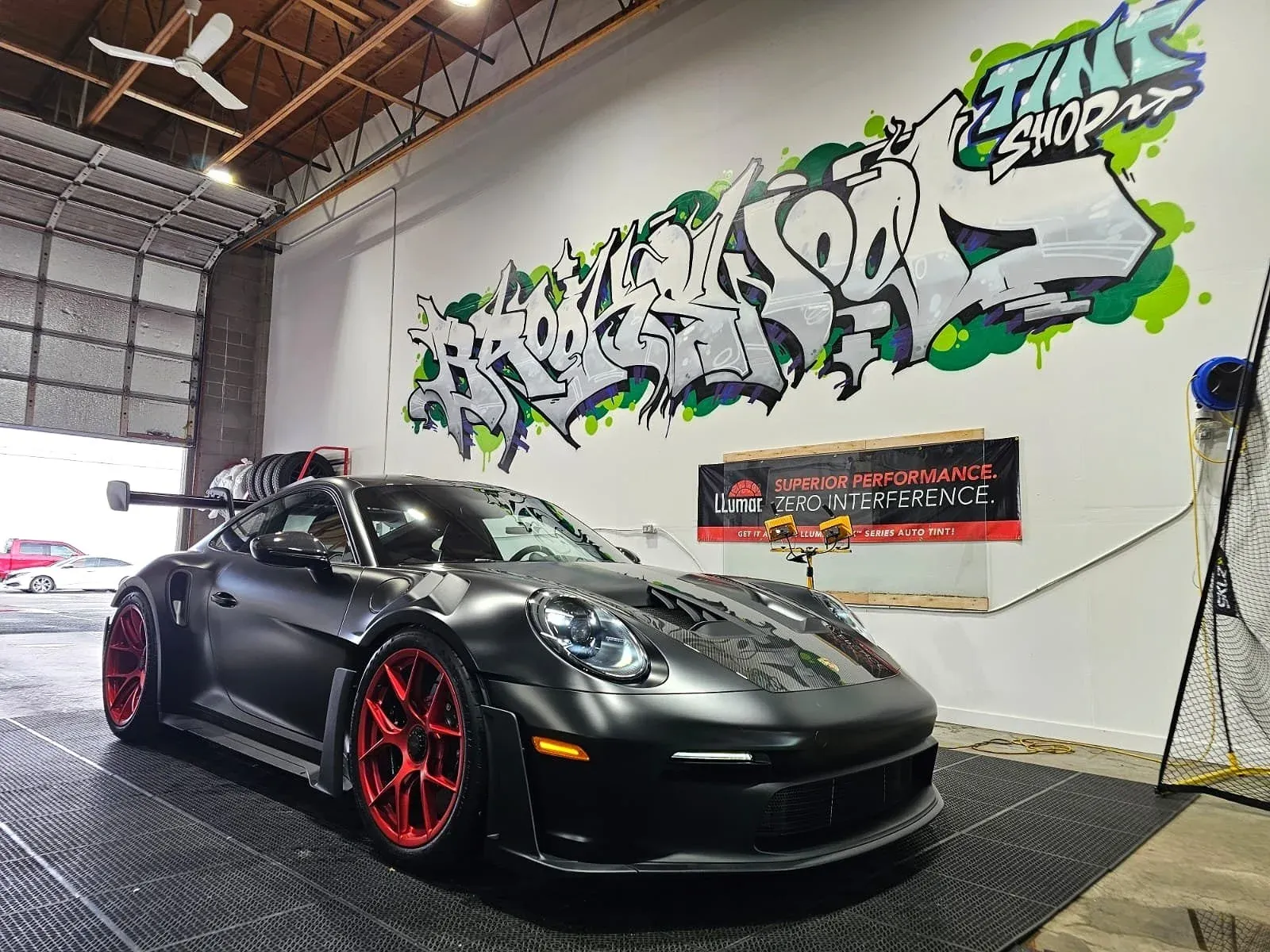
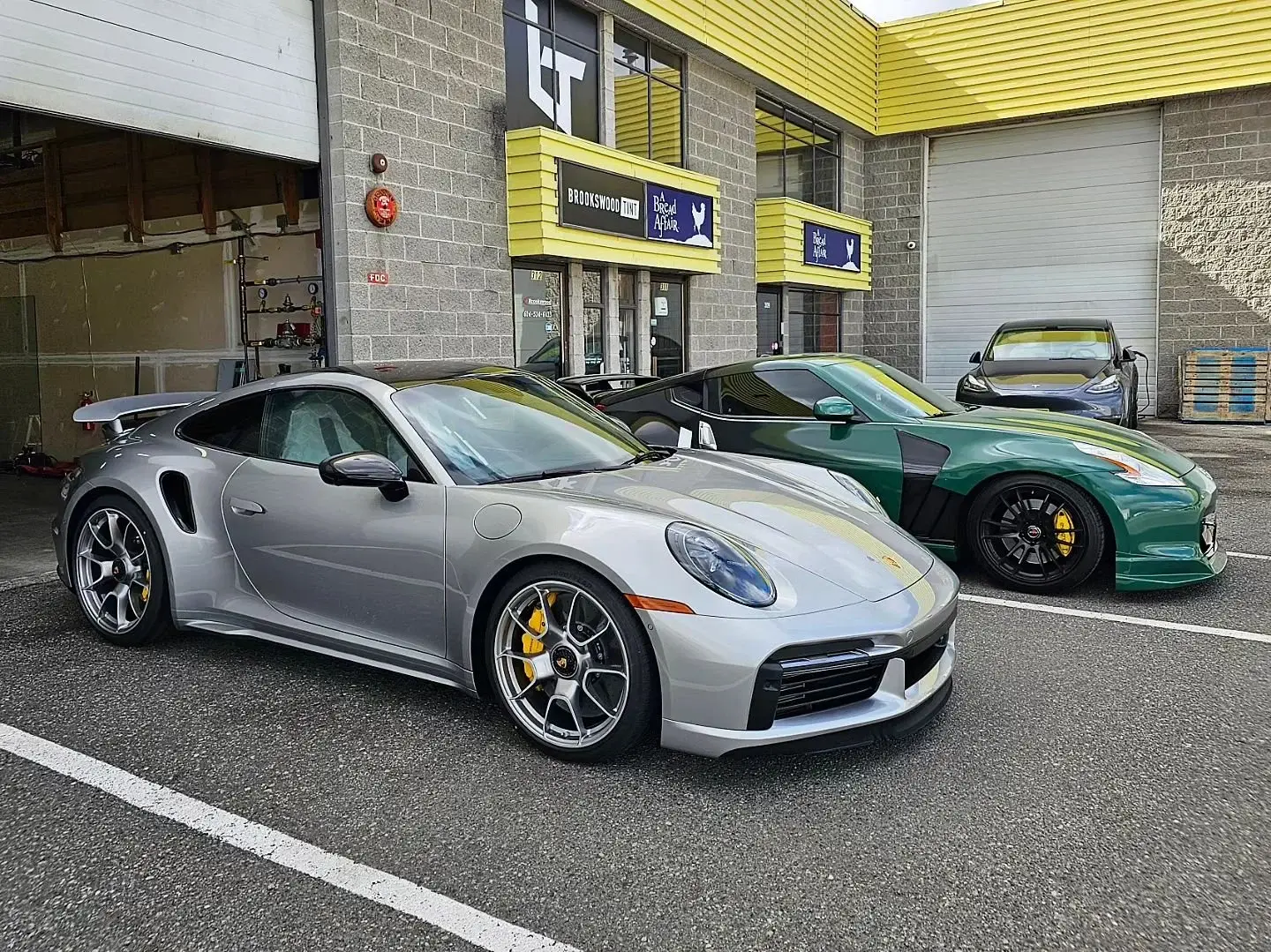
Yes, on request. ATC, IRX and AIR make up today’s menu. Even so, CTX has gone on customers’ cars here, the silver Turbo S in CTX 15 at the top of this page among them, and a LLumar banner for the CTX series hangs on the shop wall. Ask for it by shade code and it is quoted for your car.
CTX is covered like the rest of LLumar’s tint. LLumar’s tint FAQ extends its “manufacturer’s lifetime limited warranty” to every LLumar tint product, CTX among them, with an asterisk: restrictions apply, and you get them from the dealer. Since CTX isn’t a menu film, get the workmanship terms in writing on your quote.
Where can CTX go on a car in BC?
Anywhere behind the driver, in any shade. Under MVAR s. 7.05(8), CTX can cover the rear doors and quarter glass, the back window on any car that has both side mirrors, and the windshield’s uppermost 75 mm. The two front door windows can’t take any film, CTX 50 included.
Ask for CTX on the front doors and the shop will install it, but only after saying plainly that BC doesn’t allow it on the road. Mission RCMP gives $109 as the typical ticket, and a Notice & Order on top of it would mean removing the film and passing an inspection. Tinting front windows in BC explains the rule in detail.
How do you book CTX or a menu film?
Put your car, the glass you want covered and the CTX code in the window tint quote form, and ask for IRX on the same quote if you’d like to compare. IRX is priced per package above ATC, and the tint price list starts ATC rear glass at $220 for a coupe, $240 for a sedan or pickup and $260 for the biggest SUVs and wagons.
Most cars are finished the same day; tinting every window of a sedan or SUV runs two to four hours. Patterns come off the plotter for your exact model, and each one is heat-shrunk to its window by hand. Once home, leave the glass up for three to five days; the film needs that long to cure.