
What does ADAS calibration involve?
It re-teaches a sensor where it’s pointing. Transport Canada uses “Advanced Driver Assistance Systems” for features such as blind spot warning, automatic emergency braking and lane keeping assistance, and notes that systems and their names differ by maker.
ICBC’s calibration policy for glass claims gives the purpose in one line: calibration is performed “so that the camera can relearn the vehicle’s position within the sensor’s field of view.” Depending on the carmaker, that means a static calibration, a dynamic one, or both, which ICBC says is also called universal calibration. I-CAR, the collision repair training body, describes the dynamic kind: it “requires the vehicle to be driven, often times with two technicians and a scan tool,” under set conditions such as speed and road markings.
When does a car need it?
When a sensor or the glass it looks through is disturbed. Toyota’s 2025 Tacoma manual lists these triggers:
| What changed | What Toyota says needs recalibrating |
|---|---|
| Windshield replaced | The front camera |
| Radar sensor removed and refitted, or replaced | The radar sensors |
| Front bumper or front grille replaced | The radar sensors |
On BC glass claims, ICBC notes that a maker’s repair procedure may call for the forward-facing camera to be calibrated during the job. The repair facility has to decide up front whether it can do the calibration, and must keep records for the invoice: photos of the component, the calibration type, and proof it succeeded.
Does window tint affect ADAS calibration?
Not as a trigger: Toyota’s list ties camera recalibration to a new windshield and doesn’t mention film. Toyota’s manual does say not to put window tint on the windshield at all, which is a separate instruction covered on windshield film and driver-assist cameras.
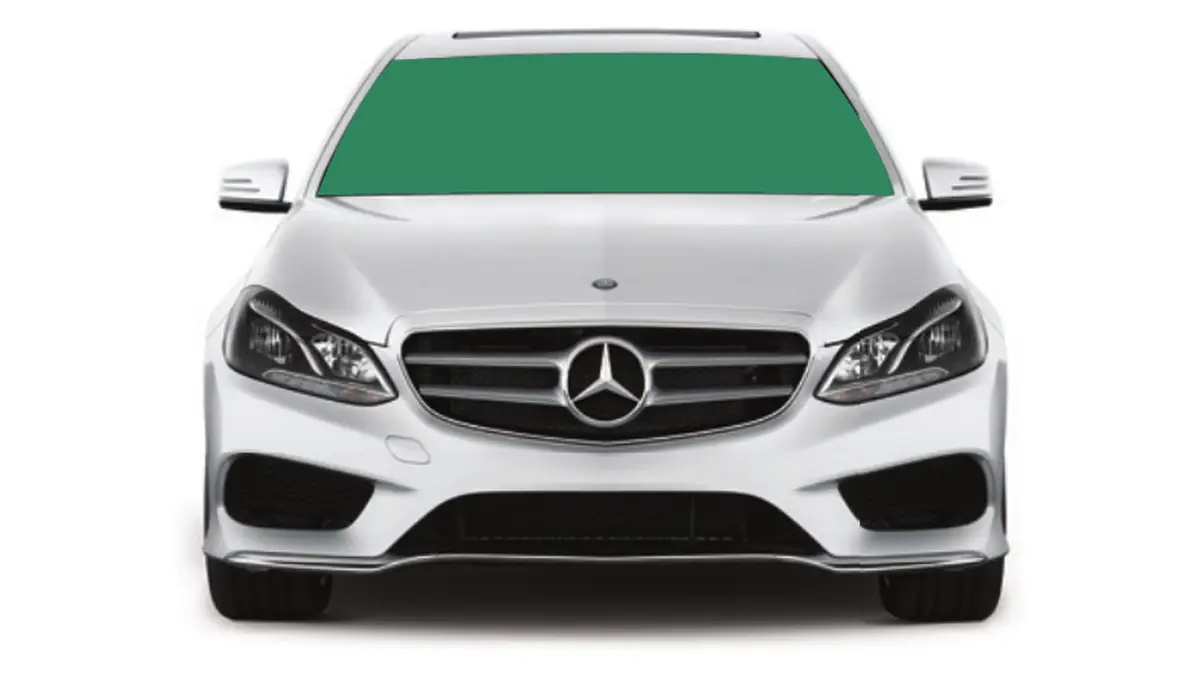
BC’s rule points the same way. Under MVAR s. 7.05(8), windshield film has to stay inside a 75 mm band along the top edge, and Toyota’s no-tint instruction doesn’t make an exception for that strip; whether windshield tint is legal in BC sets out the rule. A full windshield is available from $200 when a customer asks, but the shop explains beforehand that the film won’t be road-legal, that a typical ticket is $109, and that an officer can order it removed and the car inspected.
Calibration isn’t on the shop’s service list; it belongs to the glass facility or dealer doing the repair. If a filmed windshield is replaced, the film leaves with the old glass, so keep your tint invoice and ask ICBC how it treats it. For a strip or full windshield quote, send the year, make and model through the windshield tint page.