
What does compounding do to paint?
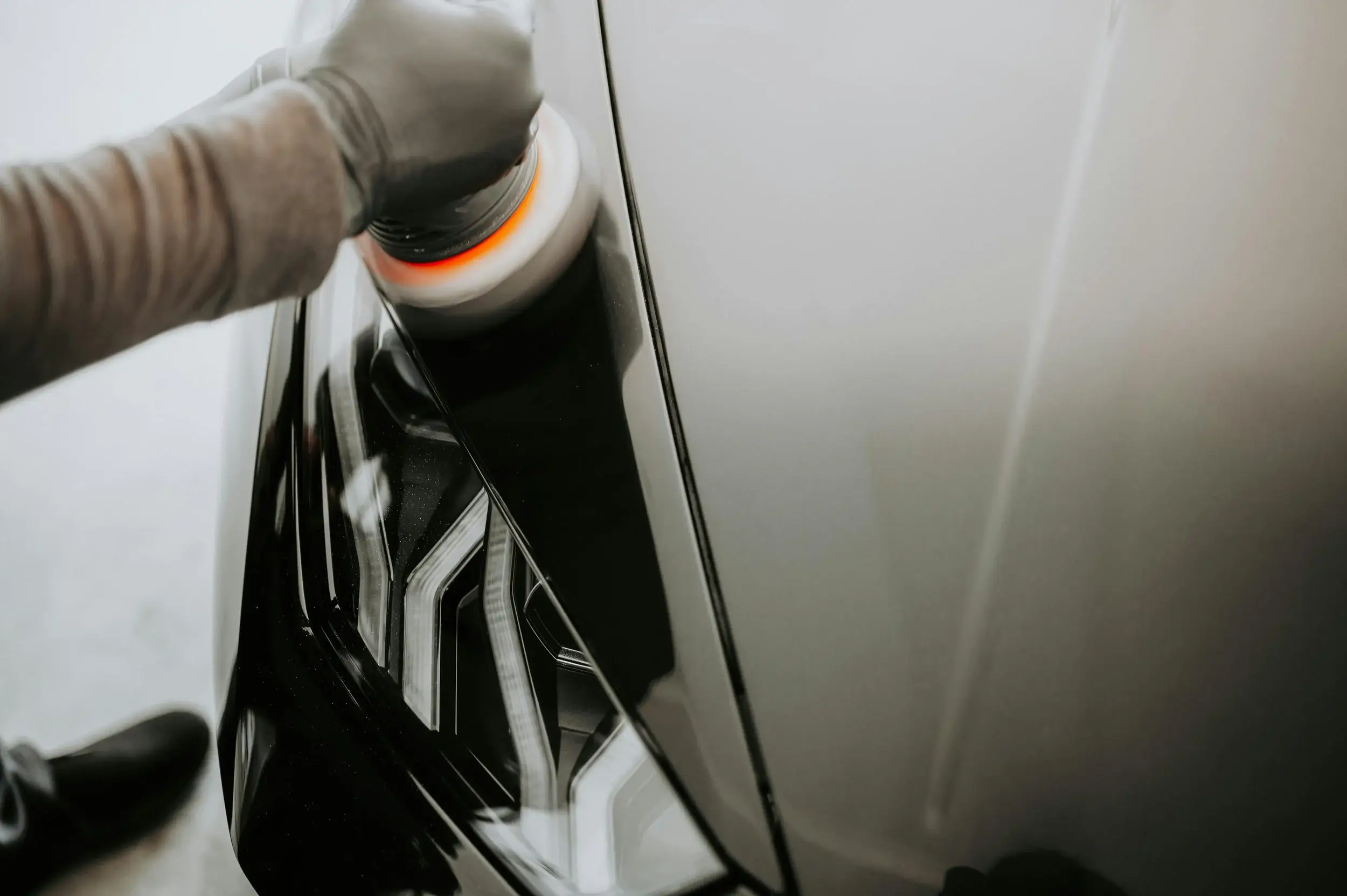
It cuts. A coarse abrasive in the compound removes a thin, even layer of clear coat until the surface sits level with the bottom of the defects, which is how deeper marks disappear rather than being filled.
3M’s Perfect-It finishing chart shows where it falls in a full sequence. After any fine sanding, step one is a rubbing compound used to remove sand scratches completely in the least time, working a 2 ft by 2 ft section at a suggested 1,200 to 2,000 rpm. The pad changes the bite:
| Compounding pad (3M) | What 3M says it gives |
|---|---|
| Wool | Fastest cut and less heat |
| Low-lint | Less lint, a better finish |
| Foam | No lint, and a finer finish still |
Step two is a machine polish, there to remove the swirl marks the compound leaves. That refining work is described under polishing.
How much clear coat does compounding cost?
A few microns, from a layer that is thin to begin with. Chrysler’s bulletin 31-001-13 allows no more than 0.2 mils off when polishing, or 0.5 mils with wet sanding first, and it puts the clear coat on most vehicles at about 1.5 mils. GM’s PIT5763 names the point of no return: base colour transferring onto the pad means the panel must be refinished. The numbers are set out in full on clear coat lost to correction.
Why compounding is used sparingly on BC cars
Because the clear coat it spends is also the paint’s sun protection. GM’s bulletin notes that clear coat contains ultraviolet screeners, and the Fraser Valley sees a fair amount of sun: Environment and Climate Change Canada’s Abbotsford normals record 1,886.7 hours of sunshine a year. Every compounding pass leaves a little less of that clear coat between the colour and the light, so it’s kept for defects a polish can’t reach.
Where compounding appears in the shop’s work
In two of the three correction levels, after the paint has been measured. The one-stage enhancement polish uses no compound. Two-step paint correction pairs a cutting compound with a finishing polish and keeps the car one or two days. Multi-stage restoration goes further, with wet sanding where it’s safe and heavier compounding; it takes three days or more and is priced after an inspection.
Plastic gets the same treatment: full headlight restoration uses progressive wet sanding, then compounding and polishing back to clear. When a mark is too deep for any of it, can paint correction remove deep scratches? explains the alternatives.