
What causes orange peel?
Paint that sets before it levels out. The paint maker PPG defines it as an “uneven, bumpy, or textured surface formation that resembles that of an orange peel,” and lists the usual reasons in a body shop:
- spray gun setup, such as low air pressure, a wide fan or spraying from too far away
- a reducer or hardener that sets too fast for the paint to level
- too little reducer, leaving the paint too thick
- high booth temperatures
- components that weren’t mixed properly
The refinish brand Baslac adds coats applied too thin and high spray viscosity. PPG also notes that “some orange peel is common in most OEM finishes,” so a factory paint job carries some texture too.
How is orange peel taken out?
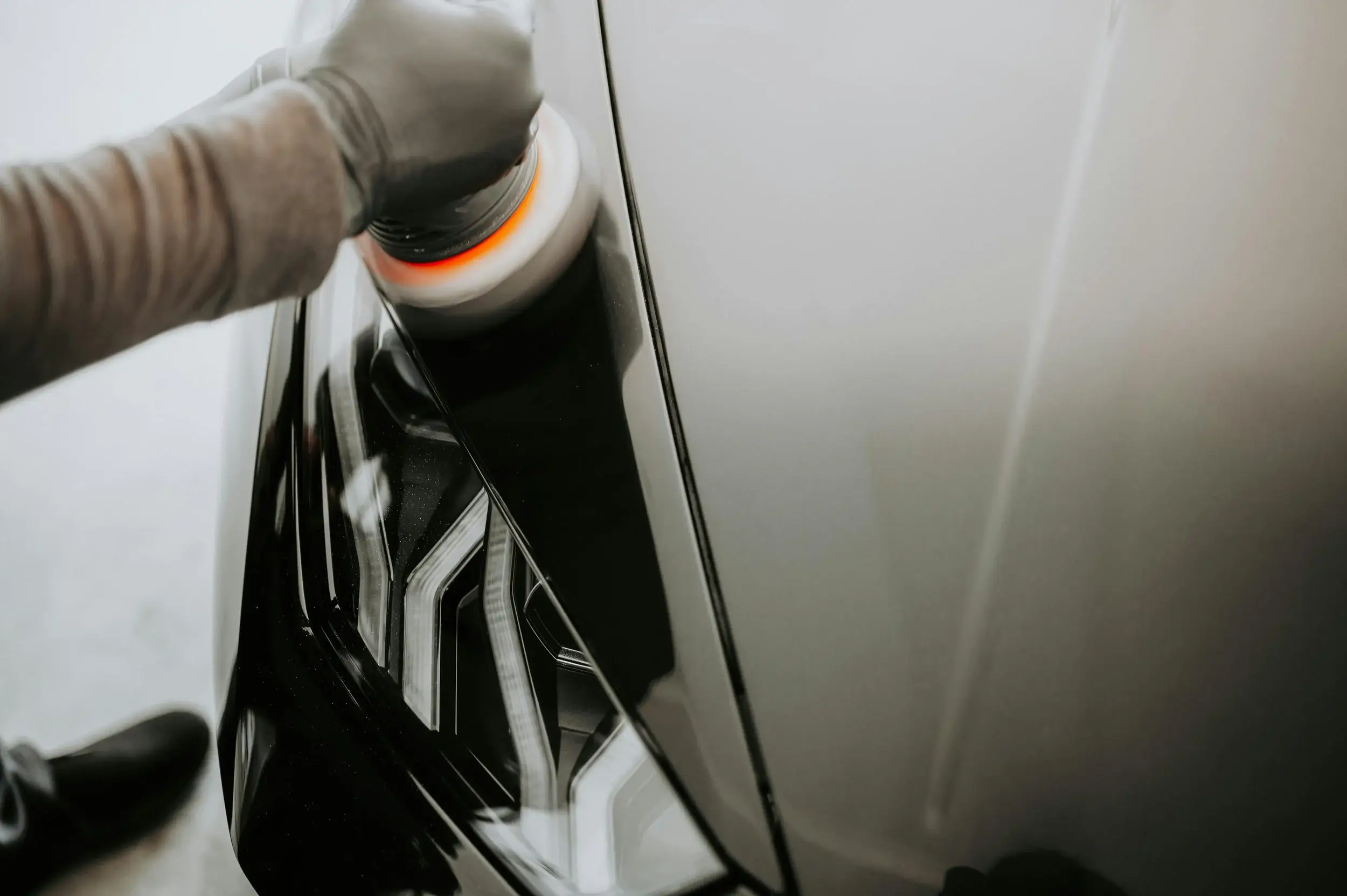
By cutting the high spots down until the surface is flat, then bringing the gloss back. How far you go depends on how heavy the texture is:
| Severity | Approach | Source |
|---|---|---|
| Mild | Machine polish or compound the cured coating | PPG |
| Small area | Sand with P1200, then polishing paste and fine polishing paste | Baslac |
| Large area | Sand down until level, then repaint | Baslac |
3M’s Perfect-It wall chart shows a body-shop version of the small-area route: P1500 or P2000 discs to “level excess surface texture”, finer foam discs to refine the sanding marks, then compound and polish. Each step removes material, and it all comes from the clear coat.
Why does it matter before paint correction?
Because flattening texture spends clear coat that can’t be put back. Chrysler’s collision bulletin 31-001-13 caps clear-coat loss at 0.5 mil for a wet-sand-and-polish repair, on a clear it puts at 1.5 mils for most vehicles. That’s why the shop takes paint thickness readings before it corrects anything; how much clear coat correction removes shows the numbers.
Orange peel is also a different problem from swirls. Swirls are marks in the surface; peel is the shape of the surface itself. The shop’s enhancement polish (one stage, about a day) and two-stage correction (1 to 2 days) are aimed at marks, while its multi-stage restoration, 3 days or more and quoted after inspection, lists wet sanding where the paint can take it. Ask about texture when you book through the paint correction page, and the decision gets made after the paint is measured.