
Why does film need a relief cut?
Because flat film can’t always follow a shape that curves in two directions or folds into a narrow recess. Where stretching would leave wrinkles or put too much stress on the film, a short cut lets each side settle flat on its own.
Installers try stretching first. 3M’s colour change instructions list three methods for recesses: follow the contour without heat, heat-stretch film drawn from at least 20 cm away, or bridge the area, then heat and stretch. For a micro-V channel or a licence plate holder, the same table names relief cutting instead. On paint protection film, 3M’s installation guidelines describe the same struggle on curved panels, with installers stretching out the “fingers” of spare film that bunch up.
Where do relief cuts usually go?
On bumpers, mostly, and around things that break up a smooth surface, such as plate recesses, sensors and badges. When you look at the plan, ask for them low, inside a recess or along a body line, where the eye passes over them.
Pattern software is built to handle much of this before film touches the car. SunTek’s cutting software page lists editing tools with shortcuts for badge and sensor removal, so openings are cut on the plotter. The slit itself is still a decision made for each shape.
Relief cuts and BC winter grit
The bumper is where the chips land, and a relief cut is still an edge. According to TranBC, winter abrasive spread on main highways is limited to pieces of 9.5 mm or less, and raising speed from 80 km/h to 110 almost doubles the energy behind each impact. The front bumper meets that grit head-on. Every cut line in that film should lie flat and be kept clear of pressure-washer spray, the same care wrapped edges need.
How Brookswood Tint handles relief cuts
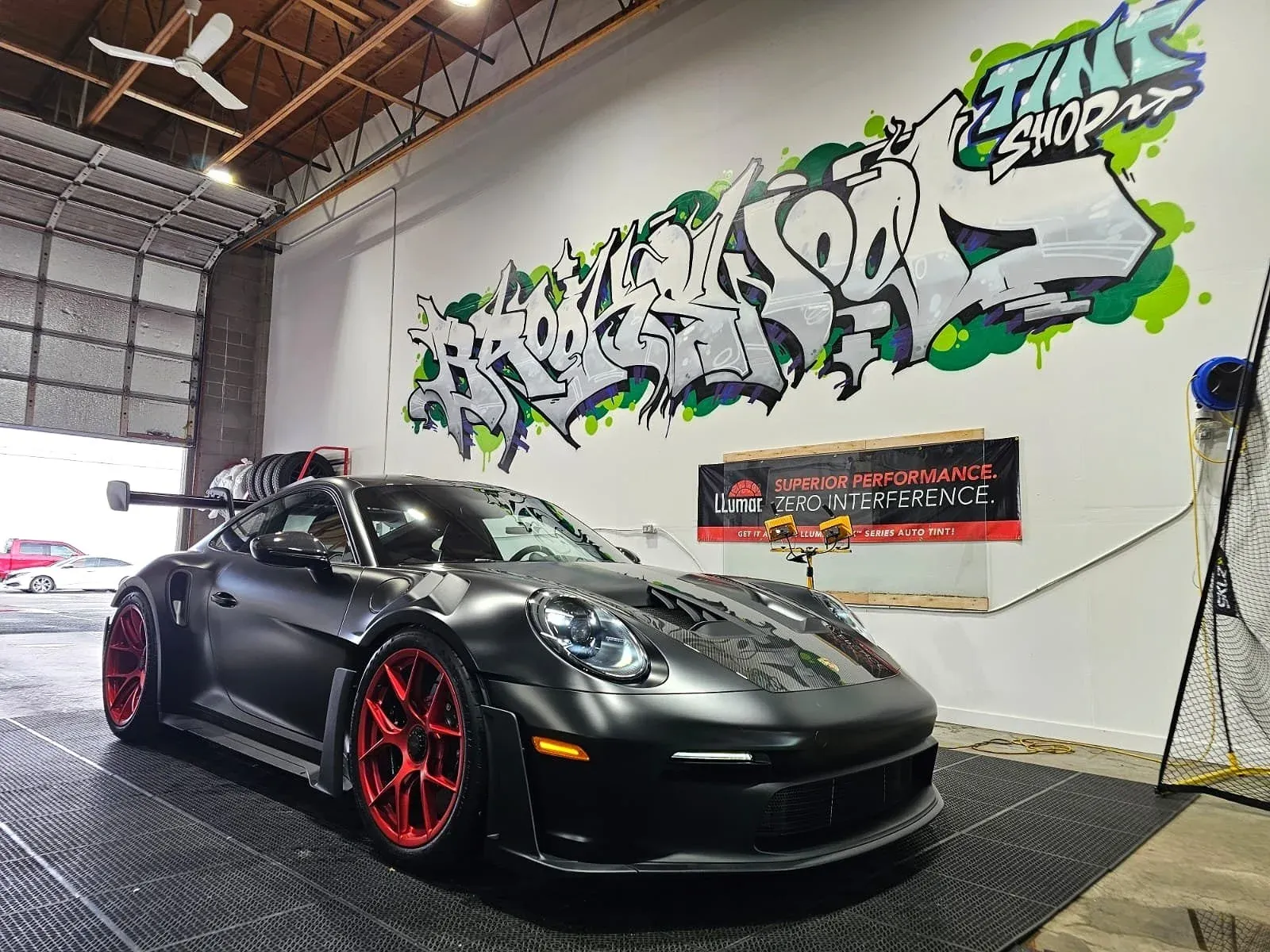
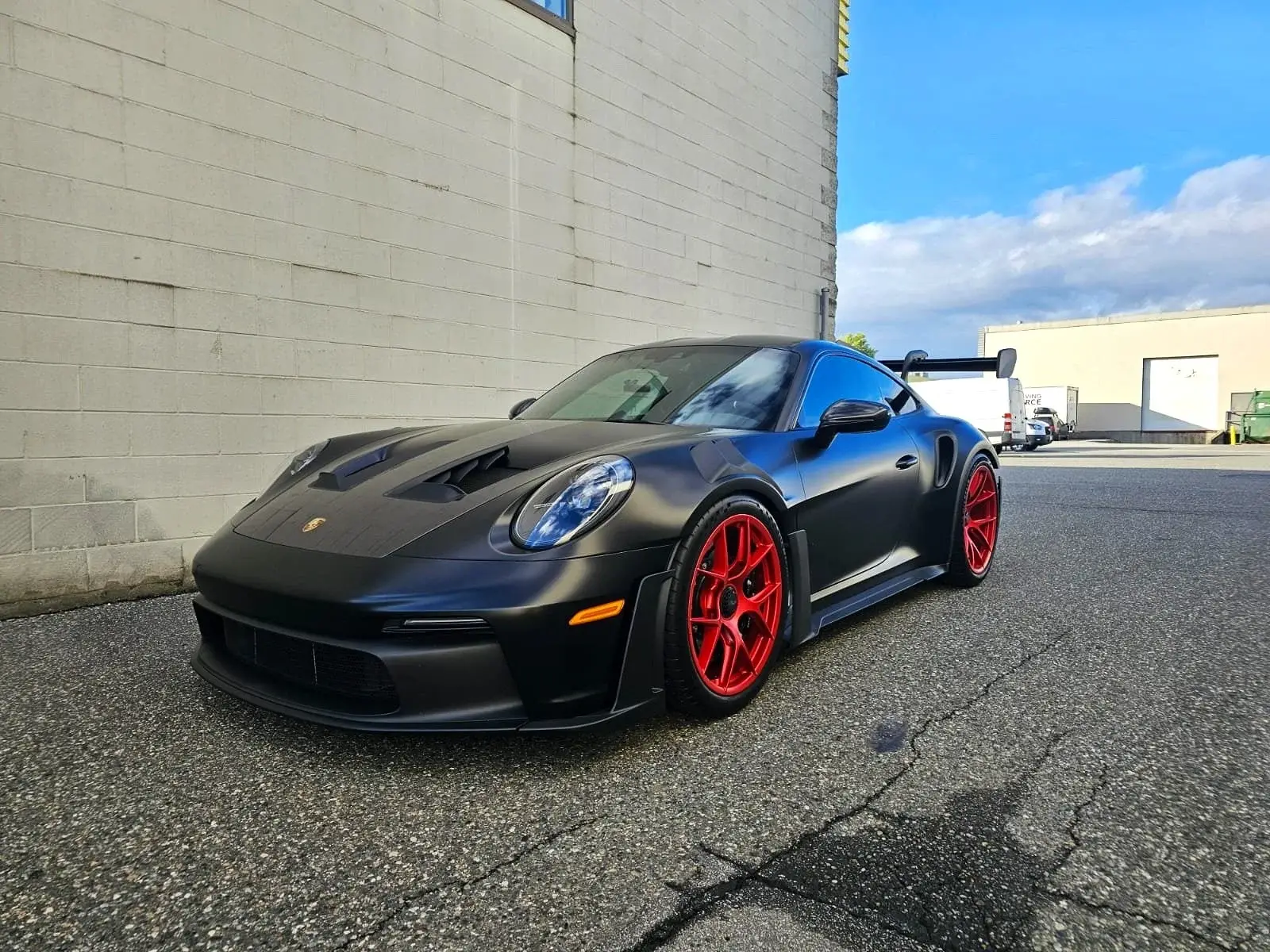
By avoiding them where the panel allows and telling you where they’ll be where it doesn’t. LLumar Platinum is cut to software templates for your car, edges are folded around panels wherever their shape permits, and if a bumper truly needs a relief cut, its position is pointed out to you before any film goes down.
The bumper is covered in every package, starting with Partial Front from $850. Why lines appear on film at all is in why PPF has seams, and how to judge them once the car is back is in signs of a poor PPF job.