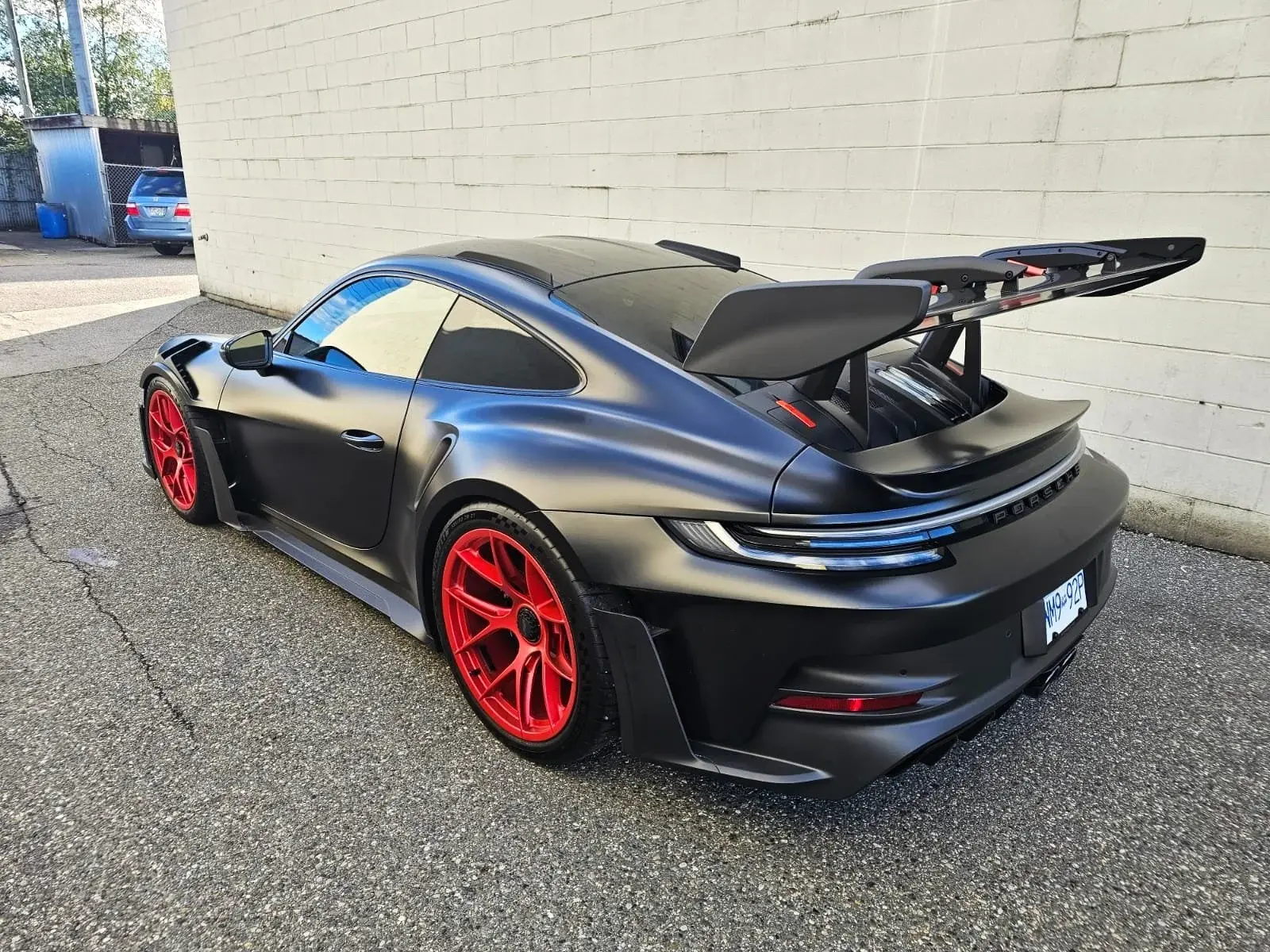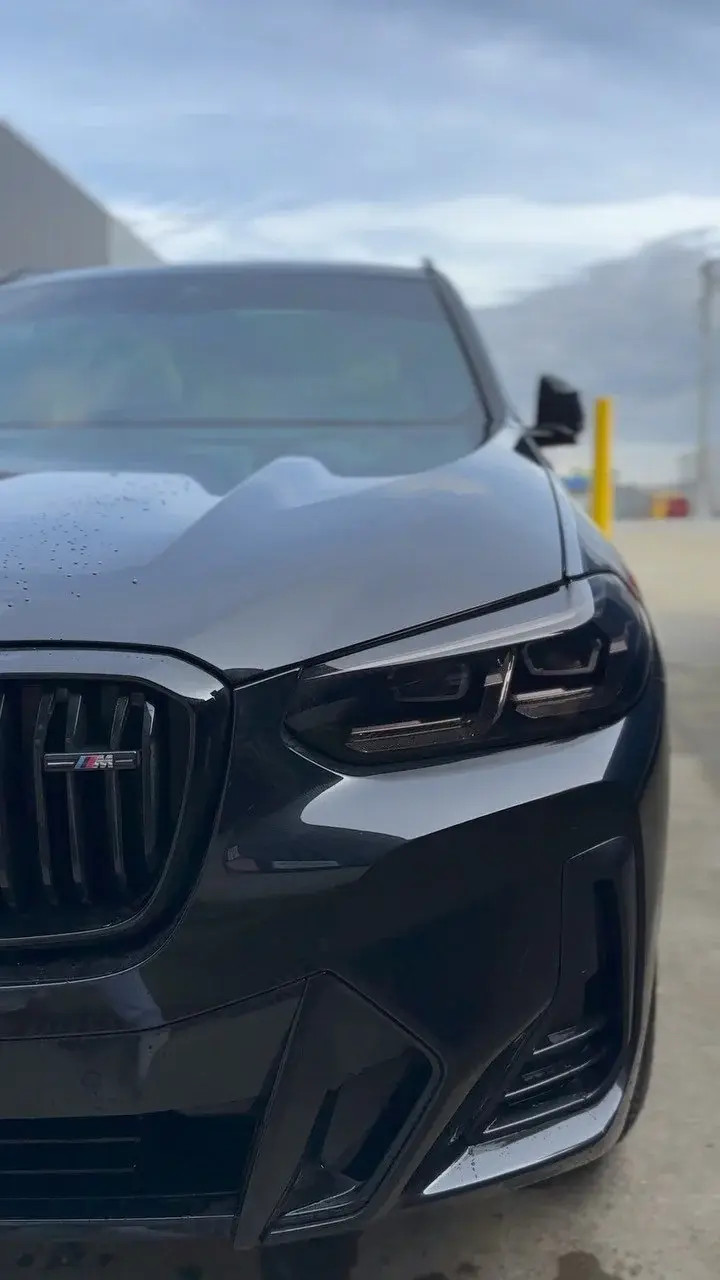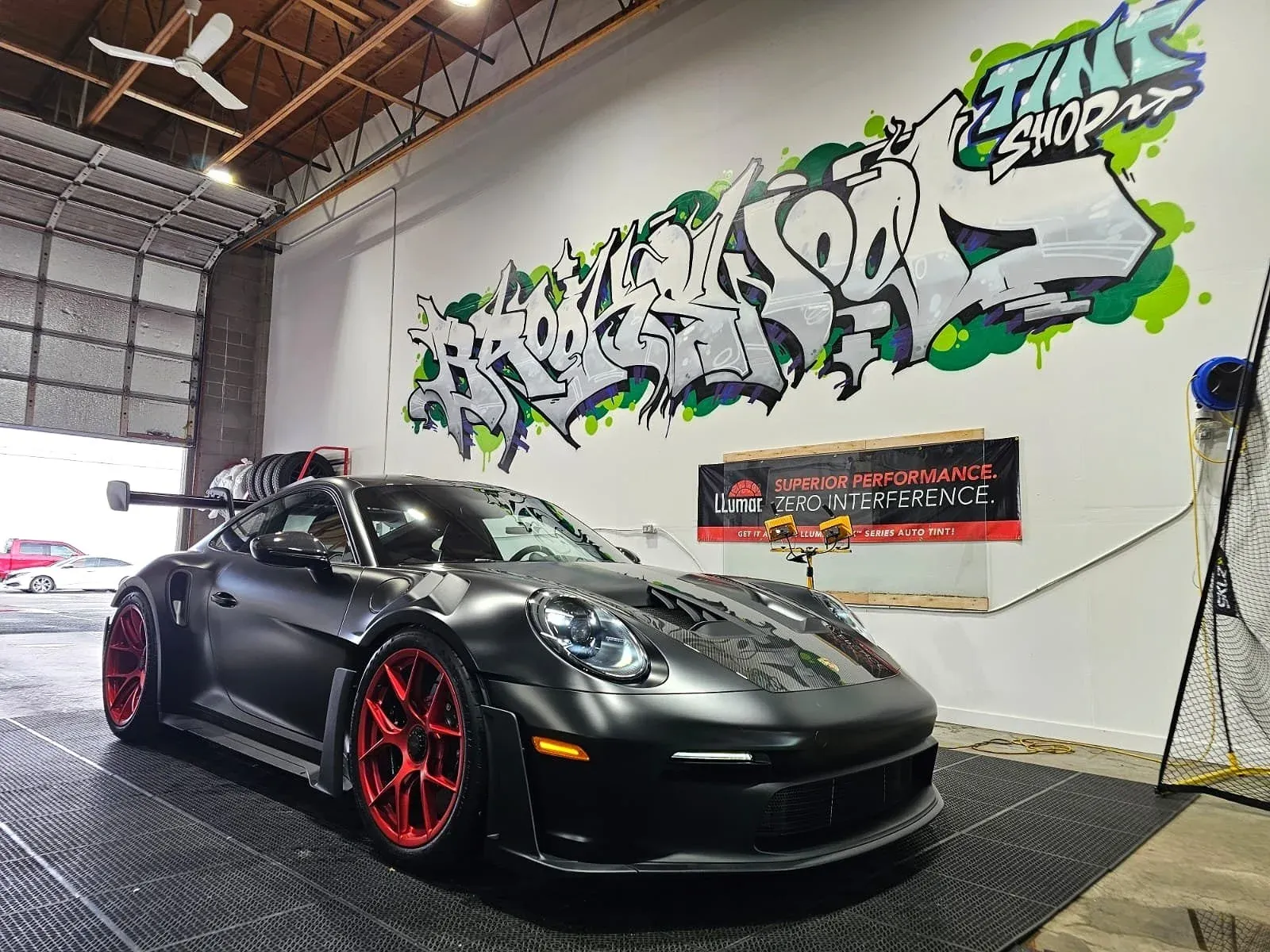
How does satin black compare with gloss and matte black?
Satin black reflects light softly without the mirror shine of gloss or the dead-flat look of matte. Avery Dennison puts numbers on the difference: its SW900 data sheet measures gloss films above 85 gloss units, satin at 20 to 30, and matte below 15, all read at 60°.
| Black finish | Avery’s measured sheen (60°) | How it reads on a car |
|---|---|---|
| Gloss black | Above 85 gloss units | Wet and reflective, closest to fresh paint |
| Satin black | 20 to 30 gloss units | A soft sheen that still shows the body lines |
| Matte black | Below 15 gloss units | Flat, with almost no reflection |
That middle position suits contrast work. On a gloss car, a satin black roof, hood or set of mirror caps reads as deliberate rather than mismatched, and the curves of the panel still catch light. If you want the flattest black, matte black wraps cover that finish; if you want black that looks like paint, compare gloss black vinyl.
Which satin black films can you choose from?
Three are worth asking for by name. Each brand has a plain satin black, and 3M lists a second satin black alongside its own.
- 3M 2080 Satin Black, code S12. Listed in the satin section of 3M’s 2080 brochure.
- 3M 2080 Satin Gold Dust Black, code SP242. A second satin black in the same brochure, worth seeing as a physical sample beside S12.
- Avery Dennison Satin Black, code SW900-197-O. Listed in Avery’s North American Supreme Wrapping Film overview.
3M notes that its product offering can vary from country to country, so the quote confirms what’s available in Canada at the time. Whichever you pick, the whole car should come from one production lot; 3M and Avery both say colour may vary from lot to lot.
How long does a satin black wrap last?
Longer than most colours on paper. Avery’s SW900 data sheet gives black and white films 12 years on vertical panels and 3 on horizontal ones in its Zone 1, against 10 and 2 for its other solid colours.
3M rates every 2080 colour the same way by zone. 3M places Canada in its Zone 2, and the warranty card for that zone reads 7 years on vertical surfaces, 2 on horizontal ones. On its own pages, the shop publishes five years of manufacturer warranty on vinyl. A satin black roof or hood is a horizontal panel under both makers’ rules, so it reaches the end of its rating years before the doors do. The reasons are covered in how long wraps last in BC.
Why does a satin finish need careful installation?
Because heat mistakes show on satin and can’t be undone. 3M’s colour change instructions warn that using a torch on matte, satin or textured 2080 films “will gloss them over, a defect that is NOT reversible”, and strongly recommend heat guns instead.
The same bulletin tells installers not to mark satin, matte or textured films with grease pencils, which can scratch and stain them. 3M’s gloss films come with a clear protective film layer that may stay in place for the whole installation; satin films don’t have that layer to hide behind, so the surface is handled bare from start to finish. That’s a fair question to ask any wrap shop: how they heat and handle a satin film, and what they do if a panel picks up a shiny patch.
How do you keep satin black looking even?
Wash it gently, keep wax and polish off it, and let warm sun deal with light marks. 3M’s care bulletin groups matte, textured and other unique finishes together and says not to put waxes, polishes, paint or clear coat over them.
- Wax residue. If wax does get on the film, 3M says to take it off with an all-purpose cleaner, then wipe the finish with isopropyl alcohol and water at a 2:1 ratio to help restore it.
- Drying. Use a soft rubber squeegee or a clean, soft towel to dry it, which stops water spots forming.
- Light scratches. 3M’s 2080 maintenance FAQ says warm sunshine makes most mild surface scratches fade on their own, and an installer can heat out others, keeping the film below 107 °C. Deeper ones need the film replaced.
- Coatings. For satin and matte finishes the shop advises a coating designed for vinyl, since both stain easily, but 3M excludes coated 2080 film from its warranty; ceramic coating a vinyl wrap weighs that trade-off.
For the weekly wash, see washing a wrapped car.
Roof, trim or the whole car in satin black?
Start with how much of the car should change. No single panel is asked for more often at the shop than a satin black roof over gloss paint, and a roof wrap takes the same day to two days.
Trim is the other natural pairing. On its blackout work, the shop’s advice is that satin black matches the black plastic already fitted to most modern cars and hides fingerprints, while gloss black suits gloss paint and glass roofs. A window trim chrome delete in satin black ties a satin roof to the belt line below it.
Already driving a black car and wanting satin without a colour change? Matte paint protection film turns gloss paint satin and adds chip protection, which vinyl doesn’t. It’s clear film, so it keeps the black you have rather than replacing it.
How do you book a satin black wrap in Langley?
Text 604 534 6433, or use the wrap quote form, listing your year, make and model, which panels should go satin black, and any film code you’ve settled on. Mention any repainted panels, since the paint is checked before vinyl goes on.
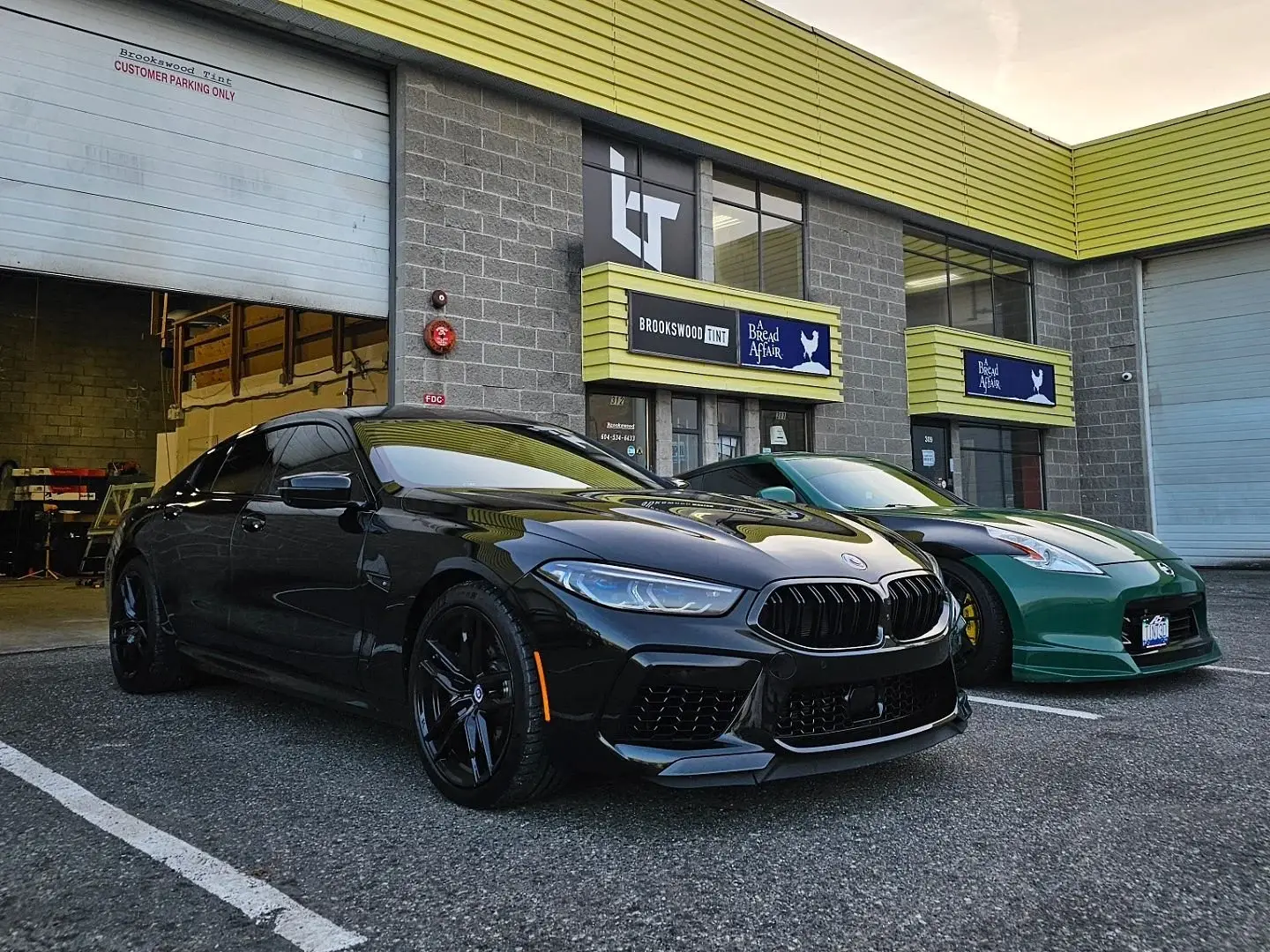
A full satin black change means 3 to 5 days without the car; single panels and trim are usually done the same day or within two. The bay is at 20560 Langley Bypass (Unit 312) and opens at 9:00, closing at 17:00, six days a week with Sundays off.