What decides whether a used car is ready for PPF?
The paint’s condition decides it, not the car’s age. Film is clear and stays on for years, so anything sealed under it on day one is what you’ll look at for the life of the film.
On a used car, five things get checked before a quote is final:
| Check | Why it matters for film | What usually happens |
|---|---|---|
| Original or repainted panels | LLumar makes its film for factory paint and excludes faults on repaired paint | Refinished panels are noted; fresh paint waits |
| Chips | Clear film covers a chip but leaves it visible | Repair first, or accept them |
| Swirls and light scratches | They show through film the same way | Polished out before the install |
| Wax, sealant or coating | Can stop the adhesive bonding to the paint | Removed during decontamination |
| Old film from a previous owner | Its age and condition are unknown | Assessed, and removed before any new film |
How can you tell if a used car’s panels have been repainted?
Start with the paperwork, then the paint itself. A claims history shows where a car was hit, and the front end is where a repair would affect film most.
ICBC sells a vehicle claims history report for $20.00 plus GST. It lists vehicle damage claimed through ICBC, the date and dollar value of the damage where available, the primary area of damage and the vehicle’s status, such as normal, rebuilt or salvage. A CARFAX Canada report, $97.95 plus GST, adds claims from across North America and a lien check. Neither can show a repair someone paid for privately, so a clean report isn’t proof of original paint.
Why it matters: LLumar’s PPF FAQ says its film is meant for original factory paint, and its warranty leaves out problems that start in aftermarket or repaired paint. Film can still go on a refinished bumper; you just know going in that a paint problem on that panel is outside LLumar’s cover. If the respray is recent, LLumar gives 30 days as the usual wait for new paint to outgas.
When a car needs correction before film, its paint thickness is read before the polisher comes out. What a paint depth gauge measures is explained in the glossary.
What happens to swirls and chips already in the paint?
Swirls get polished out; chips need a decision. Film over either one keeps it exactly as it is.
Swirls and wash marks
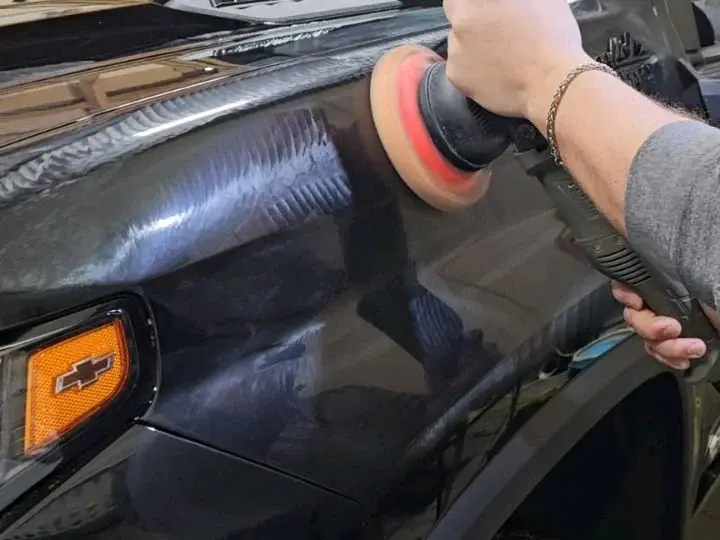
They show up as fine circles when a bright light hits the hood, and film would lock them in for good. Brookswood Tint’s paint correction comes in one stage (an enhancement polish, roughly a day), two stages (one to two days) or a multi-stage restoration (three days or longer, priced once the paint has been inspected). Swirl work on its own is covered on swirl mark removal.
Chips
Polishing levels the clear coat; it can’t put back paint that a stone knocked off. Your choices are to repair the chips before the film or to accept them under it, compared in detail on will PPF hide existing rock chips. One rule from Kia’s owner’s manual is worth keeping in mind: a chip that shows bare metal belongs with a proper body and paint shop.
Does a previous owner’s wax or coating matter?
Yes, because it sits between the paint and the adhesive. LLumar tells owners not to wax or coat a car before its film goes on, because those layers can stop the adhesive gripping the paint.
A used car can carry products nobody told you about: a dealer sealant, the wax from a previous owner’s last detail, or a full ceramic coating. 3M’s installation guidelines for its own film make the first prep step checking that no ceramic coating is on the paint, and having one removed by a paint correction specialist or detailer if there is. At Brookswood Tint, every car is decontaminated before film; a coating you know about is worth mentioning when you book, since taking one off adds work. The cleaning stage is described under decontamination wash.
What if the used car already has PPF on it?
If it’s being replaced, the old film comes off first, and it should come off warm. LLumar’s advice is that a professional removes it indoors at 13 °C (55 °F) or above; in hard cold, it says, the film and its adhesive can come apart.
Ask the seller for the original install invoice so you know which film it is and when it went on. If the film is clean and sound, it may be worth keeping; if it’s yellowed, cracked, lifting or cut, plan on replacing it. What removal does to the paint underneath is covered on does PPF damage paint when removed.
Which package makes sense on a used car?
Match the coverage to your ownership plans and your kilometres. A car you plan to keep for years on Highway 1 earns more coverage than one you’ll sell next spring.
| If you plan to keep the car | Package to look at | Starting price | Days in the shop |
|---|---|---|---|
| A year or two, mostly around town | Partial Front: bumper, lamps, mirrors and the leading edge of hood and fenders | $850 | Usually 1 |
| Several years, with highway driving | Full Front: the entire hood and both fenders as well | $1,550 | 1 to 2 |
| Several years, with gravel or track days | Track Package: adds rockers, A-pillars and the roof’s front | $1,900 | 1 to 2 |
| For the long haul, every panel matters | Full Vehicle: all painted panels and the headlights | $4,000 | 3 to 5 |
These are starting prices in LLumar Platinum; size, panel shapes and the paint’s condition move the final number, and any correction is quoted on top. If the purchase also came with tint on the front side windows, that’s a separate issue: no film of any darkness is legal there in BC, and police can ticket it or order it removed and the car inspected; bought a used car with front tint explains what to do.
How do you book PPF for a used car?
Send the year, make and model, the panels you want covered, and anything you know about the car’s history: repairs, chips, coatings or old film, so the prep can be planned along with the quote.
Still unsure film suits the car? Is PPF worth it weighs it up. Otherwise, start a paint protection film request or text 604 534 6433; the shop on the Langley Bypass takes cars any day but Sunday.