
Which ceramic coating package suits a Panamera?
Whichever fits the state of your Panamera’s paint and whether it wears film. All three use the same graphene-ceramic coating; they differ in correction depth, layer count and coverage, and a Panamera is priced only after its paint has been seen.
| Package | Correction first | Layers | Panamera surfaces coated |
|---|---|---|---|
| Essential | One or more machine-polish stages | 1 | Body paint |
| Performance | Two-stage correction | 2 | Body paint, glass, wheel faces |
| Signature | Full correction | 4 | Body paint, PPF, glass, wheels, trim |
Each Panamera begins with a decontamination wash and clay, and the paint is gauged for thickness before polishing. That prep and the coating’s cure fill most of the one to three days. Afterwards the Panamera needs to stay out of the rain for a day. Extras for any package: coated wheels and calipers, coated glass, and protection for the leather or fabric inside. Graphene versus ceramic coating explains the coating itself.
How do Porsche’s Panamera colours affect the work?
Mainly by telling the shop what paint it’s dealing with. Porsche’s third-generation press kit splits the colours into four schemes: Legends, with shades like Aventurine Green Metallic and the heritage Oak Green Metallic Neo; Dreams, including Gentian Blue Metallic and Madeira Gold Metallic, standard on the Turbo E-Hybrid; Shades, five metallics from Jet Black to Dolomite Silver plus Carrara White Metallic; and Contrasts, black and white only.
Beyond those, Paint to Sample offers “more than 50 predefined, technically approved colours,” and Paint to Sample Plus lets the buyer choose “almost without restriction.” The 2020 press kit shows the range moving even within a generation, with Cherry Metallic and Truffle Brown Metallic replacing two earlier colours. Bring the exact name from your build sheet; the correction plan comes from the thickness readings on your car.
How should Turbonite and satin trim be handled?
As trim, not paint, and with no machine polishing where the finish is satin. On a current Turbo E-Hybrid, Porsche describes Turbonite as “an elegant, warm grey with a premium-feeling bronze undertone” and applies it to the intake airblades, the side window trims, the Turbo and E-Hybrid lettering, a strip in the rear bumper, the crest on the hood and the wheels.
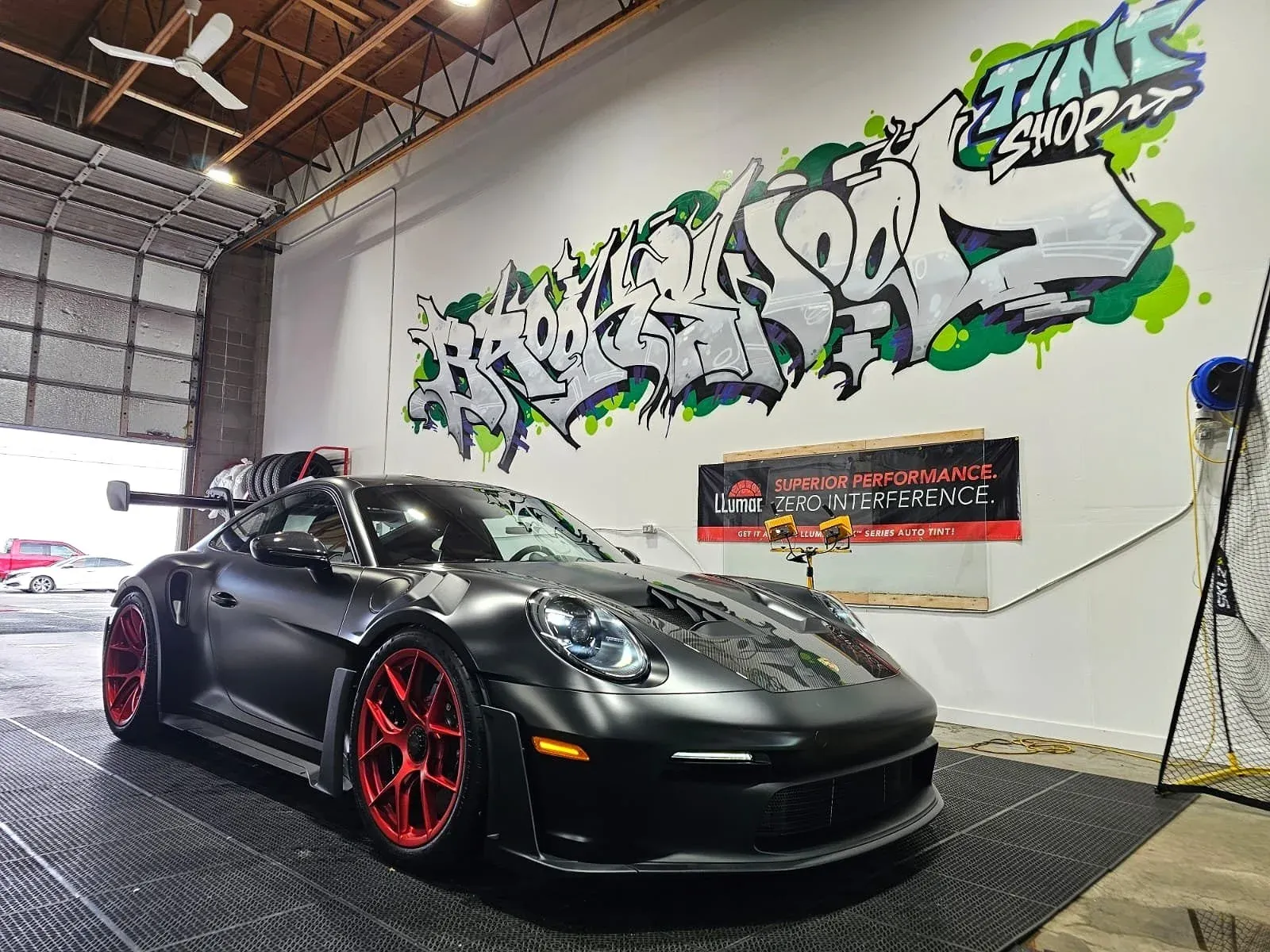
Second-generation GTS models are the satin case. Porsche’s 2020 kit gives them grained intakes and Sport Design side sills in Satin Gloss Black, plus a rear apron in the same finish. Polishing would change that sheen, so name every satin and Turbonite piece at drop-off and agree how each is handled; the Signature package is the one that includes trim. Coating matte paint and trim covers low-sheen surfaces.
Can the coating go on a Panamera’s wheels, calipers and exhaust?
Wheels and calipers, yes, and the exhaust finishes are worth a mention. On a Panamera, the Performance package reaches the wheel faces and Signature each complete wheel, with calipers an add-on to either; the shop’s view is that it stops brake dust bonding so readily.
Porsche lists eight new wheel designs from 19 to 21 inches for the third generation, including a forged 21-inch centre-lock wheel for the Turbo E-Hybrid, and the 2020 kit describes Exclusive Design wheels with bright-polished areas and calipers in yellow, red, black or Acid Green depending on version. The current Panamera and Panamera 4 have brushed stainless tailpipes and the Turbo E-Hybrid bronze ones, so point them out if you want them included. Ceramic coating for wheels has the detail.
How do you book a Panamera coating in Langley?
Send the year, body, version and the colour by name, list any Turbonite, satin or carbon parts, and say whether the car has PPF. Film changes the package choice, and coating over PPF explains why.
The Panamera stays between one and three days, and should see no rain or washing on its first day back. Ask for a price with the Panamera coating request or call 604 534 6433, and look at Porsche Panamera PPF if chips are the bigger worry.