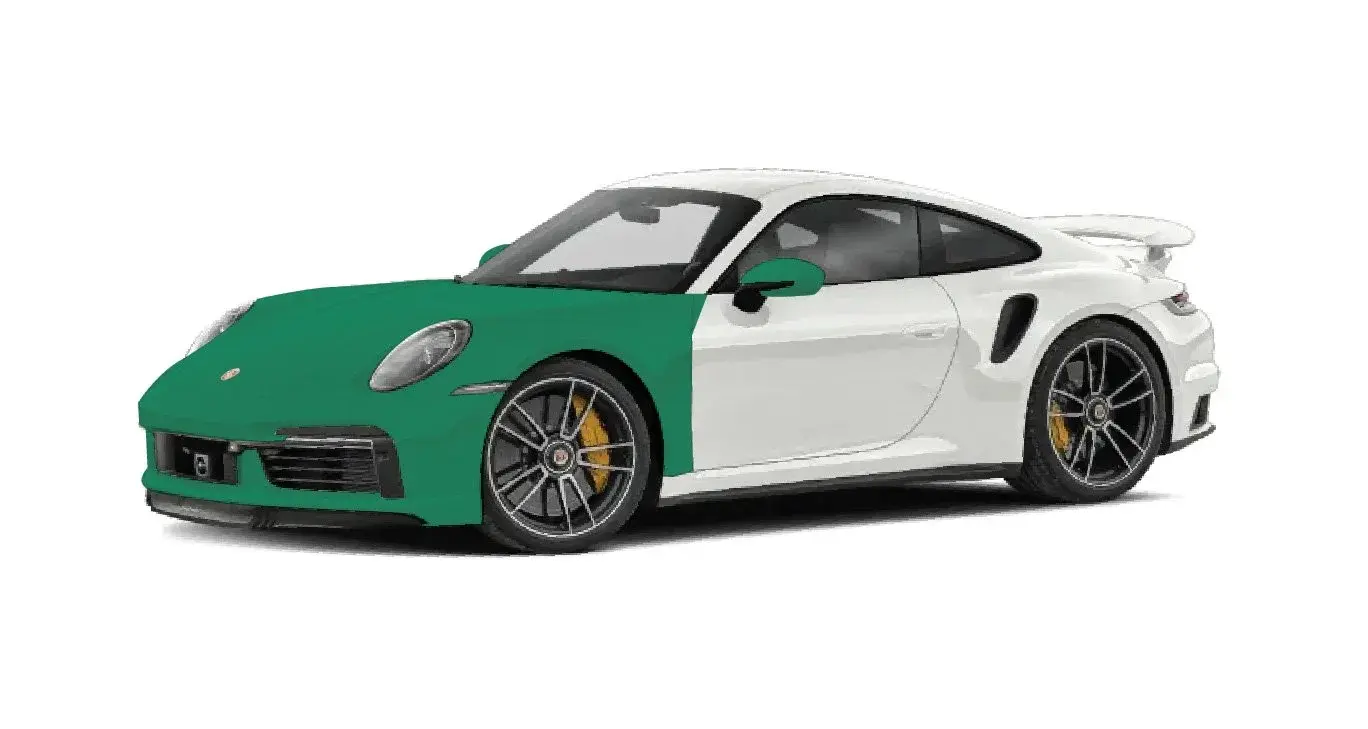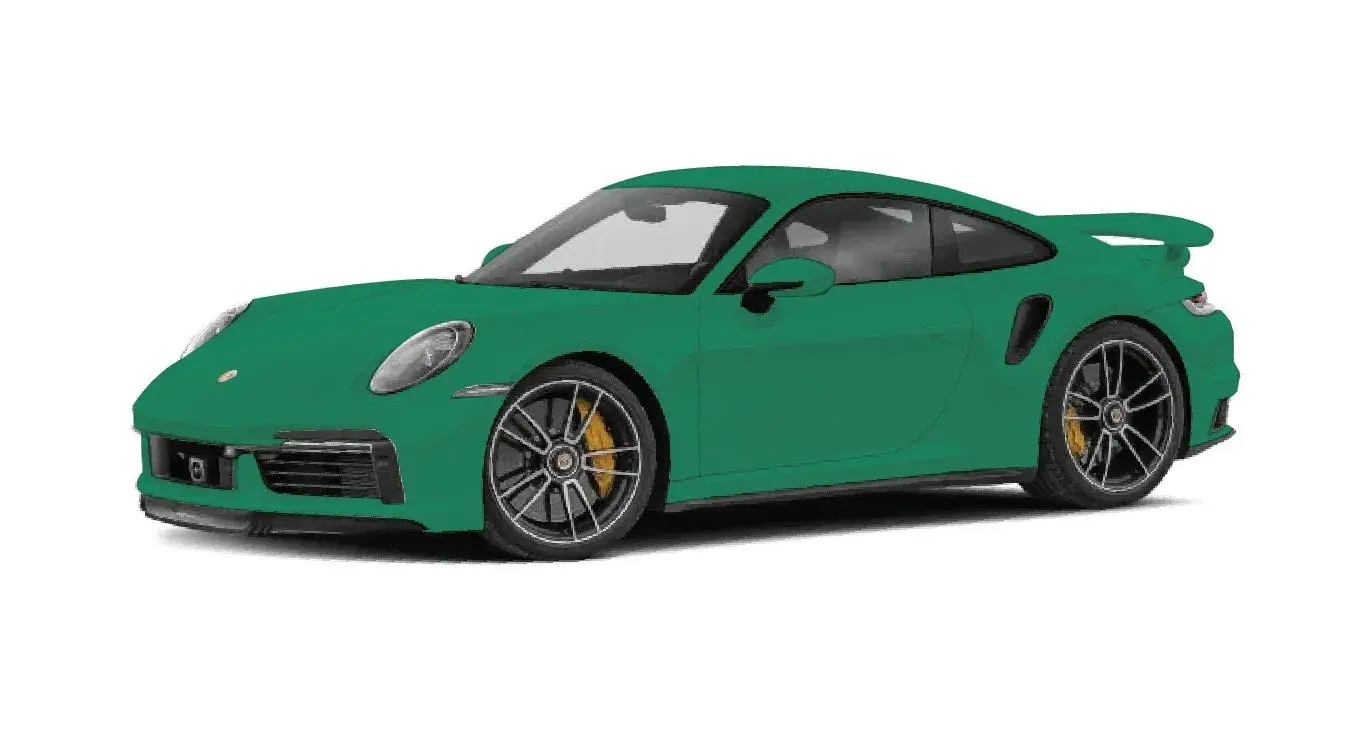
How do full front and full body PPF compare side by side?
Full front films the front of the car; full body films all of it. Both use the same LLumar Platinum film with the same 10-year limited warranty, so the decision comes down to how much paint you want covered and how many days the car can spend in the shop.
| Full Front | Full Vehicle (full body) | |
|---|---|---|
| Starting price | $1,550 | $4,000 |
| Hood and front fenders | Whole panels | Whole panels |
| Front bumper and headlights | Yes | Yes |
| Side mirrors | Yes | Yes |
| A-pillars and roof | No | Yes |
| Doors and rocker panels | No | Yes |
| Rear quarters, trunk or tailgate, rear bumper | No | Yes |
| A painted wing or spoiler | No | Yes |
| Usual time in the shop | 1 to 2 days | 3 to 5 days |
| Film | LLumar Platinum, gloss or matte | LLumar Platinum, gloss or matte |
| Warranty | 10-year LLumar limited | 10-year LLumar limited |
| Matte film gives a satin look on | The front panels only | The whole car |
Both prices are where a quote starts, before anyone has seen your car. Size, panel shapes and paint condition move each one, and LLumar itself leaves pricing to the dealers who install its film. Its PPF FAQ describes the same split this page is about: some owners “protect all painted surfaces, while other owners just protect areas that receive the most punishment.” The full panel lists live on the package pages: full front PPF and full body PPF.
What does the extra $2,450 for full body PPF buy?
It buys film on everything behind the front fenders. At starting prices, full body costs a little over two and a half times what full front does, and the difference pays for the panels that face sideways, upward and backward rather than into oncoming grit.
| Panel group added by full body | What usually marks it |
|---|---|
| A-pillars and roof | Stones that clear the hood, tree sap and droppings on a car parked outside |
| Doors | Neighbouring door edges, bag zippers, rings and keys |
| Rocker panels | Grit and winter brine thrown back by the front tires |
| Rear quarters | Spray along the sides of the car, and scuffs in tight parking spots |
| Trunk or tailgate and rear bumper | Loading and unloading, boots, hockey bags and bikes |
None of those threats is as concentrated as the stones that hit a car’s nose at speed, which is why full front exists. They’re spread thinly over the rest of the body, and over years of ownership they add up.
There is a middle step. The Track Package, from $1,900, adds the A-pillars, the rocker panels and the front part of the roof to full front. It sits $350 above full front and $2,100 below full body, and it covers the panels the shop describes as taking abuse on track days and gravel roads, without paying for the doors and rear.
Is full front PPF enough for a Highway 1 commuter?
For most commuters, yes. Highway chips come from the road ahead and land on the surfaces that face forward: the bumper, the hood, the fronts of the fenders, the mirrors and the headlights. On those panels the two packages are identical.
That’s the useful way to read the price gap. TranBC, the provincial transportation ministry’s blog, says no piece of winter abrasive on main highways may be over 9.5 mm, and that going from 80 to 110 km/h almost doubles a stone’s impact energy. Most of those faster, harder hits land on panels both packages cover, so most of the $2,450 extra for full body pays for panels that sit out of the worst of that spray.
Two things full front doesn’t cover are worth knowing before you settle on it:
- The rocker panels. They sit just behind the front tires and collect grit and brine on wet highway days. If chips along the bottom of the doors bother you, the Track Package films the rockers for far less than full body.
- The windshield. No paint package covers glass, and exterior film for windshields isn’t something the shop installs.
When does full body PPF make more sense than full front?
Full body makes sense when the whole car is what you’re protecting, not just its nose. That usually means one of three cars: one you’ll keep for many years, one whose paint marks easily, or one with a matte finish you want to keep matte.
A car you plan to keep for a long time
Each year adds a few more marks to every bare panel: a door edge here, a scuffed bumper corner there, wash marring on the roof. Over a long ownership, those are the marks that separate a car that looks its age from one that doesn’t. With full body, they land on film rather than paint, and LLumar says light scratches in Platinum’s top coat fade with heat from the sun or the engine (Platinum Gloss).
Paint that marks easily
Some finishes show fine scratches after an ordinary wash, especially dark colours. If that’s your car, every panel under film is a panel where wash marks end up in a self-healing top coat instead of in the clear coat, which leaves less to polish out of the paint later.
Matte paint, or a satin look on the whole car
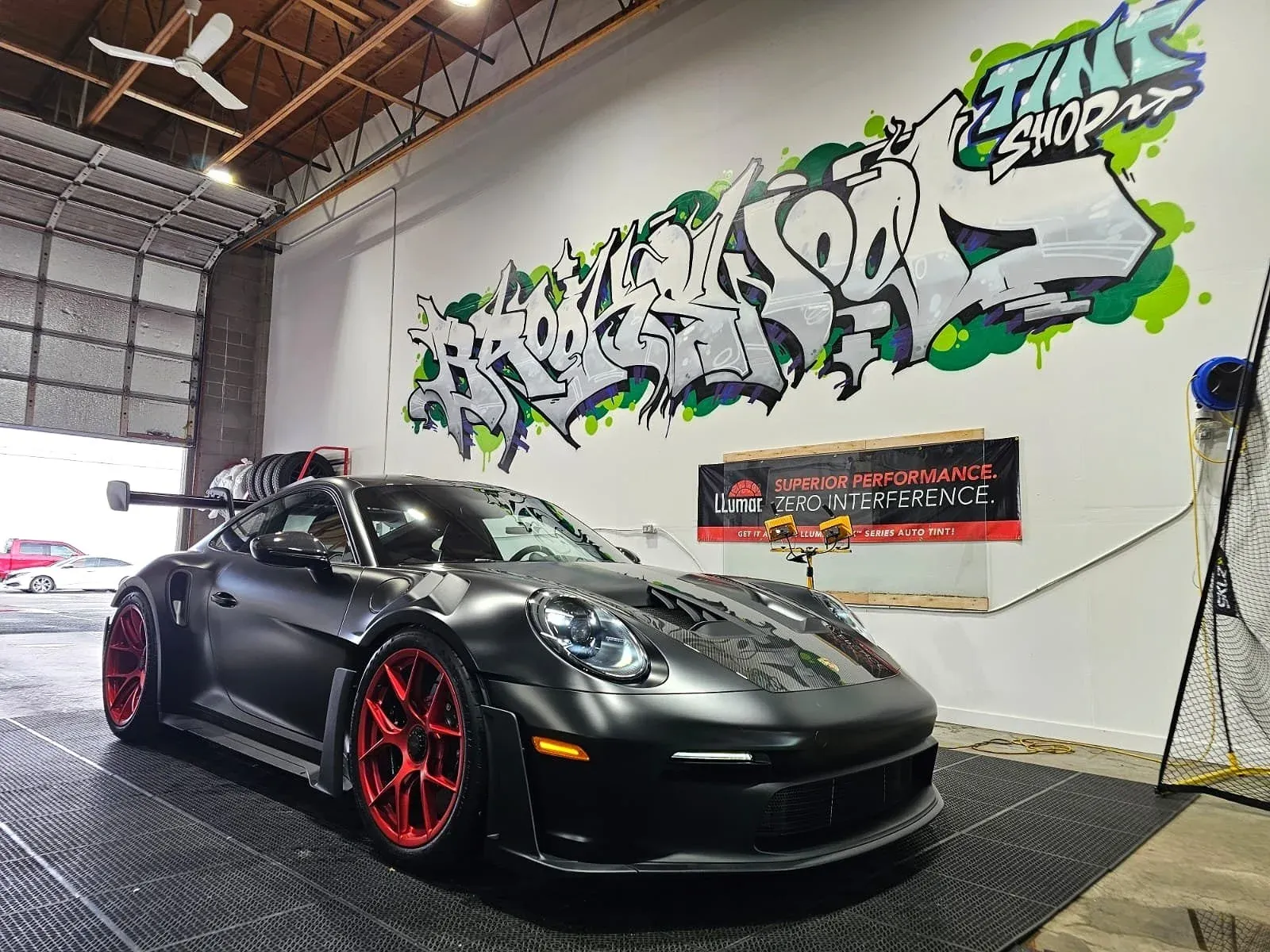
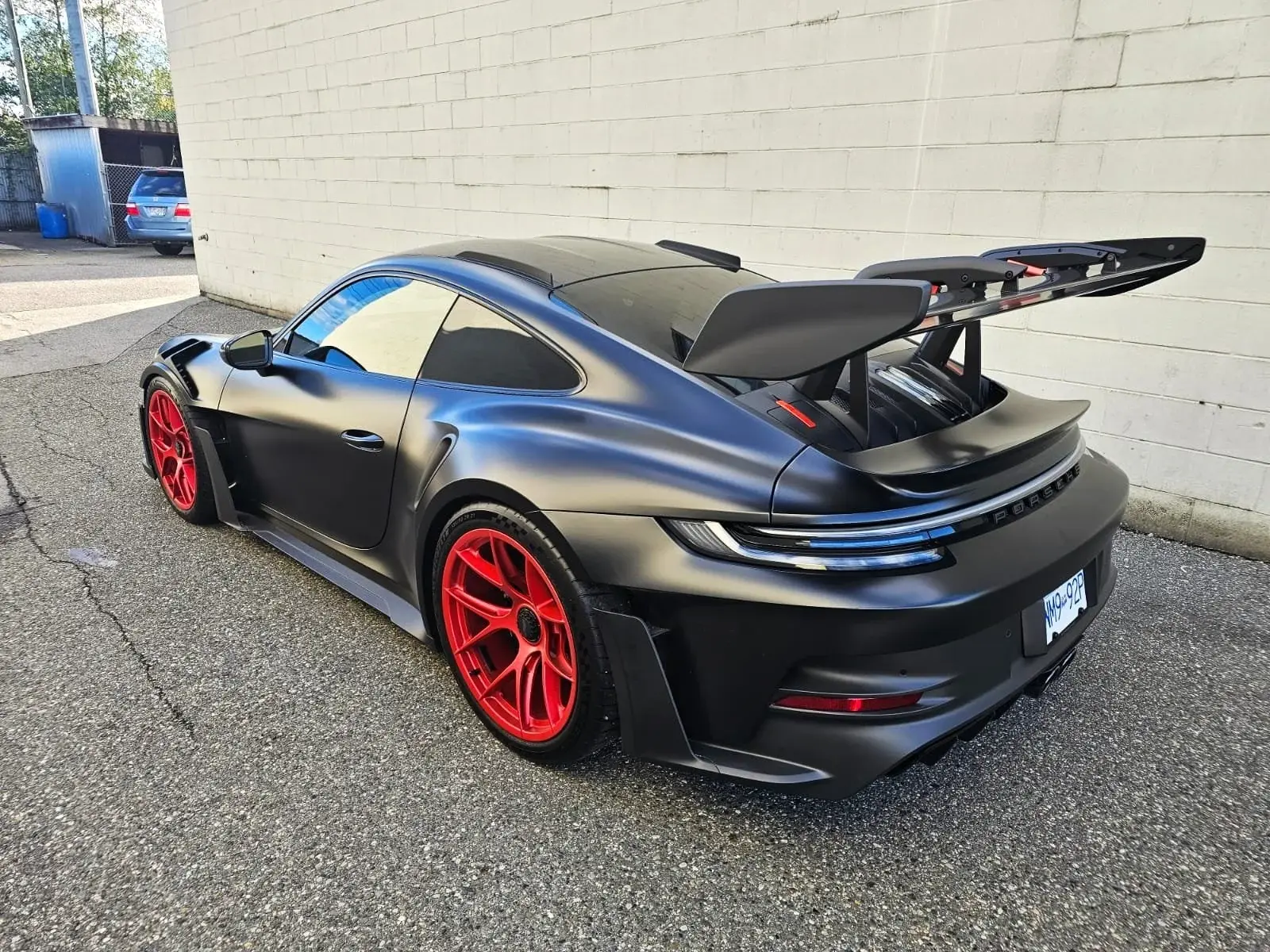
LLumar says Platinum Matte can blend with existing flat finishes or turn glossy paint flat. On a car with matte factory paint, full front would protect only the nose and leave the rest of that finish bare. On a gloss car, matte film on full front gives you a satin nose and gloss doors; only full body makes the change even. The GT3 RS at the top of this page, satin from nose to wing, wears full body film. Owners of exotics will find more on the exotic car PPF page.
How do the two installs differ at the shop?
Full front is a one-to-two-day job and full body takes three to five days, because every panel on a full body car has to be prepared, fitted and finished at its edges. Correction, when it’s needed, scales the same way.
Prep across more paint
Paint is decontaminated before any film goes on, and corrected first if it needs it, after its thickness is measured. On full front, that’s the hood, fenders and bumper. On full body, it’s the whole car, so a car with swirls everywhere needs correction everywhere, and that adds days and cost before the film starts.
More edges to look after
Each filmed panel has edges at its gaps, and a full body car has film edges all the way round. Aftercare is the same for both packages: wait a week before the first wash, wash by hand or touchless, and keep pressure-washer nozzles off film edges. On full body, that rule applies to every door, the roof line and the rear as well.
Full front or full body PPF: which should you choose?
Choose by what the car does and how long you’ll have it. Full front covers where the chips come from; full body covers the whole car you’re trying to keep.
Full front suits you if
- The car commutes on Highway 1 or other fast roads and the nose is what takes the hits.
- You’ll keep the car a few years, not a decade.
- The budget is $1,550 and up, not $4,000 and up.
- You can only spare the car for a day or two.
Full body suits you if
- You plan to keep the car for many years and want every panel to stay original.
- The paint is matte, or you want a satin look from bumper to bumper.
- The paint shows wash marks and scuffs easily.
- The car is valuable enough that a repaint of any panel would hurt.
Where Brookswood Tint stands on full front and full body
We install both, and a commuter doesn’t need full body to stop highway chips. If the money only stretches to one, full front on a daily driver covers the panels that face the road, and the Track Package is the sensible next step if the rockers are suffering. Full body is the right call when the car itself is the thing you’re preserving, not just its front end. If you’re torn, ask us to quote both on the same car so you can see the gap for your model, not just the starting prices.
Booking either package in Langley
Send the car’s year, make and model, gloss or matte, and which package you’re leaning toward through the PPF quote form, or text 604 534 6433. Plan on one to two days for full front and three to five for full body. Truck owners can see how the packages work on a pickup on truck PPF, and every package price is listed on PPF cost in Langley. If you’re also weighing a smaller front package, partial vs full front PPF covers that step.