
What causes adhesive ghosting?
One of two things, and each needs a different fix: adhesive that stayed behind when the film came away, or a surface that ended up different under the film from the surface around it.
Adhesive left behind. Some residue is normal and expected. 3M says a 2080 wrap may leave adhesive on the car when it’s removed, and that a citrus-based cleaner takes it off (3M 2080 maintenance FAQ). Avery Dennison defines “clean removability” for SW900 as less than 20% adhesive residue using proper heat and chemical methods (Avery SW900 data sheet). Technique changes the amount: how fast the film is pulled, and at what angle, both change how much adhesive stays behind, according to 3M’s removal bulletin (3M Instruction Bulletin 6.5).
A mark in the surface. This is the outline no cleaner moves. 3M warns that high-output heat sources can oxidize or burn paint around a graphic and “may emphasize any shadow that remains where the graphic was applied.” Avery won’t warrant paint staining that shows after removing film that had cracked or discoloured.
Where does ghosting show up on a car?
Wherever film sat for a long time. Age and sun make removal harder: 3M says older graphics turn brittle and bond more strongly with time, and that heat and UV exposure add to it.
| Surface under the film | What the maker or the shop says |
|---|---|
| Factory paint, wrap within its warranty | 3M: some adhesive may remain; a citrus-based cleaner removes it |
| Automotive paint over 5 years old | Avery: removal from it isn’t warranted |
| Oxidized or chalked paint | Avery: removability isn’t warranted |
| Rear window glass with old tint | Shop: film steamed off, adhesive fully dissolved |
The paint side of that table connects to oxidation, which changes how film grips and lets go.
When does ghosting become a problem in BC?
When film has to come off at a moment where a clean surface counts: a lease return, a sale, or an order to remove tint. In BC the last of those concerns the front side windows, which MVAR s. 7.05(8) keeps free of film entirely (MVAR s. 7.05), and the shop offers front-two-only removal for cars heading to an inspection.
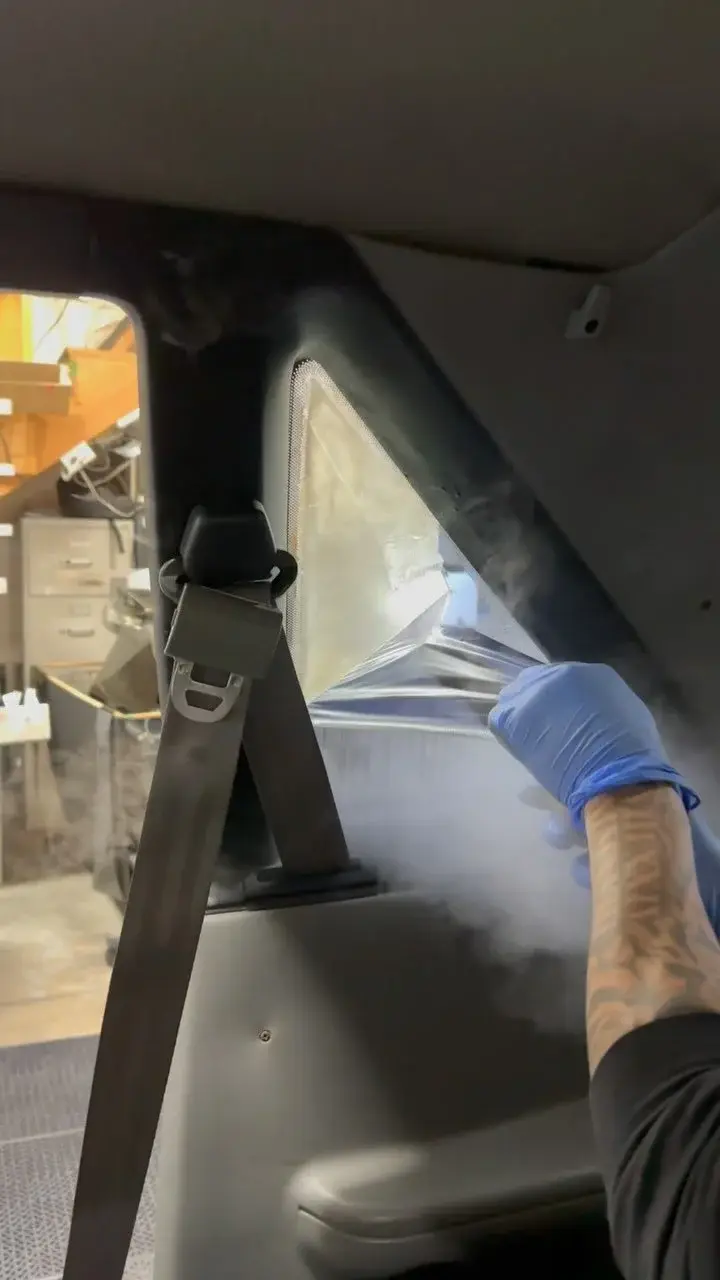
Glass adds its own risk. The rear window carries the defroster grid, so the shop takes rear film off with steam rather than blades and dissolves the adhesive completely, leaving the grid intact and the glass clean. Wrap and chrome delete removal on sound paint is heat and patience; what to expect on your car is covered under taking a wrap off.
How Brookswood Tint removes film without leaving a ghost
Tint removal usually takes one to three hours, with a per-window price that drops when you re-tint in LLumar afterwards. The full process is on tint removal, with the defroster side explained under rear window tint removal.
For vinyl, tell the shop the age of the wrap and whether the paint underneath has ever been resprayed, since both affect how cleanly it releases. Removal of wraps is described under vinyl wrap removal. Send photos of the film you want gone through the tint removal quote form.