What can a racing livery or custom graphics package include?
Anything from a single stripe to a full design that covers most of the car. The shop’s partial and accent work runs from a roof, hood or mirrors to a full stripe kit, and its graphics work covers logos, lettering and full-print designs built from your file.
| Livery element | What it is | Film type to ask about |
|---|---|---|
| Stripes | Over-the-top, side or rocker stripes | Solid colour film cut to shape |
| Colour blocks | A contrasting hood, roof, panel or splash shape | Solid colour film |
| Numbers and roundels | Race numbers and the panels behind them | Solid colour film, cut |
| Lettering and script | Names, model script, social handles | Cut film, or printed |
| Logos and sponsor marks | Multi-colour artwork | Printed film |
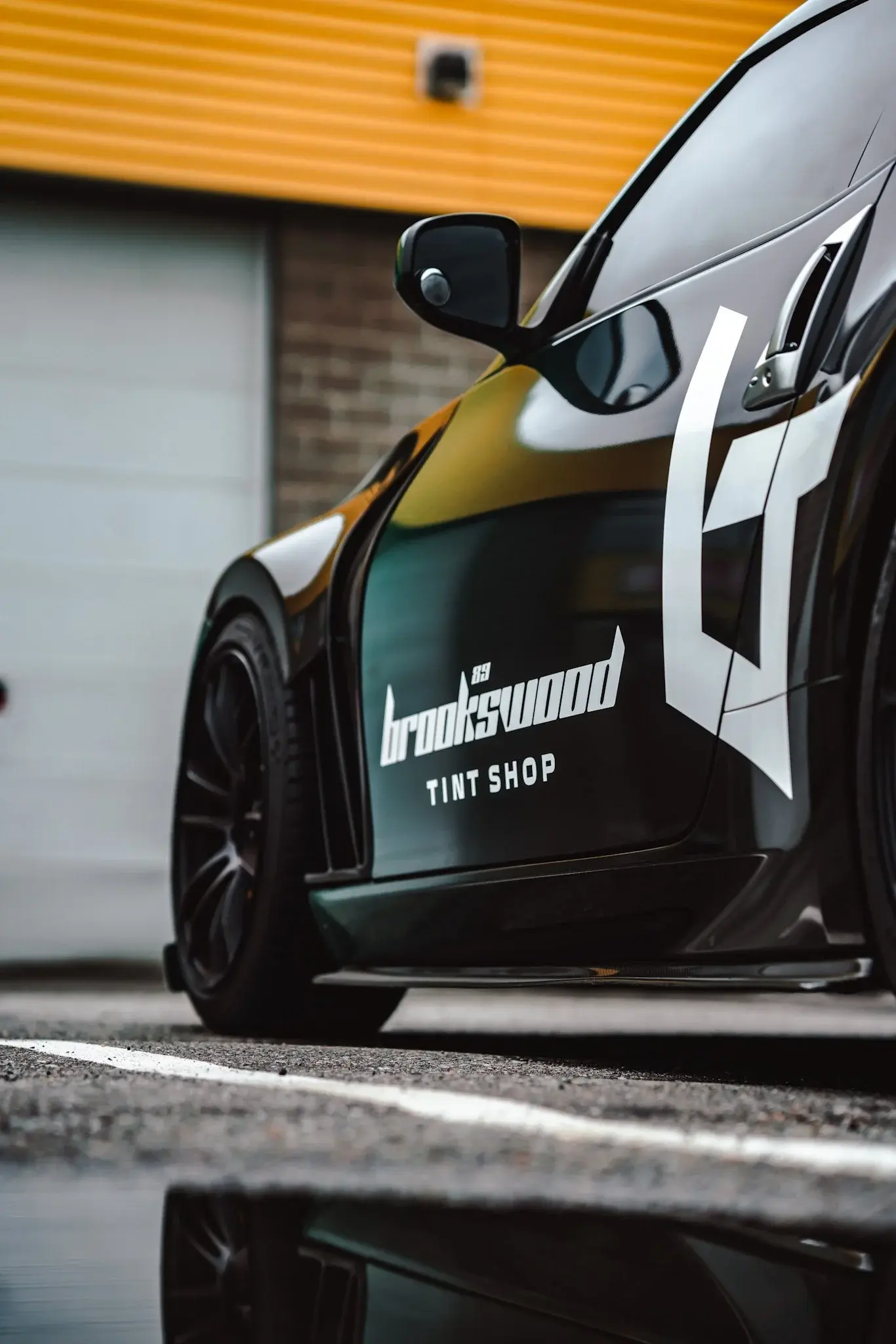
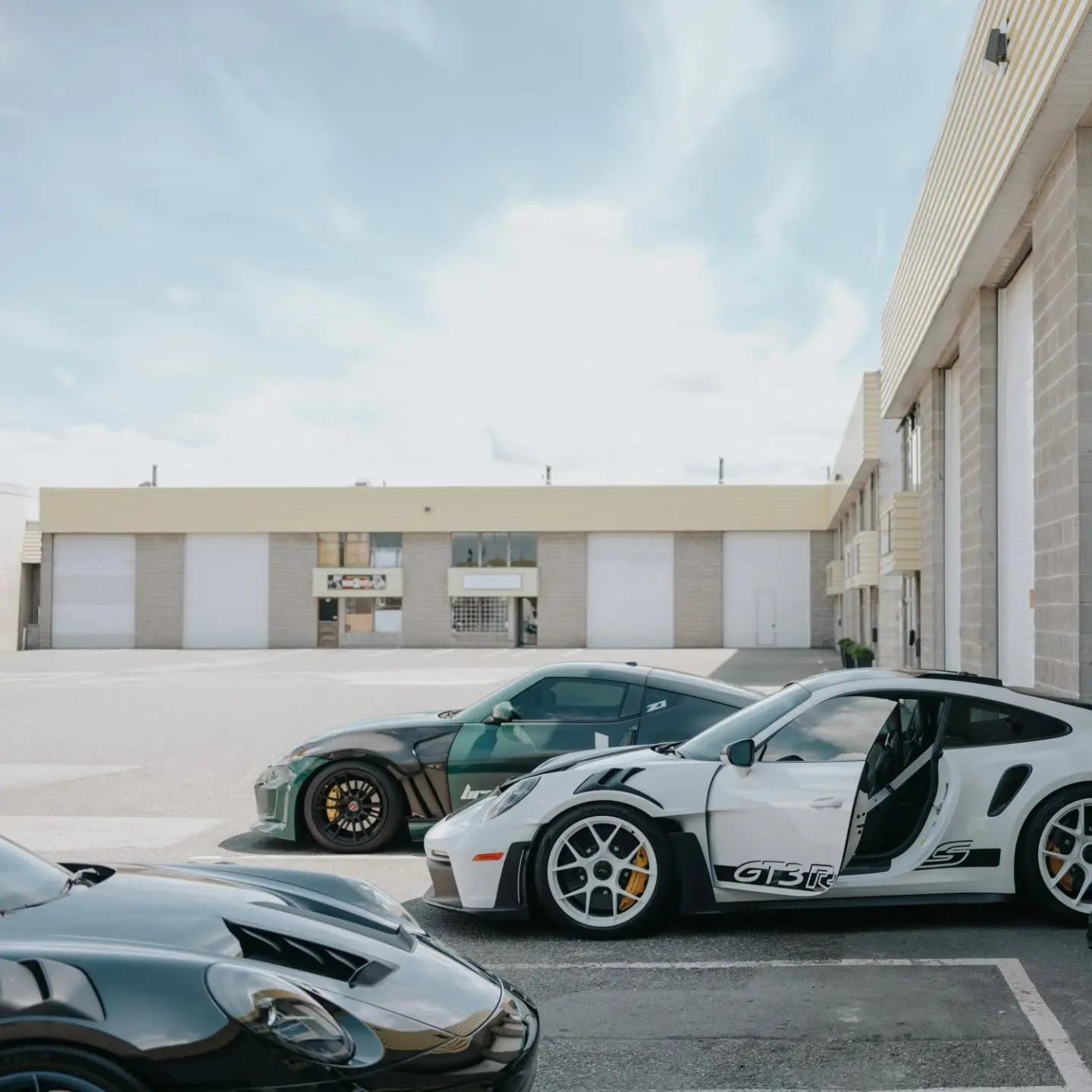
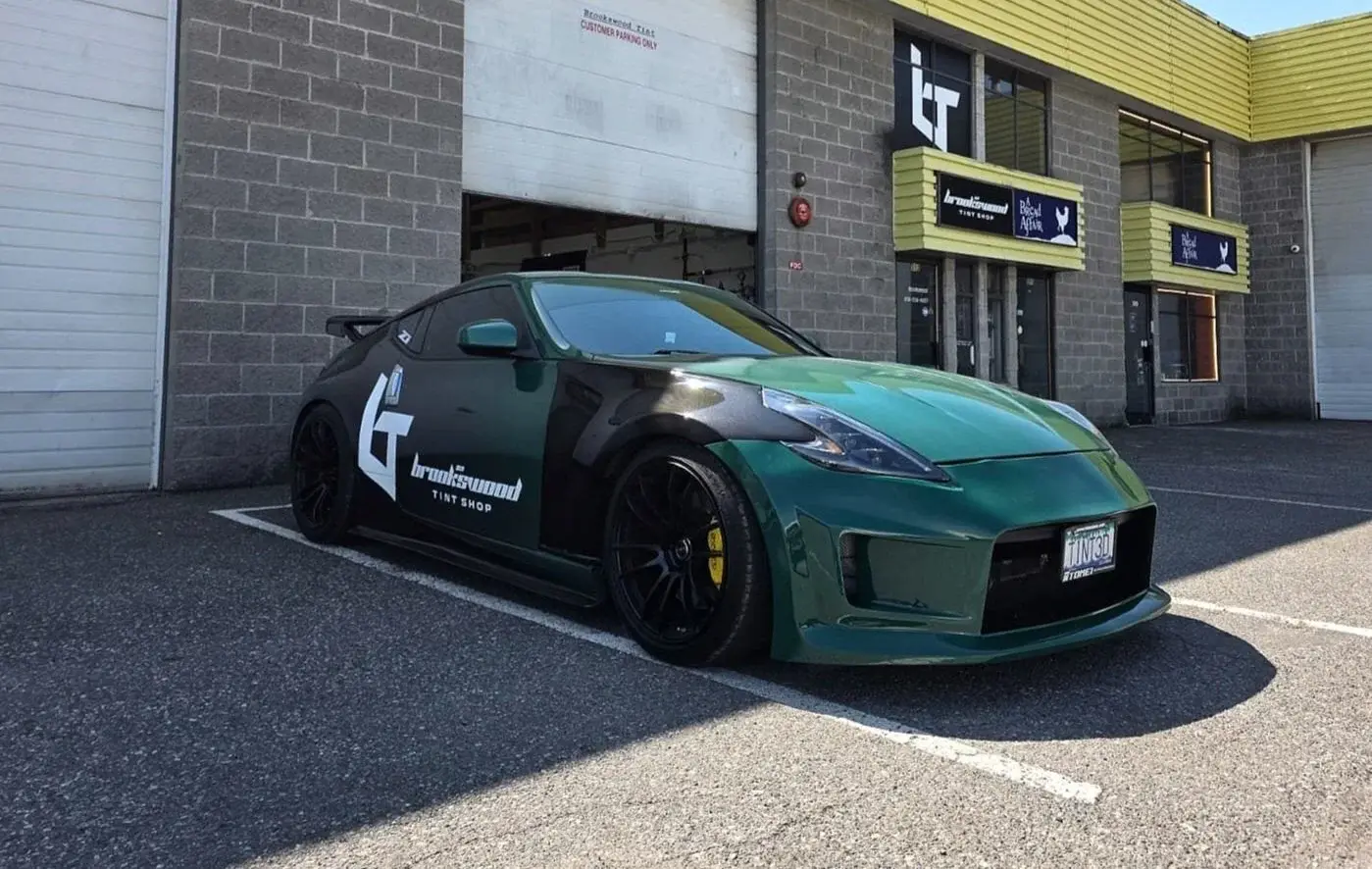
3M’s 2080 product bulletin lists racing stripes and rocker panels among its accent jobs and names striping as one of the film’s uses. The shop’s own 370Z is the working example: green and black panels with a large white logo and the shop’s lettering, all in vinyl, and it’s written up as the 370Z shop livery project.
Should your livery be cut vinyl or printed?
Solid shapes and stripes are cut from colour film; anything with gradients, photos or many colours is printed. The choice changes the film, its warranty and how easily it comes off later.
Cut colour film
Stripes, blocks and simple numbers can come from the same 3M and Avery colour films used for a colour change, so they match the depth and finish of a wrap. For cutting 2080 on the car itself, 3M’s recommendation is its Knifeless Tape. Avery Dennison draws a line at small detail, though. Its SW900 data sheet says cutting the film to sizes or shapes is feasible but sign-cutting letters and graphics is not recommended, so fine script and small lettering are planned as a separate graphics job.
Printed logos and artwork
Logos, sponsor artwork and photographic designs are printed. 3M leaves printing on 2080 to the user to test and approve, and it doesn’t warrant any printed 2080 application, so ask which film the printed parts will be made on and which warranty covers them. Ask about the overlaminate too; 3M notes that adding one makes its film stiffer and more difficult to install.
Printing also affects removal. 3M’s 2080 maintenance FAQ limits its removability promise to unprinted 2080 with no overlaminate on it.
Where can livery go on glass and lamps in BC?
On painted panels, anywhere. On glass, only in the zones BC’s tint rule allows, and never over a lamp lens.
BC’s rule, MVAR s. 7.05(8), isn’t limited to tint. Lettering and graphics stuck to glass reduce the light through it, so they fall under the same rule:
| Glass | Livery allowed? |
|---|---|
| Windshield | Only within the top 75 mm, so a banner has to stay inside that strip |
| Front side windows | No, at any size or darkness |
| Side windows behind the driver | Yes |
| Rear window | Only with outside mirrors fitted on the left and right |
Graphics on the front side windows or low on the windshield aren’t road-legal in BC. Mission RCMP puts the usual cost of a tint ticket at $109 in its traffic FAQ, and officers can also hand out a Notice & Order that means taking the material off and getting the car inspected. At an inspection, BC’s 2025 inspection manual rejects, at item 13d, after-market material on the driver’s door glass or any side glass further forward. Section 6, item 1.0(a) also rejects a lamp lens that’s “covered in any manner”, which is why the design should end at the edge of every headlight, taillight and signal. The shop explains these limits before anything is planned for glass.
How does a livery hold up on a car that goes to the track?
As well as the film it’s made from, and no better against stones. Cut graphics in wrap film carry the same ratings as a wrap, with flat panels like the hood and roof rated for fewer years than the sides, and stone damage falls outside 3M’s 2080 warranty altogether.
For stone protection, the shop’s Track Package PPF, from $1,900, is the Full Front package with A-pillar, rocker and partial roof coverage added, all in LLumar Platinum. If you want livery and PPF on the same car, ask how the two would be layered on your panels before you book. Track day protection covers the rest of a track car’s film and coating choices.
What happens when the livery comes off?
It comes off with heat, like a wrap, but a partial design can leave a faint outline. 3M’s removal bulletin cautions that high-output heat sources can make a graphic’s leftover shadow more noticeable, and that matters most where a design sat on paint beside uncovered paint for years.
Taking graphics off within the film’s rated life helps: 3M links clean removal of 2080 to its warranty window, and notes that graphics get more brittle and stick harder as they age. The outline effect is explained on adhesive ghosting.
How do you get a livery quoted in Langley?
Start the quote with your design or brand file, the year, make and model, photos of both sides of the car and any series rules for numbers; send them through the livery quote form or text 604 534 6433. Liveries are quoted per design, because the film count, printed parts and panel prep differ every time.
If the car needs a new base colour under the graphics, the colour change wrap is quoted alongside it. For business lettering on a work vehicle rather than a race design, see commercial vehicle wraps. Work happens at Unit 312, 20560 Langley Bypass; drop the car between 9:00 and 17:00 on a weekday or Saturday.