How is a car wrap priced at Brookswood Tint?
Per vehicle, starting from how much of it you want covered. The shop sorts wrap work into three kinds of job, and each one is priced on the film it uses and the days it keeps the car in the bay.
| Kind of wrap | What it covers | Time in the shop | What moves the price within it |
|---|---|---|---|
| Full colour change | Every painted exterior panel, with door jambs available | 3 to 5 days | Vehicle size, parts removed, jambs, finish |
| Partial wrap and accents | A roof, hood, mirrors, spoiler or a stripe kit | Same day to 2 days | Which panels, and how shaped they are |
| Commercial and livery | Logos, lettering and printed graphics from your brand file | Quoted per design | Design work, printing and coverage |
A colour change wrap is the largest of the three, and the one where the car’s shape changes the figure most. Single panels such as a roof wrap are the low-cost way in, and commercial vehicle wraps start with design work before any film is cut.
Where does the money go in a full wrap?
Mostly into labour, and most of that labour isn’t laying film. 3M’s own instructions for a colour change in its 2080 film describe a job built around cleaning, checking, shaping and heating, and each step takes hours on a whole car.
A day of preparation
3M’s colour change bulletin recommends “a dedicated day for thoroughly cleaning and inspecting the vehicle”, then cleaning each panel again just before film goes on it. It also asks installers to fill in and sign a pre-installation inspection record for every vehicle.
Shaping the hard parts
The same bulletin singles out bumpers, mirrors and door handles as complex areas where the film has to be pre-stretched before it will conform. Where it can, Brookswood Tint takes parts off the car so the vinyl wraps their edges instead of stopping at a visible line, and every part that comes off has to go back on.
Heating it to stay put
Once a panel is covered, 3M calls for post-heating the film to between 80 and 95 °C, checked with an infrared thermometer, to relieve the stress built up in vinyl that has been stretched into shape.
A warm, clean bay
3M’s best practice is to apply film only when the air and the car’s surface are both above 16 °C, in a clean, well-lit space. That’s why a wrap is shop work here rather than a driveway job.
Which choices raise or lower a wrap quote?
Coverage and the car set most of the figure; the finish, the door jambs and the paint fine-tune it. Each of these is something you can decide or describe before you ask for a price.
Coverage and vehicle size
A compact hatchback and a three-row SUV need very different amounts of vinyl and very different hours. The same goes for body shape: deep vents, sharp creases and multi-piece bumpers take longer than flat doors.
Door jambs
Wrapping the jambs hides the old colour when a door opens, and it adds surfaces and time. The pros and cons are set out in can you wrap door jambs.
The finish
Some finishes ask for more care in the bay. 3M says its textured 2080 films are “especially sensitive to overstretching”, and that a torch used on matte, satin or textured film glosses it over, “a defect that is NOT reversible”. Gloss films come with a protective layer that has to be removed before post-heating. None of that makes a finish wrong for you; it’s part of why two colours can quote differently on the same car.
The paint underneath
Vinyl is made for sound factory paint. 3M recommends installers get written limits on liability for vehicles with unsound paint, and Brookswood Tint inspects the paint before any wrap starts. Fixing that paint first is its own job with its own price, and what can go wrong when vinyl goes over damaged paint is set out in whether a wrap can harm the paint under it.
Why do wrap quotes from different shops differ?
Because a wrap is mostly hours, and shops spend different numbers of them. Compare what each quote says about the film, the parts, the edges and the paperwork, then compare totals.
- The film. 3M describes 2080 as a multi-layer cast film. Ask which brand, line and colour code is quoted, and whether it’s cast vinyl. The difference between cast and calendered film is in the cast vinyl glossary entry.
- One lot for the car. 3M tells installers to use film from the same lot for an entire installation so the colour matches across the car. Ask whether your car’s film will all be drawn from a single lot.
- Parts off or cut in place. Removing handles, badges and trim so film wraps behind them takes longer than trimming around them, and it changes how the finished edges look.
- Jambs in or out. Two quotes for “a full wrap” can differ by whole surfaces.
- The warranty paperwork. 3M’s 2080 warranty card records the film’s lot or run number and must be shown “along with the original invoice” to make a claim. Ask whether you’ll get both. Brookswood Tint publishes a 5-year manufacturer warranty on its vinyl.
- Tax. Check whether each total includes it.
How the two film brands the shop uses compare for a buyer is in 3M 2080 vs Avery SW900.
What does a wrap cost after it’s on the car?
Mostly time spent washing it gently, plus the cost of taking it off if you ever want the paint back. Plan for both before you commit.
Upkeep is a hand or touchless wash with no brushes; how to wash a wrapped car has the routine. Removal is a job of its own. 3M says 2080 needs heat, chemicals or both to come off and doesn’t commit to how quickly it releases, and its warranty card leaves out “paint pull during film removal process”. Sound factory paint lowers that risk. The process is on vinyl wrap removal.
Two more things sit outside the shop. 3M’s warranty applies to the original buyer and “is not transferable”, which matters if you sell the car with the wrap on. And because a colour change alters how the car looks, check what your insurer needs to know, as explained in do you tell ICBC if you wrap your car.
How do you get an exact car wrap price in Langley?
Put the details below into the vinyl wrap quote request; the same details can be texted to 604 534 6433. The more you can say up front, the closer the first figure will be.
- Year, make and model.
- Full colour change, partial, or graphics.
- The colour and finish, with the film code if you’ve chosen one.
- Door jambs in or out.
- Any respray, chips or flaking clear coat you know about, with photos.
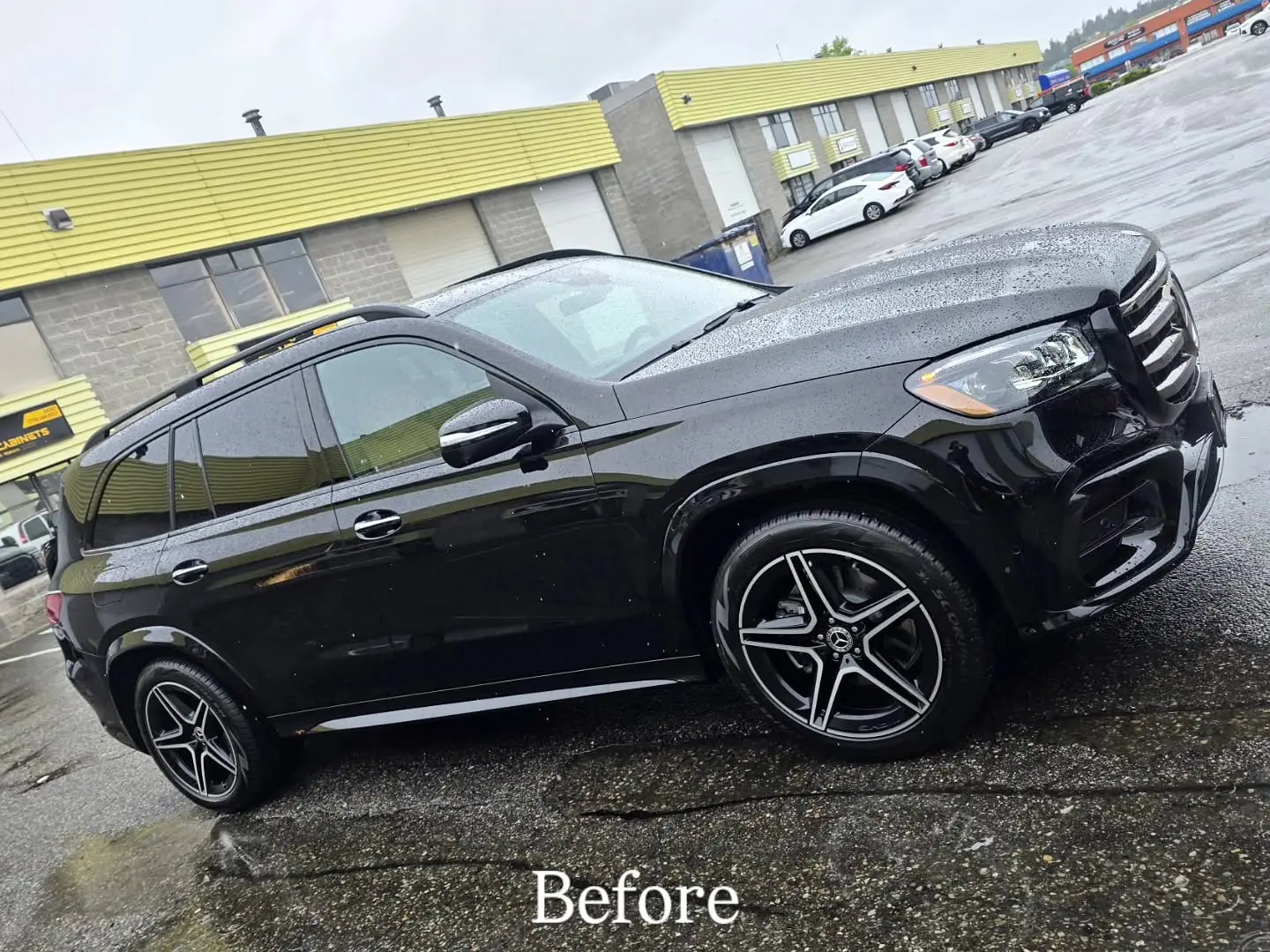
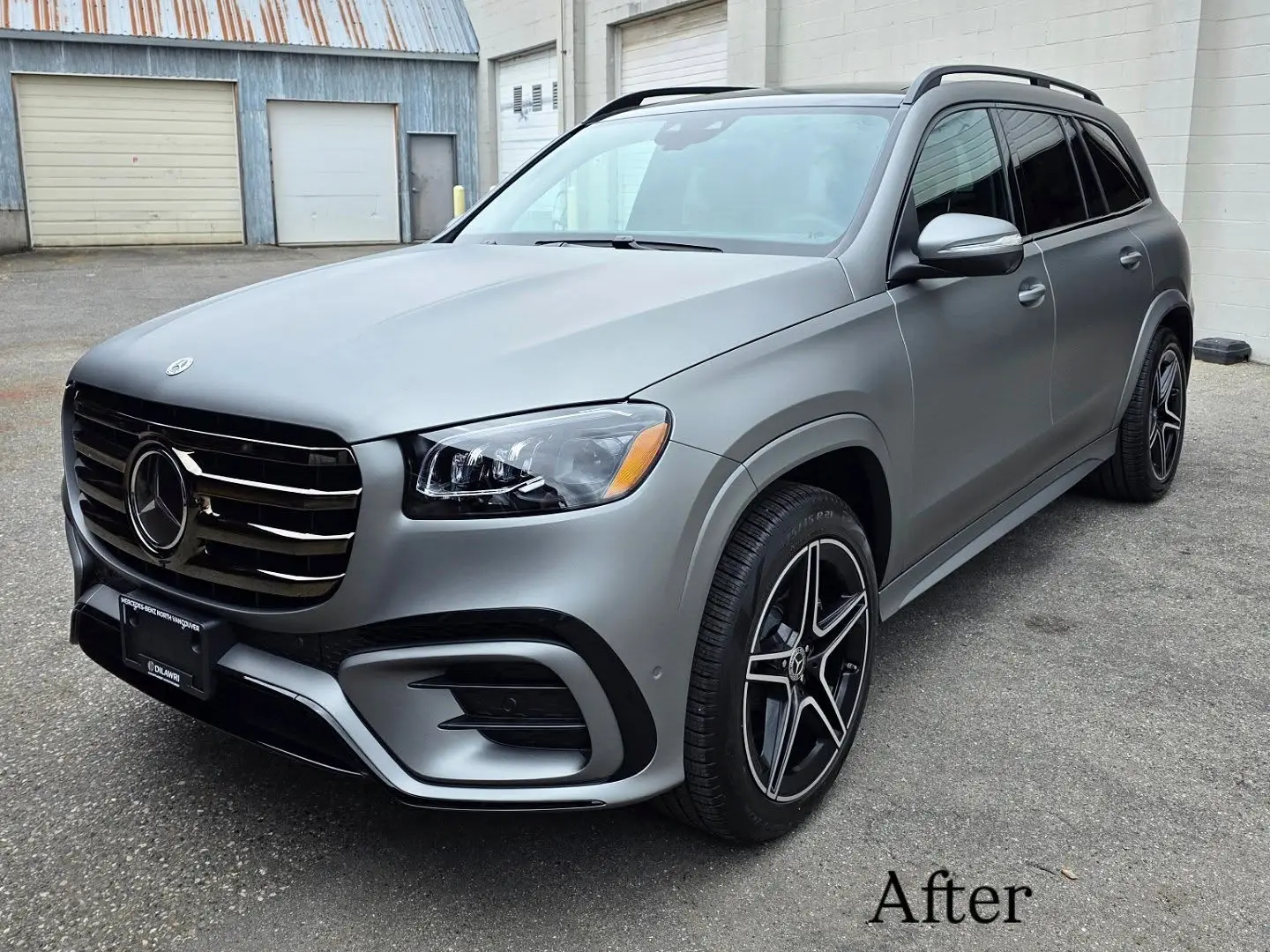
The GLS in the photos went from black paint to Avery Matte Metallic Gunmetal; the GLS wrap project shows it in more detail. Plan on 3 to 5 days without the car for a whole wrap, or up to 2 days for a panel or accents. Cars are dropped at the Langley Bypass shop, number 20560, Unit 312, Monday through Saturday. If you’re still choosing film, finish and coverage, the vinyl wrap buyer’s guide works through each decision.