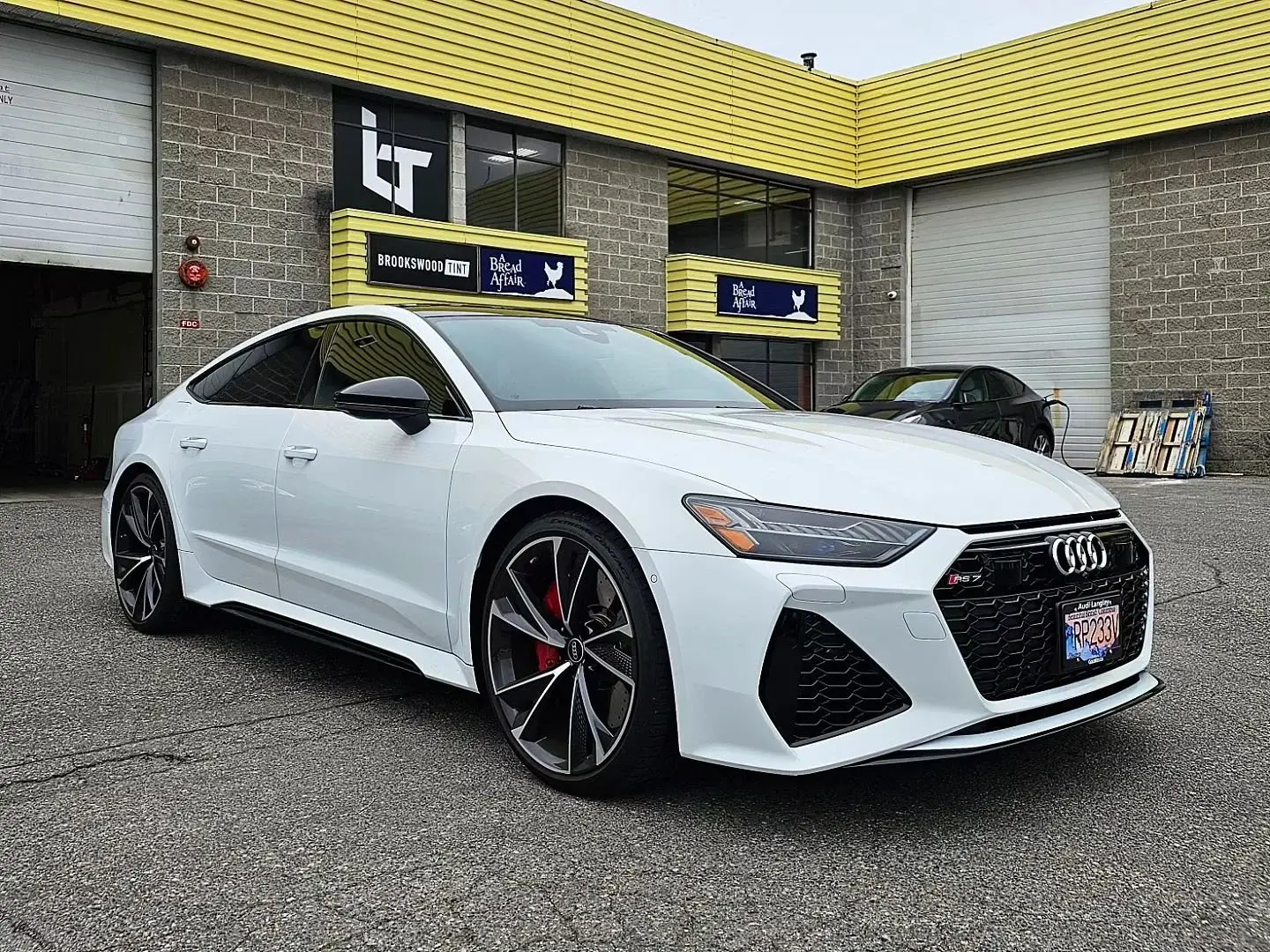
What changes when the car getting tint and PPF is electric?
The films, the packages and the prices don’t change. What changes is the car around them: heating and cooling draw on the same battery that moves the car, glass roofs and long rear windows are common, and antennas, radar and parking sensors sit in the glass and bodywork that film covers.
There are a lot of these cars on Lower Mainland roads now. The province’s Zero-Emission Vehicle Update 2025 counts 228,647 light-duty ZEVs registered in BC, 172,640 of them fully battery-electric, and 176,226 of the total in the Lower Mainland and Southwest region. ZEVs made up 17.9% of new light-duty vehicles registered in BC in 2025.
| What’s different on many EVs | Why it matters for film | What to ask before booking |
|---|---|---|
| Cabin heating and cooling run on the battery | Solar heat through the glass is energy the car spends | Which film turns away the most solar energy at the shade I want? |
| Antennas built into the glass | Metallised film can block reception | Is there an antenna in my rear glass? |
| Glass roofs and long rear windows | Bigger panes, more heat-shaping, priced from the car | Is the roof included, and how is it priced? |
| Radar and sensors in the bumper | Film placement follows the carmaker’s manual | How will my car’s sensors and radar cover be handled? |
| Frameless door glass | Still front side windows under BC law | Which of my windows can legally take film? |
Nothing about an EV changes the way the shop works: tint is plotter-cut for the exact year, make and model, and PPF is cut from software templates for the vehicle. What it changes is the questions worth asking before you book.
Can window tint help an EV’s battery?
Only indirectly, and mostly in summer. Film behind the driver cuts the solar heat coming through that glass, so the air conditioning has less to fight; it isn’t a fix for winter cold, when heating the cabin is the big draw. The shop measures film by heat rejection and makes no range claim.
The US Department of Energy’s fuel economy site lays out the size of each problem. In its cold-weather testing at 20 °F (about −7 °C), it says an EV’s range can drop by 41%, and about two-thirds of the extra energy goes to heating the cabin; with the heater off, the range loss was about 12%. In hot weather, the air conditioning’s effect costs EVs proportionally more than gas cars, and its tips include shade parking, a sunshade to keep the cabin from heating up, and cooling the cabin down before you unplug.
Film is a permanent version of that sunshade on the windows it covers. How much solar energy each LLumar film turns away, measured on clear 6 mm test glass:
| Film (LLumar) | Light transmitted (VLT) | Solar energy turned away (TSER) | Solar energy left over (100 − TSER) | Infrared turned away (IRER) |
|---|---|---|---|---|
| ATC 35, dyed | 38% | 35% | 65% | 22% |
| IRX 35, ceramic | 39% | 54% | 46% | 60% |
| IRX 05, ceramic | 6% | 62% | 38% | 60% |
| AIR 80, clear ceramic | 77% | 43% | 57% | 60% |
| AIR 90, clear ceramic | 84% | 30% | 70% | 40% |
Every number is from LLumar’s spec sheet LL0116NAEN, and the leftover column is just 100 minus TSER. The useful comparison is ATC 35 against IRX 35: almost the same darkness, but the ceramic film turns away 54% of the solar energy instead of 35%. On a real car, laminated or factory-tinted glass changes the numbers, and the windshield and front doors stay unfilmed, so the effect on the whole cabin is smaller than the table suggests.
Fraser Valley summers, by the numbers
ECCC’s normals for Abbotsford Airport log an average of 100.3 days a year that top 20 °C, and 8.7 that pass 30 °C. Those are the days ceramic film earns its keep. In winter the job reverses: you want to keep heat in, and LLumar’s sheet measures only how much incoming solar energy a film turns away. Whether film helps at all in the cold has its own page: tint and a warmer winter cabin. The range question on its own sits on does window tint improve EV range, and the difference between heat claims and heat measurements on does ceramic tint really block heat.
Which window film suits an EV’s glass?
Ceramic, in most cases. LLumar IRX and AIR are the shop’s ceramic films, described by the shop as containing no metal; at matched darkness IRX outperforms dyed ATC on total solar rejection, and AIR 80 matches IRX on infrared while staying nearly clear. That matters on EVs that carry antennas in the glass, and on cars with large panes that let in a lot of sun.
Antennas in the glass
Some EVs put the radio antenna in the rear window. The Polestar 2 owner’s manual says not to use solar film with a metallised surface on the rear window, because the antenna is inside that glass and reception can suffer. A used EV wearing old film of unknown make is worth checking for the same reason. Steam is the gentle way to get it off; the shop uses it on back glass to keep the defroster lines intact, as rear window tint removal explains.
Glass roofs and long rear windows
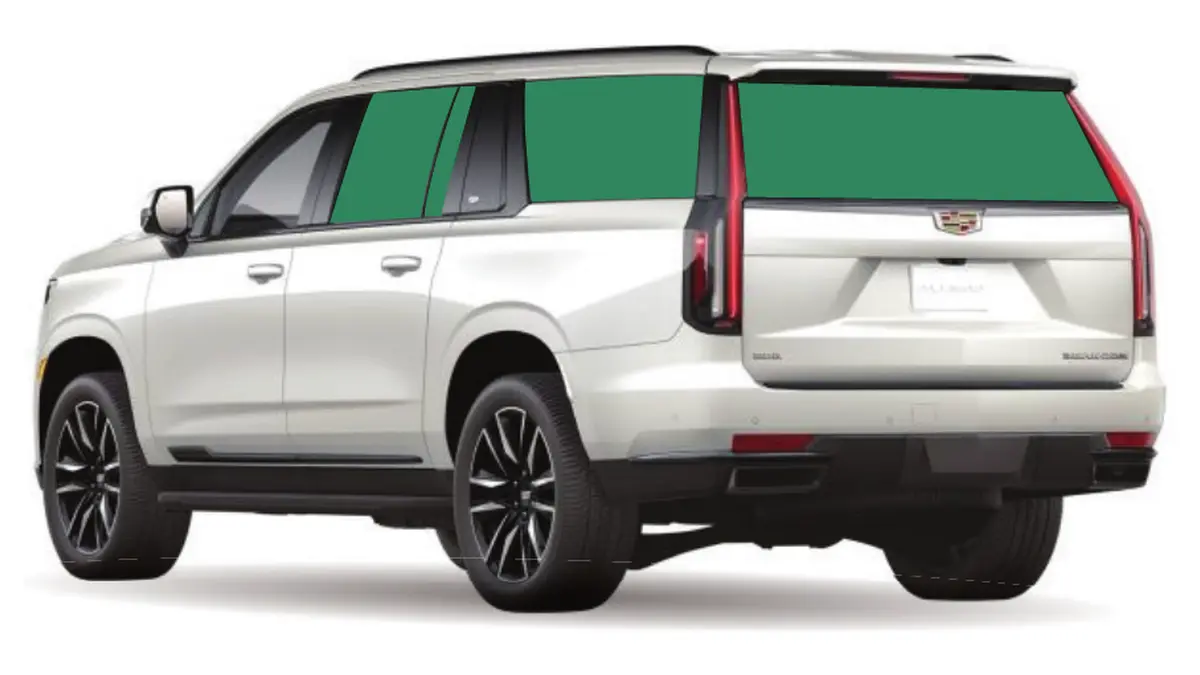
A big one-piece back window takes more heat-shaping and more bay time than a small one, and glass roofs differ by model and trim, some with tinted or switchable layers of their own. Both are quoted from the car. Model-by-model details are on EV window tint, and roof film, including the legal question, on sunroof and panoramic roof tint.
Darker factory glass on an EV
If your EV has darker factory glass in the rear, film over it multiplies: a 20% film on 20% glass lets through roughly 4%. Check how dark the glass already is before picking a shade, and read can you tint over factory tint first.
Clear or dark
For heat rejection without a darker look, AIR 80 is the one: it ties IRX at 60% IRER, yet still passes 77% of visible light. The two are compared on LLumar IRX vs LLumar AIR, and the carmaker’s own tint options against aftermarket film on Tesla tint vs aftermarket tint.
Which EV windows can you legally tint in BC?
The same ones as on any car: side glass from the driver’s shoulder back, the back window if mirrors are fitted on both doors, and a band along the top of the windshield up to 75 mm deep. Frameless doors, glass roofs and the car’s battery don’t change that.
MVAR s. 7.05(8) puts no limit on darkness behind the driver and permits nothing at all on the front door glass, clear film like AIR included. A BC owner on Tesla Motors Club once wrote about LLumar AIR 80 on every side window of a Model 3, six in all; two of the six are front doors, where no film is road-legal in BC, however clear.
The shop will install front-door or windshield film if you ask, after explaining what you’re taking on:
- A ticket. According to Mission RCMP, the usual tint fine is $109.
- A Notice & Order. An officer can order removal of the film plus an inspection at a designated facility.
- An inspection fail. The 2025 Vehicle Inspection Manual fails aftermarket film on side windows ahead of where the driver’s seat back sits (item 13d), and, under item 12e, any windshield tint sitting lower than that 75 mm band.
Many EVs also carry driver-assistance cameras behind the windshield; tinting a windshield with an ADAS camera covers what carmakers say. For everything else about the front-window rule, read front window tint in BC.
Where should PPF go on an EV?
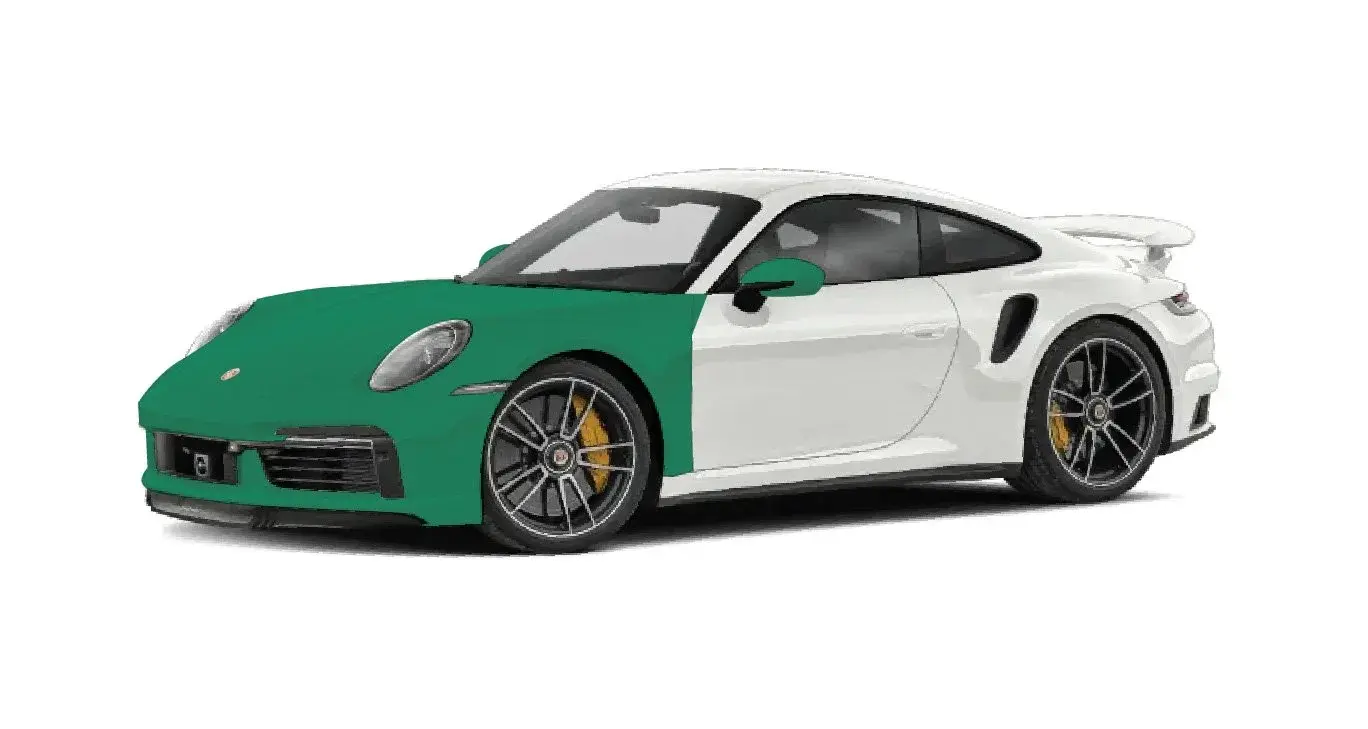
Start where every car takes chips: the bumper, hood, fenders, mirrors and headlights. Then look at the lower body behind the front wheels. Tesla’s own service manual for the 2021+ Model S includes a procedure for retrofitting clear film to the rear quarter panels ahead of the rear wheels, a sign of where one carmaker thinks film is worth adding.
That Tesla procedure is worth reading for what it reveals about fitting film properly: the area is cleaned with soap and water first, the film is floated on slip solution, it’s kept parallel to the rocker body line and not taken over it, “as it will not properly cure to vehicle”, and its ends wrap about 10 mm and 15 mm onto the neighbouring panels.
| Package | Covers | From | EV notes |
|---|---|---|---|
| Partial Front | The bumper, mirrors, headlights and the front portion of hood and fenders | $850 | Ask how bumper sensors and the radar cover are handled |
| Full Front | The bumper, mirrors, headlights, plus hood and fenders end to end | $1,550 | No cut line across the hood |
| Track Package | The Full Front set, then A-pillars, rocker panels and part of the roof | $1,900 | Adds lower-body film at the sills |
| Full Vehicle | Each painted panel on the car, and the headlights | $4,000 | Includes the quarters ahead of the rear wheels |
These are floors, not fixed prices: size, panel shapes and paint condition decide where the quote lands, and big electric SUVs and pickups can come in higher. Note the headlights, too. A provincial inspection can fail a lamp with anything over its lens (item 1.0(a)), and clear film gets no exemption, so an inspector may query it.
Whether EV paint is softer than other cars’ is a common worry with its own answer: do electric cars have softer paint. For the film itself, the service page is EV paint protection film, and choosing a package is set out step by step in the PPF buyer’s guide for BC drivers. If only the sills worry you, see rocker panel PPF.
How do radar, sensors and cameras change a PPF install?
They set where the film can and can’t go. Carmakers such as Polestar tell owners to keep sensor faces and radar covers clear of add-ons, so film has to be trimmed and placed around them the way the manual for your model and trim requires; ask how the shop will handle your car’s sensors before work starts.
Polestar is specific. The Polestar 2 manual’s radar section says not to attach objects, tape or decals to the surface of the sensors, to use only Polestar’s own protective cover in the grille in front of the radar unit, and not to repaint that cover or apply a foil finish to it, because either can disrupt the radar. It also says dirt, ice and snow over the sensors can cause false warnings or no function, which is a reminder that a clean front end matters on any car with driver-assistance features.
Details the shop needs from you
- Year, model and trim. Sensor counts and radar positions can change between trims and model years.
- Which assistance features you use. Adaptive cruise, emergency braking and parking aids all rely on sensors in the bodywork.
- Any warning lights already on. Film shouldn’t be blamed for a fault that was there first.
After the install
If a driver-assistance warning appears after any film, bodywork or repair, have it checked rather than driving around it, and tell the shop exactly what the dash shows.
In what order should a new EV get tint, PPF and a coating?
Paint first, then film on the paint, then any coating, with window tint fitted alongside because it never touches the paint. A new EV can often have tint and a partial front done in a day or two.
- Inspect and prepare the paint. It’s decontaminated, and corrected if delivery left swirls.
- Fit the PPF. Partial front: a day. Full front or Track: up to two. Full vehicle: three to five.
- Coat over film and paint, if you want a coating; it goes on after the film, never under it.
- Tint the glass. Most cars are done the same day; big glass and roofs take longer.
Then the waiting rules. Leave tinted windows rolled up for the next three to five days, and give the film seven days before its first wash, as the shop asks; Tesla’s quarter-panel procedure asks for 24 hours after its own small pieces, and LLumar’s minimum is three days, so the shop’s week covers all of them. The reasoning behind the order is on sequencing PPF, a coating and tint, the combined days on one visit for all three, and the case for booking right after delivery on PPF on a new car right away. Leased EVs have their own considerations, covered on lease car protection.
What do tint and PPF cost on an EV, and how do you book?
EVs are priced like any car with the same body: rear tint from $220 to $260 in LLumar ATC, ceramic IRX or AIR priced per package, and LLumar Platinum PPF from $850. Glass roofs, oversized rear glass and larger EVs are quoted from the vehicle.
| Job | Starting price |
|---|---|
| Rear tint, sports coupe (3 windows) | $220 |
| Rear tint, sedan (up to 5 windows) | $240 |
| Rear tint, full-size SUV or wagon (7 windows) | $260 |
| IRX or AIR ceramic upgrade | Priced per package |
| Glass roof, one-piece rear glass, unusual shapes | Quoted from the car |
| PPF: Partial Front / Full Front / Track / Full Vehicle | $850 / $1,550 / $1,900 / $4,000 |
Model pages collect what’s specific to popular EVs, such as the Tesla Model Y, Model 3 PPF, Polestar 2 PPF, Hyundai Ioniq 5 tint and Kia EV9 PPF.
To book, list the model year, model and trim, the windows and panels you want done, and whether there’s a glass roof, on the EV quote form; a call or text to 604 534 6433 works too. Find it at 20560 Langley Bypass, Unit 312; it’s open six days, 9:00 to 17:00, and shut on Sundays.